News
Rich project cases across industries, showing real implementation and proven technical strength.Nickel sulfate (NiSO₄·6H₂O) is a critical raw material for the production of cathode materials in lithium-ion batteries, particularly for nickel-rich chemistries such as NMC (nickel manganese cobalt) and NCA (nickel cobalt aluminum). As global demand for electric vehicles and energy storage systems continues to accelerate, the efficient and safe handling of nickel sulfate has become a central concern for chemical processors and battery material manufacturers. The material's hygroscopic nature, moderate abrasiveness, and tendency to cake under humid conditions make conventional mechanical conveyors—such as belt conveyors or screw conveyors—less reliable over time. Pneumatic conveying systems have emerged as the preferred solution due to their enclosed design, flexibility in routing, and precise control over material flow. At headpowder, we specialize in designing nickel sulfate pneumatic conveying systems that address these unique material challenges while maintaining throughput consistency and operational safety. This article provides a comprehensive technical overview of pneumatic conveying for nickel sulfate, covering system configurations, key design parameters, industry trends through 2026, and practical selection criteria for plant engineers.
Pneumatic conveying uses air or inert gas to transport bulk solid materials through a pipeline. For nickel sulfate, two primary modes are employed: dilute phase and dense phase conveying. Dilute phase systems operate at high air velocities (typically 15–30 m/s) and low material-to-air ratios, suspending particles in the airstream. This method is suitable for short distances and when the material has low friability. However, nickel sulfate's crystalline structure can degrade under high-velocity impact, generating fines that increase dust hazards and reduce product quality. Dense phase conveying, on the other hand, operates at lower velocities (2–8 m/s) with higher material loading, pushing the material through the pipeline as a moving plug. This method significantly reduces particle attrition and is often preferred for fragile or moisture-sensitive materials like nickel sulfate. The choice between dilute and dense phase depends on the specific particle size distribution, bulk density, and moisture content of the nickel sulfate batch. headpowder's engineering team conducts detailed material characterization before proposing a system, ensuring that the conveying mode aligns with the client's downstream process requirements.
Nickel sulfate hexahydrate typically appears as blue-green crystals with a bulk density ranging from 0.9 to 1.2 g/cm³, depending on crystal morphology and moisture. The material's hygroscopicity means it readily absorbs atmospheric moisture, leading to agglomeration and increased wall friction in the conveying line. Additionally, nickel sulfate is slightly acidic in solution, which can accelerate corrosion of carbon steel components. Therefore, system materials of construction must be carefully selected—common choices include 304L or 316L stainless steel for piping, with PTFE or rubber linings in high-wear areas such as bends and diverters. Air supply must be filtered and dried to a dew point below -20°C to prevent moisture ingress. headpowder incorporates inline moisture sensors and automatic purge cycles in its designs, allowing real-time adjustments to air conditions when ambient humidity fluctuates. The conveying distance also plays a role: for lines exceeding 150 meters, pressure drop calculations must account for both particle-wall friction and interparticle collisions. Using computational fluid dynamics (CFD) modeling, headpowder optimizes pipe diameter and bend radii to maintain stable transport without blockages.
A typical nickel sulfate pneumatic conveying system includes a material feeding device (e.g., rotary airlock or screw feeder), a pipeline network, a primary air mover (positive displacement blower or compressed air), a dust collection system, and a receiving vessel with venting. For batch processes, a vacuum system draws material from storage hoppers to process vessels; for continuous operations, pressure systems push material through longer distances. One common configuration in cathode material plants is a closed-loop nitrogen conveying system, where nitrogen is recirculated after filtration to maintain an inert atmosphere and prevent oxidation. headpowder has delivered multiple turnkey systems where the entire conveying path is enclosed and monitored via distributed control systems (DCS), providing operators with real-time data on flow rate, pressure, temperature, and humidity. In a recent project for a lithium-ion battery precursor plant, a headpowder dense phase system achieved a conveying capacity of 8 tons per hour over a 120-meter route with less than 0.5% particle degradation, as verified by sieve analysis before and after transport.
The global nickel sulfate market is projected to grow at a compound annual growth rate (CAGR) of approximately 12% from 2024 to 2026, driven by the expansion of battery manufacturing capacity in North America, Europe, and Southeast Asia. With this growth, stricter occupational exposure limits (OELs) for nickel compounds are being enforced by agencies such as OSHA and the European Chemicals Agency (ECHA). For example, the permissible exposure limit (PEL) for soluble nickel compounds is 1 mg/m³ as an 8-hour time-weighted average. Pneumatic conveying, with its fully enclosed design and integrated dust collection, inherently reduces worker exposure compared to open handling methods. Additionally, sustainability initiatives are pushing for energy-efficient conveying designs. Newer systems incorporate variable frequency drives (VFDs) on blowers, allowing the air velocity to be adjusted based on actual material load, reducing power consumption by up to 30%. headpowder's latest systems are equipped with smart sensors that detect pipeline wear and predict maintenance intervals, minimizing unplanned downtime. These innovations align with the industry's move toward Industry 4.0 and predictive maintenance frameworks.
Selecting the right pneumatic conveying system for nickel sulfate requires evaluating several parameters: conveying distance, elevation change, required throughput, particle size distribution, moisture content, and allowable degradation. A common mistake is undersizing the air mover, which leads to insufficient velocity and line plugging. As a rule of thumb, for dense phase conveying of nickel sulfate, a material-to-air ratio of 10–20 kg of solid per kg of air is typical, with a conveying velocity between 4 and 8 m/s at the pickup point. Pressure drop calculations should include losses through straight pipe, bends (typically using long-radius bends with R ≥ 10D to reduce wear), diverging and converging sections, and filtration units. headpowder provides a detailed engineering datasheet for each project, including predicted pressure profiles and recommended blower specifications. For clients requiring multiple discharge points, a multi-way valve system with automated switching can be integrated. The company also offers optional heat tracing and insulation for lines that must operate in cold climates to prevent salt crystallization from moisture condensation.
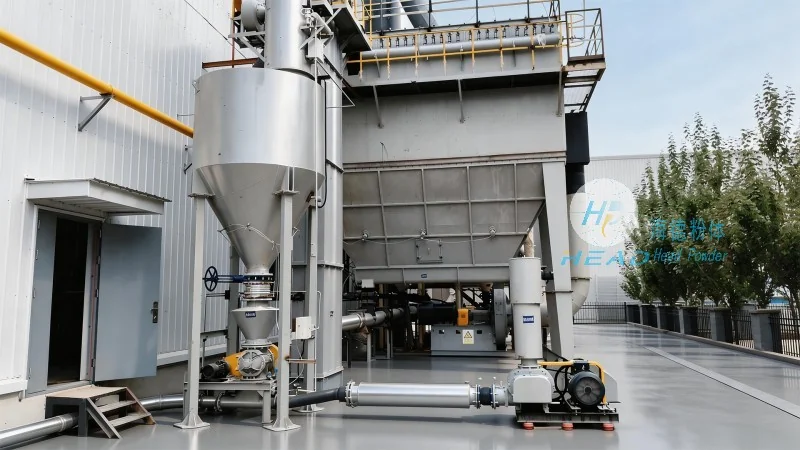
Routine maintenance of a nickel sulfate pneumatic conveying system focuses on three areas: air quality, pipeline integrity, and component wear. Filters in the blower intake and dust collector should be inspected weekly; a pressure drop exceeding the manufacturer's threshold indicates clogging. Pipeline wall thickness should be ultrasonically measured every six months in high-wear areas such as the first 10 meters after the feeder and at each bend. For systems handling nickel sulfate, it is advisable to flush the line with dry air or nitrogen after each production shift to remove residual moisture. headpowder's systems are designed with modular spool pieces that facilitate quick replacement without welding. A training program for operators is included with every installation, covering troubleshooting of common issues like blowback through the rotary airlock or erratic flow due to hopper bridging. By following a documented preventive maintenance schedule, plants can achieve system availability rates above 98%.
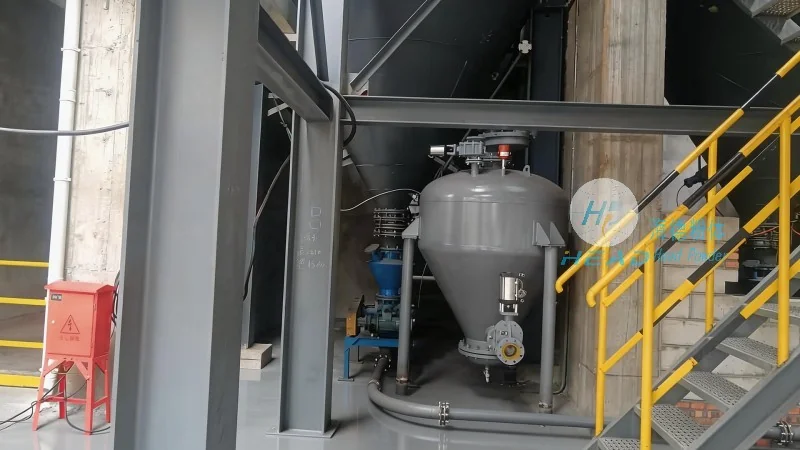
A North American cathode precursor manufacturer recently approached headpowder to upgrade their existing dilute-phase system that suffered from excessive fines generation and frequent filter bag replacements. After conducting a material test using a 1-ton sample of nickel sulfate, headpowder's engineers recommended a conversion to dense phase conveying with a nitrogen purge. The new system reduced particle attrition from 3.2% to 0.4%, extended filter life by 400%, and lowered overall compressed air consumption by 25%. The project was completed within 18 weeks from order to commissioning, including site acceptance testing. This case illustrates how a targeted engineering approach can solve specific material handling challenges while improving total cost of ownership. headpowder's in-house testing lab can simulate conveying conditions for up to 5 tons of material, providing clients with empirical data before committing to system design.
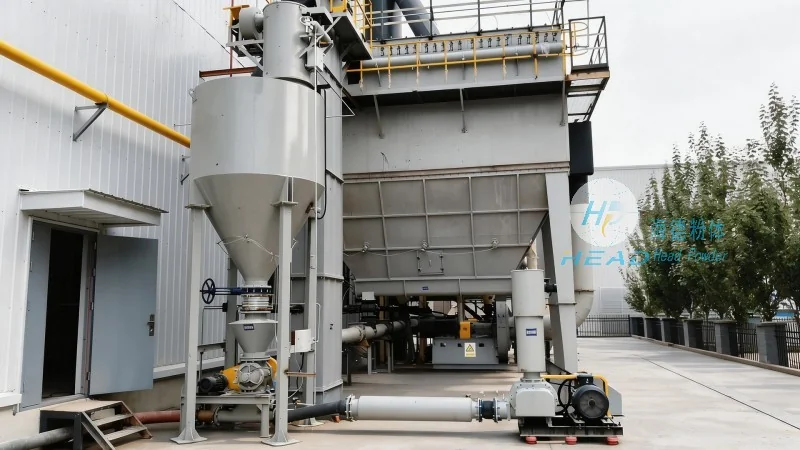
As the battery materials industry scales to meet global electrification targets, the ability to handle nickel sulfate with precision, safety, and efficiency becomes a competitive advantage. Pneumatic conveying offers a proven, enclosed method that minimizes dust, maintains product quality, and adapts to changing production demands. Whether you are designing a new greenfield plant or retrofitting an existing facility, a thorough evaluation of material properties and process parameters is essential. headpowder brings over a decade of specialized experience in pneumatic system design for challenging bulk solids, including nickel sulfate, lithium carbonate, and cathode precursor materials. Our approach combines rigorous material testing, advanced modeling tools, and modular construction to deliver systems that operate reliably for years with minimal maintenance. For detailed technical consultation or a preliminary system design proposal, we invite you to reach out to our engineering team. (咨询热线:156-6277-7102)
```
 Shandong headpowder Engineering Co., Ltd.
 156-6277-7102(Manager Zhang)
  0531-83386006
  Jinan City, Shandong Province, China
服务热线
微信咨询
回到顶部