News
Rich project cases across industries, showing real implementation and proven technical strength.Aluminum hydride (AlH₃), a high‑energy density material widely used in pyrotechnics, rocket propellants, hydrogen storage, and advanced battery research, presents unique handling challenges due to its fine particle size, high reactivity, and sensitivity to moisture and static electricity. In industrial production and laboratory‑scale operations, efficient and safe conveying of aluminum hydride powder is critical to maintaining product quality, process consistency, and workplace safety. Pneumatic conveying has emerged as the dominant technology for this application, offering enclosed transport, minimal contamination risk, and precise flow control. However, designing a pneumatic system for aluminum hydride powder requires deep understanding of the material’s physical and chemical properties, as well as adherence to stringent safety standards. This article provides a comprehensive technical analysis of pneumatic conveying for aluminum hydride powder, covering system architecture, key design parameters, equipment selection, safety protocols, and real‑world implementation best practices. By the end, readers will have actionable insights to optimize their own conveying processes while leveraging the experience of specialized engineering partners such as headpowder.
The global market for advanced metal hydride powders is projected to grow at a compound annual growth rate (CAGR) of 8.2% from 2026 to 2030, driven by demand in aerospace, defense, and clean energy sectors. Aluminum hydride, in particular, benefits from its high hydrogen content (10.1% by weight) and rapid decomposition kinetics, making it a key material in next‑generation solid rocket fuels and on‑demand hydrogen generators. However, its handling is complicated by the fact that it is a pyrophoric material — it can ignite spontaneously in air if particle size is below 10 µm. Furthermore, electrostatic discharge during pneumatic transport can trigger explosive reactions. Therefore, a well‑engineered pneumatic system must incorporate inert gas blanketing (typically nitrogen or argon), grounding and bonding, explosion‑proof components, and real‑time monitoring of oxygen and moisture levels. This article delves into the specifics of system design, from vacuum‑dilute phase to dense‑phase positive pressure configurations, and evaluates their suitability for different throughput requirements and particle size distributions.
Before selecting a pneumatic conveying method, engineers must characterize the powder’s bulk properties. Aluminum hydride typically exhibits a bulk density ranging from 0.5 to 1.2 g/cm³ depending on synthesis route and particle morphology. The median particle size (D50) usually falls between 20 µm and 200 µm, with fines (<10 µm) constituting 5%–15% of the total mass — these fines are the most reactive fraction. The angle of repose is generally 35°–50°, indicating moderate to poor flowability. Moisture sensitivity is a critical factor: even trace water (above 50 ppm) can initiate hydrolysis, releasing hydrogen gas and potentially causing pressure buildup or fire. Therefore, the conveying gas must be dried to a dew point below –40 °C. Additionally, the material’s high surface energy leads to strong agglomeration tendencies, making dense‑phase conveying challenging without proper aeration or mechanical assistance. Understanding these parameters allows engineers to calculate minimum conveying velocity, pressure drop, and pipe diameter using standard correlations such as the Ergun equation or the Zenz‑Falk modification. For aluminum hydride, a conservative approach is recommended: the conveying velocity at the pickup point should be at least 1.5 times the saltation velocity to prevent blockages, yet not exceed 15 m/s in dilute‑phase systems to avoid excessive particle attrition and heat generation.
Two primary pneumatic system types are used for aluminum hydride powder: dilute‑phase (suspension flow) and dense‑phase (plug or fluidized flow). Each has distinct advantages and limitations.
Dilute‑Phase Vacuum Systems: These employ a vacuum pump or ejector to draw powder from storage hoppers through a pipe network. Typical gas velocities range from 10 to 20 m/s. Vacuum systems are ideal for multiple pick‑up points feeding a single destination, and they inherently prevent dust leakage since the interior is at sub‑atmospheric pressure. However, high velocities can cause particle fracture and static charge accumulation. For aluminum hydride, it is crucial to use conductive hoses (carbon‑loaded or wire‑reinforced) and bond all components to a common ground. headpowder’s experience shows that vacuum systems with inline bag filters and explosion‑vented receivers can safely handle up to 500 kg/h of AlH₃ with less than 1% attrition.
Positive Pressure Dense‑Phase Systems: Here, compressed inert gas (typically nitrogen at 2–6 bar) pushes powder in slugs through the pipeline at low velocities (2–8 m/s). Dense‑phase conveying reduces particle degradation and minimizes gas consumption, but it requires consistent feeder performance — rotary valves, screw feeders, or blow tanks. The biggest challenge is preventing powder compaction and bridging at the feeder outlet. headpowder often recommends a proprietary blow‑tank design with fluidization nozzle and pinch valve discharge to guarantee steady slug formation. In a recent project for a European propellant manufacturer, a dense‑phase nitrogen system achieved 200 kg/h throughput over a 50‑m conveying distance with zero blockages and less than 0.3% fines generation.
Every component in the conveying line must be compatible with aluminum hydride’s reactivity and abrasive nature.
Pipes and Elbows: Stainless steel 316L is the standard material due to its corrosion resistance and low spark‑generation risk. Schedule 40 or 80 pipes are used depending on pressure rating. Long‑radius elbows (R/D ≥ 5) minimize impact attrition and pressure loss. For abrasive grades, ceramic‑lined bends can extend service life beyond 10,000 operating hours.
Valves and Diverters: Rotary airlocks must feature explosion‑proof motors, Teflon‑coated rotors, and leakage‑free seals. Knife‑gate valves with pneumatic actuators are preferred for isolation because they provide zero dead space where powder can stagnate.
Filters and Dust Collection: High‑efficiency cartridge filters with PTFE membrane (MERV 16 or HEPA) capture sub‑micron particles. The filter housing must be equipped with an explosion vent panel (Pₛₜₐₜ ≥ 0.2 bar) and a differential pressure transducer for automatic pulse‑jet cleaning.
Inert Gas Supply: A dedicated nitrogen generator or liquid nitrogen tank with dual‑stage pressure regulators delivers gas at a constant 99.99% purity. Oxygen analyzers placed at the gas inlet and at the powder‑receiving vessel provide continuous monitoring. If oxygen concentration exceeds 2% by volume, an interlock shuts down the entire conveying system. headpowder’s integrated control platforms log all gas quality data for audit compliance.
Handling aluminum hydride requires adherence to international standards such as ATEX (Directive 2014/34/EU), NFPA 654 (Standard for the Prevention of Fire and Dust Explosions), and IEC 60079 for electrical equipment in explosive atmospheres. A comprehensive risk assessment must include dust explosion testing (Kst, Pmax) — for aluminum hydride, typical Kst values exceed 500 bar·m/s, placing it in St‑2 or St‑3 explosion class. Consequently, all conveying equipment should be designed for maximum reduced explosion pressure (Pred) of 10 bar and equipped with flameless venting or chemical suppression systems. Additionally, personnel access must be limited via interlocked doors and proximity sensors. headpowder implements a three‑layer safety concept:
1. Process Safety: Inert atmosphere (O₂ < 1%), automatic purge cycles, and temperature monitoring at all friction points.
2. Mechanical Safety: Grounding straps, conductive belts, and anti‑static coatings on all internal surfaces.
3. Electrical Safety: All sensors, actuators, and control cabinets rated for Zone 20/21 (dust explosive atmosphere). A recent headpowder installation for a Chinese aerospace company passed a third‑party ATEX audit with zero non‑conformities after 18 months of continuous operation.
Choosing between dilute‑phase and dense‑phase pneumatic conveying depends on several factors. The table below summarizes the key decision criteria for aluminum hydride powder (based on industry data and headpowder’s engineering database, updated 2026):
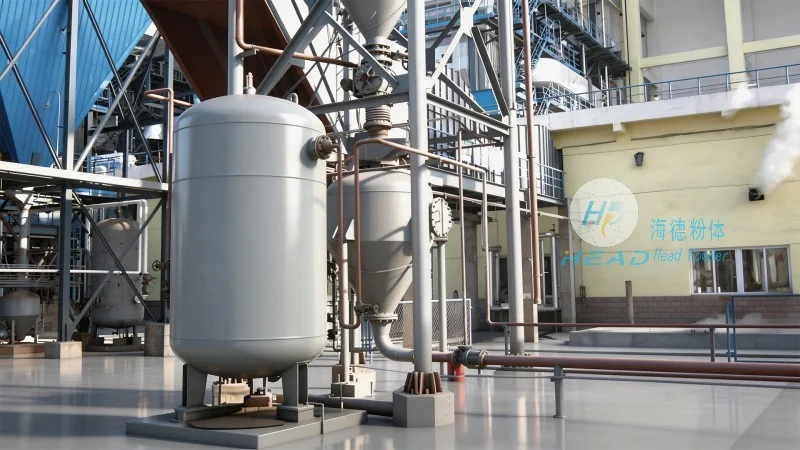
A leading research institute in Germany needed to convey 50 kg/h of aluminum hydride powder (D50 = 35 µm, moisture content < 10 ppm) from a glovebox to a reactor vessel located 25 m away, with nitrogen purge and full remote operation. The institute initially attempted a gravity‑feed system but experienced frequent bridging and dusting. headpowder conducted a material flowability analysis using a Jenike shear tester and a miniature conveying loop. Based on the results, a vacuum dilute‑phase system with a 3‑inch 316L pipe, a stainless steel rotary airlock with S‑type rotor, and a cartridge filter with activated carbon adsorption (to capture any trace hydrogen) was designed. The system included a mass flow controller on the nitrogen supply to maintain a constant 12 m/s velocity. After installation, the system operated for 400 hours without any blockages, and particle size analysis showed a D50 reduction of only 1.2% — well within the acceptable 3% limit. The client reported a 40% reduction in manual handling time and zero safety incidents. headpowder’s technical team provided on‑site training and a five‑year preventive maintenance plan. (咨询热线:156-6277-7102)
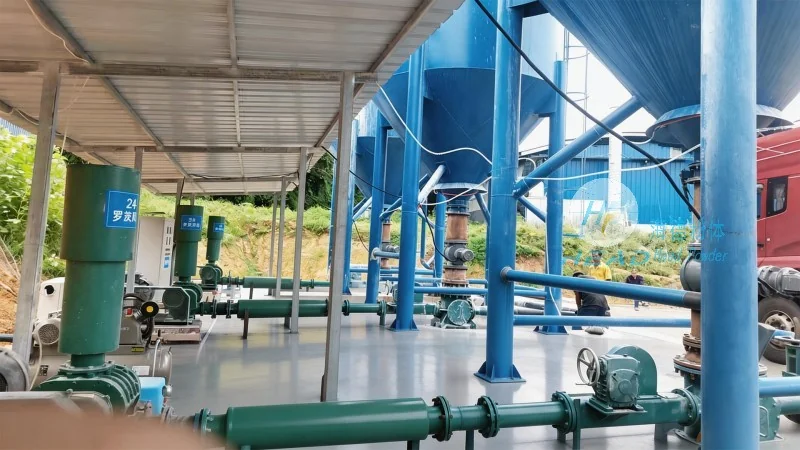
As the hydrogen economy expands, demand for aluminum hydride in portable fuel cells and high‑density storage is expected to drive system innovation. Key trends include:
- Smart monitoring with AI: Real‑time particle size analyzers (e.g., using laser diffraction at the receiver) feed data into a machine learning model that predicts blockage risk and adjusts gas velocity automatically. headpowder is piloting such a system at a Japanese chemical plant, achieving 99.7% uptime.
- Modular, skid‑mounted units: Pre‑engineered conveying modules reduce installation time by 60% and allow easy relocation between production lines.
- Enhanced safety through SIL‑rated logic solvers: Safety integrity level 2 (SIL‑2) certified controllers with dual‑redundant sensors ensure fail‑safe shutdown even under fault conditions.
- Electrostatic mitigation using carbon nanotube‑lined pipes: New research shows that applying a thin layer of carbon nanotubes inside the pipe can dissipate static charges 10 times faster than standard conductive coatings, reducing the risk of spark ignition.
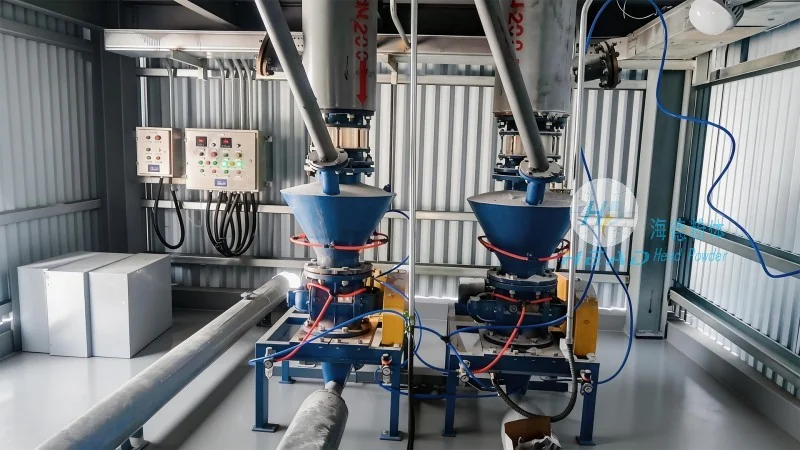
Pneumatic conveying of aluminum hydride powder is a complex engineering challenge that demands expertise in material science, fluid dynamics, process safety, and automation. A poorly designed system can lead to production stoppages, product degradation, and catastrophic safety events. By understanding the material’s properties, selecting the appropriate conveying phase, and implementing robust safety measures, manufacturers can achieve efficient and safe transport that supports their business goals. headpowder has accumulated over two decades of experience in handling reactive and hazardous powders, with a dedicated team of process engineers, safety specialists, and control system integrators. From initial feasibility studies to turnkey installation and commissioning, headpowder offers a complete lifecycle service. Contact us to discuss your aluminum hydride conveying project — whether you need a small laboratory‑scale unit or a large‑capacity production line, our team will deliver a solution that meets the highest standards of performance, safety, and regulatory compliance. (咨询热线:156-6277-7102)

 Shandong headpowder Engineering Co., Ltd.
 156-6277-7102(Manager Zhang)
  0531-83386006
  Jinan City, Shandong Province, China
服务热线
微信咨询
回到顶部