News
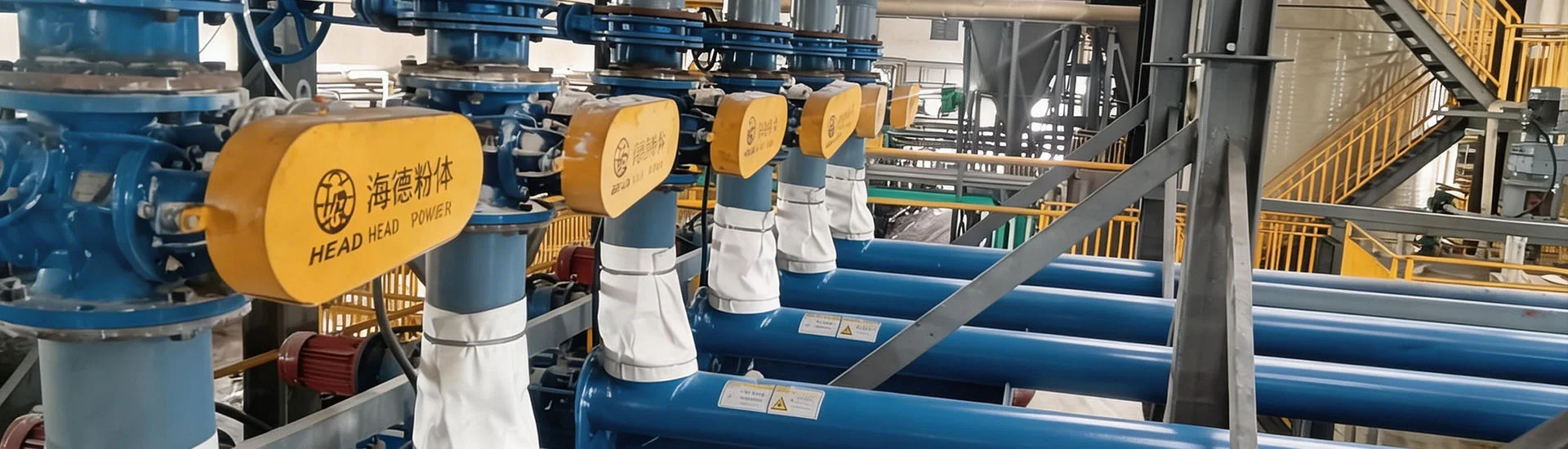
Rich project cases across industries, showing real implementation and proven technical strength.In the evolving landscape of industrial material handling, efficiency, safety, and environmental compliance have become non-negotiable pillars for manufacturers and processors across sectors such as pharmaceuticals, chemicals, food processing, minerals, and cement. Among the most critical operations is the conveying of dry, powdered, or granular materials—often referred to as dry dust. Traditional mechanical systems like belt conveyors, screw conveyors, and bucket elevators have served the industry for decades, but they increasingly fall short when handling fine, abrasive, or hazardous dusts. This is where pneumatic conveying technology emerges as the definitive solution. Dry dust conveying via pneumatic systems offers a closed-loop, dust-free, and highly flexible method to transport bulk solids from one process point to another. It leverages the power of air or inert gas to move material through pipelines, eliminating many of the risks associated with mechanical handling—such as spillage, contamination, dust emissions, and mechanical wear. As global regulatory pressures intensify around worker safety and particulate emissions, and as industries push for higher throughput with lower maintenance costs, the pneumatic conveying system has become not just an alternative but a strategic asset. This article delves deep into the principles, configurations, design considerations, and real-world applications of pneumatic conveying systems for dry dust, offering technical insights that plant engineers, project managers, and procurement specialists can directly apply. We also explore how headpowder, an industry-recognized specialist in bulk solids handling, integrates advanced pneumatic technologies to deliver tailored solutions that meet the most stringent operational requirements. Whether you are upgrading an existing line or designing a greenfield facility, understanding the nuances of dry dust pneumatic conveying is essential for optimizing material flow, reducing downtime, and achieving long-term cost savings.
Pneumatic conveying operates on the basic principle of using a gas stream—typically air, but sometimes nitrogen or other inert gases for explosive or reactive materials—to suspend and transport particulate solids through a sealed pipeline. The system relies on the balance between gas velocity, particle properties, and pipeline geometry. For dry dust, which often has a low bulk density and small particle size, achieving consistent suspension requires careful control of airflow. Two primary mechanisms govern the movement: dilute phase and dense phase. In dilute phase conveying, particles are fully suspended in the gas stream at high velocities, typically above 15 m/s, which is suitable for non-abrasive, free-flowing materials. Dense phase conveying operates at lower velocities—often below 5 m/s—where material moves in a “plug” or “slug” form, creating a moving bed along the bottom of the pipe. This method drastically reduces wear and energy consumption, making it ideal for fragile or abrasive dusts. The choice between these phases depends on the material’s particle size distribution, moisture content, angle of repose, and flowability. For example, cement dust and fly ash can be effectively conveyed in dense phase, while fine pharmaceutical powders may require dilute phase to avoid agglomeration. Accurate calculation of pressure drop, air-to-material ratio, and pipe diameter is critical. Engineers often use empirical equations such as the Ergun equation for packed beds or the Darcy–Weisbach equation for gas flow, combined with material-specific factors like the Geldart classification. A properly designed pneumatic system can achieve conveying efficiencies exceeding 90%, with energy consumption per ton of material lower than many mechanical alternatives over long distances.
A complete pneumatic conveying system for dry dust consists of several interconnected modules, each engineered to handle specific functions. The material feeding device—often a rotary airlock, screw feeder, or venturi injector—introduces the dust into the pipeline while maintaining pressure integrity. The air mover, typically a positive displacement blower, roots blower, or compressed air system, generates the required airflow. For dense phase systems, boosters or pulse jets may be used to prevent blockages. The pipeline itself must be designed with appropriate wall thickness, material of construction (carbon steel, stainless steel, or wear-resistant alloys), and bend radius to minimize erosion. Filtration is another critical component: a baghouse or cartridge filter at the receiving end separates the dust from the conveying air, ensuring clean exhaust that meets environmental regulations. Instrumentation such as pressure sensors, flow meters, and level indicators provide real-time monitoring. Control systems, often based on PLC and SCADA, automate start-up, shut-down, and material flow adjustments. Valves for diverting, splitting, or isolating different branches add flexibility for multi-destination conveying. When handling hygroscopic or electrostatic dust, grounding systems and dehumidification equipment may be required. headpowder has refined these components into modular platforms that can be rapidly configured to match specific material characteristics. For instance, their rotary airlocks feature adjustable rotor tip clearance and abrasion-resistant coatings, extending service life by up to 40% compared to standard designs. Each system is pre-tested under simulated operating conditions to validate performance metrics before onsite installation.
The two main categories—dilute phase and dense phase—each have distinct subtypes. Within dilute phase, one can find lean-phase systems where the solids-to-air ratio is low (typically <1 kg solid per kg air), and medium-phase systems with ratios up to 5. Dense phase subdivides into fluidized dense phase (for fine, aeratable materials like cement) and plug-phase (for granular or pelletized materials). Selection is driven by material properties, distance, throughput, and budget. For example, if the material is highly abrasive (e.g., silica sand) and the conveying distance exceeds 200 meters, dense phase is preferable to reduce pipe wear. If the material is temperature-sensitive or requires inert atmosphere, a closed-loop system with nitrogen is necessary. The pipeline configuration also matters: a system with many bends and vertical lifts will require higher pressure and velocity. A useful decision matrix considers the following parameters: bulk density (greater than 500 kg/m³ favors dense phase), particle size (below 100 microns often needs dilute phase), moisture content (above 2% may cause bridging), and explosion hazard (requires ATEX or NFPA compliant design). Recent industry data from 2026 indicates that approximately 65% of new dry dust conveying installations in mineral processing adopt dense phase technology, driven by lower energy use and reduced maintenance downtime. In the food industry, dilute phase remains dominant due to the need for gentle handling of ingredients like flour, sugar, and cocoa. headpowder provides a pre-selection tool based on a database of over 1,200 materials, helping clients narrow down the optimal system type within hours rather than weeks.
Designing a reliable pneumatic conveying system for dry dust requires balancing multiple engineering variables. The most common challenge is preventing pipeline blockages, especially in dense phase systems where material can settle or bridge. Proper sizing of the conveying line diameter—typically between 50 mm and 400 mm—must account for the minimum conveying velocity to keep particles airborne. For fine dusts, the velocity must exceed the saltation velocity, which can be estimated using methods such as the Zenz diagram or the Rizk correlation. Another critical factor is the pressure drop across the system, which determines the blower power requirement. Calculating the total pressure loss involves summing the losses from straight pipe sections, bends (which can contribute 10–30 times the equivalent straight length), diverter valves, and filters. Using computational fluid dynamics (CFD) simulation has become standard practice in advanced engineering firms to predict particle trajectories and erosion hotspots. For explosive dusts like aluminum powder or coal dust, safety measures include oxygen monitoring, inert gas blanketing, explosion venting, and spark detection systems. Maintenance accessibility is also crucial; installing purge ports, inspection windows, and removable spools can reduce downtime during cleaning. headpowder integrates these best practices into their design methodology, following ISO 13503 and ASME B31.3 standards. Their in-house test loop, capable of handling up to 20 tons per hour, allows validation of material behavior under actual conditions before committing to fabrication. A recent project for a cement plant in Southeast Asia demonstrated a 22% reduction in energy consumption after switching from a dilute phase to a dense phase system designed by headpowder, with zero unscheduled shutdowns in the first 18 months of operation.
Real-world examples illustrate how dry dust pneumatic conveying systems solve specific operational pain points. In a lithium battery cathode material plant, fine nickel-cobalt-manganese (NCM) powder requires completely sealed, contamination-free transfer to avoid moisture pickup. headpowder implemented a dense phase system with nitrogen purge and automated cleaning-in-place (CIP) cycles, achieving a product purity level meeting EV battery specifications. The system handles 8 tons per hour over a 150-meter distance with less than 0.5% particle degradation. In another case, a large cement grinding station replaced its bucket elevator and screw conveyor combination with a pneumatic system to reduce dust emissions below the 10 mg/Nm³ regulatory limit. The upgrade eliminated 36 mechanical failure points and reduced annual maintenance costs by EUR 120,000. For a chemical company producing titanium dioxide pigment, headpowder’s multi-line pneumatic network conveys 15 different grades of powder to 12 storage silos using a single blower, with automatic diverting valves and color-change validation logic. These deployments highlight the importance of tailored engineering: no two dusts behave identically. The ability to model, test, and iterate ensures that the final system delivers reliable performance from day one. headpowder also offers remote monitoring services, allowing operators to track air consumption, filter differential pressure, and material flow rates in real time, enabling predictive maintenance alerts that prevent unplanned stoppages.
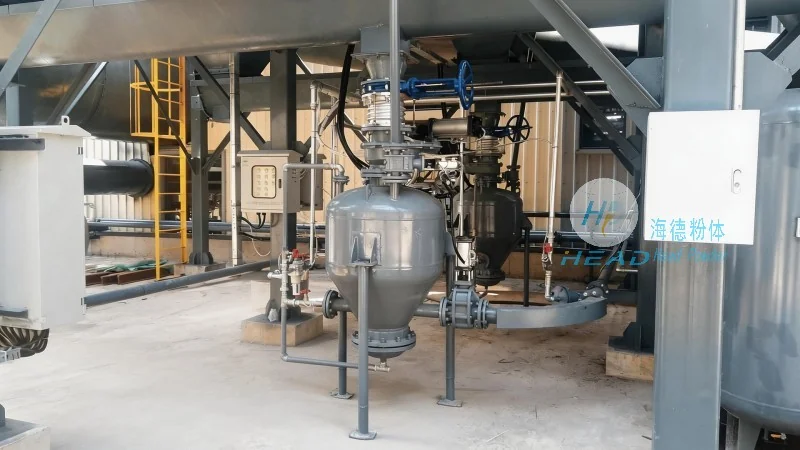
The global pneumatic conveying system market is projected to grow at a compound annual growth rate (CAGR) of 6.2% from 2024 to 2029, reaching nearly USD 45 billion by 2026 according to industry reports. This growth is fueled by the rapid expansion of the battery materials, semiconductor, and additive manufacturing sectors, where ultra-fine dry powders must be handled with micron-level precision. Digitalization is reshaping the landscape: smart sensors integrated with IIoT platforms allow real-time optimization of airflow and material feed rates, reducing energy usage by up to 30%. Artificial intelligence-based algorithms now predict blockage risks based on historical pressure signals and adjust system parameters autonomously. Another major trend is the adoption of vacuum-dense phase systems for low-pressure applications, offering safer operation in explosion-prone environments. Regulatory frameworks such as the EU’s revised Industrial Emissions Directive (IED) and China’s stricter dust emission standards are pushing plants to enclose material transfer processes, making pneumatic conveying the default choice. Sustainability also plays a role: pneumatic systems can be paired with heat recovery units to reuse compressed air energy, lowering the carbon footprint. headpowder is actively developing next-generation systems that use IoT-enabled wear sensors to automatically recommend pipe liner replacements, extending asset life and reducing waste. By combining field experience with technology partnerships, headpowder ensures that its solutions remain aligned with evolving global standards and market demands.
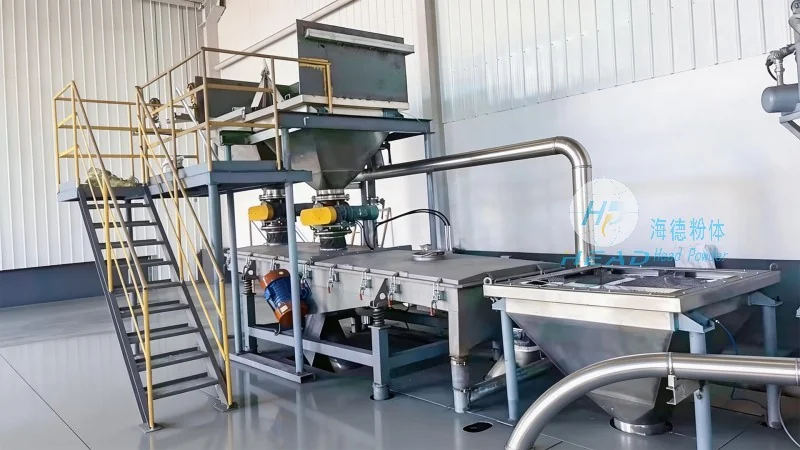
Selecting the right partner for a pneumatic conveying project goes beyond purchasing equipment; it involves a collaborative engineering process. headpowder begins each engagement with a thorough material characterization, including particle size analysis, moisture sensitivity tests, and flowability measurements using Jenike shear cells. Based on the results, a pre-feasibility report is generated, outlining the recommended system type, preliminary layout, and budget estimate. The company maintains a dedicated test facility where clients can witness their own material being conveyed under controlled conditions. This eliminates guesswork and provides performance guarantees. With over 15 years of experience serving industries from mining to pharmaceuticals, headpowder has refined its project execution methodology to deliver systems that meet both process and regulatory requirements. Their after-sales support includes on-site commissioning, operator training, and a spare parts service level agreement. For a detailed consultation or to request a project assessment, reach out to headpowder directly (consultation hotline: 156-6277-7102). The team is ready to discuss your specific material, throughput targets, site constraints, and budget parameters. Whether you need a single conveying line or a complex multi-source, multi-destination network, headpowder provides the technical depth and practical know-how to ensure your dry dust handling operation runs efficiently, safely, and in full compliance with all applicable standards.
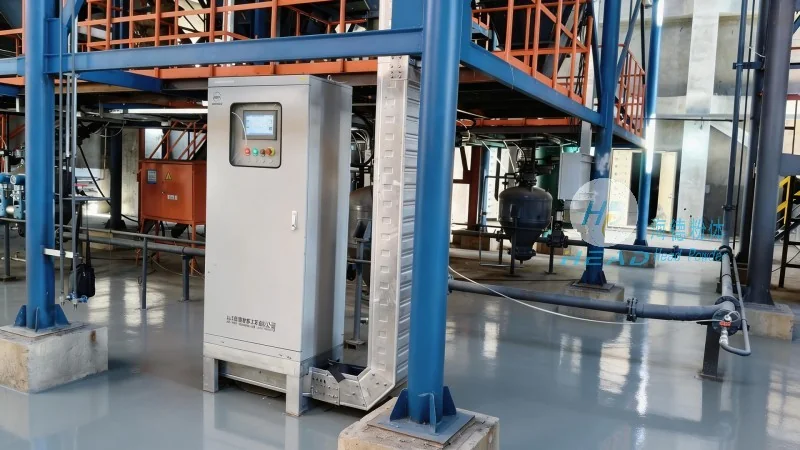
Dry dust conveying has moved from being a niche specialty to a mainstream requirement in modern industrial facilities. The ability to pneumatically transport fine, abrasive, or hazardous powders in a contained, low-emission, and low-maintenance manner directly impacts operational profitability, worker safety, and environmental stewardship. Companies that invest in well-engineered pneumatic systems gain a competitive edge through reduced downtime, higher product quality, and lower total cost of ownership. As we look toward the latter half of this decade, the convergence of stricter regulations, rising energy costs, and the need for process automation makes pneumatic conveying an indispensable technology. headpowder stands ready to support this transition with proven systems, rigorous engineering, and a client-first approach. From the initial material test to the final commissioning and beyond, the goal is to deliver a solution that works reliably in the real world—not just on paper. For plant managers and decision-makers evaluating their material handling strategy, the evidence is clear: modern pneumatic conveying offers the best balance of performance, safety, and sustainability for dry dust applications. Partner with headpowder to take your facility’s material handling to the next level.

 Shandong headpowder Engineering Co., Ltd.
 156-6277-7102(Manager Zhang)
  0531-83386006
  Jinan City, Shandong Province, China
服务热线
微信咨询
回到顶部