News
Rich project cases across industries, showing real implementation and proven technical strength.In the evolving landscape of industrial material handling, the efficient and reliable transport of high-alumina ash has become a critical challenge for power plants, cement factories, and ceramic industries worldwide. High-alumina ash, a byproduct of coal combustion in certain boilers, contains elevated levels of aluminum oxide (Al₂O₃), often exceeding 30% by weight. This composition gives it abrasive properties and a tendency to agglomerate, making conventional mechanical conveyors prone to wear, blockage, and excessive maintenance. Pneumatic conveying systems have emerged as the preferred solution for this demanding application, offering enclosed transport, reduced dust emissions, and flexible routing. However, the unique physical and chemical characteristics of high-alumina ash demand specialized engineering — from particle size distribution analysis to pressure drop calculations and air velocity optimization. This article provides a deep technical exploration of pneumatic conveying for high-alumina ash, covering system types, design parameters, material properties, operational considerations, and real-world performance factors. Drawing on industry data and proven engineering practices, it aims to equip plant managers, process engineers, and procurement professionals with actionable insights to select, design, or upgrade their ash handling systems. Whether you are dealing with fly ash from alumina-rich coal or alumina ash from secondary processes, understanding the nuances of pneumatic conveying ensures longer equipment life, lower energy consumption, and consistent throughput. headpowder, as a specialist in this niche field, advises that a thorough assessment of ash characteristics is the foundation of a successful project. (咨询热线:156-6277-7102)
High-alumina ash differs significantly from standard fly ash in both physical and chemical aspects. Typically derived from coal with high aluminum content or from industrial processes such as alumina refining, this material exhibits a bulk density ranging from 0.8 to 1.2 t/m³, with particle sizes varying from sub-micron fines to coarse particles over 200 microns. The alumina content not only increases abrasiveness but also affects the surface charge, leading to higher electrostatic attraction between particles. This can cause agglomeration, especially in humid conditions. Furthermore, the angle of repose for high-alumina ash often exceeds 45 degrees, indicating poor flowability. These characteristics directly impact pneumatic conveying system design: higher air velocities are required to keep particles suspended, but excessive velocity accelerates pipe wear. The presence of fine particles (below 10 microns) increases the risk of dust explosion and requires proper grounding and explosion venting. A key parameter is the Geldart classification of the powder — high-alumina ash typically falls into Group A (aeratable) or Group C (cohesive) depending on the particle size distribution. Understanding this classification helps determine whether dilute-phase or dense-phase conveying is more suitable. Industry data from 2026 indicates that over 60% of new high-alumina ash conveying projects opt for dense-phase systems operating at low velocity (1–5 m/s) to minimize wear, while existing plants often retrofit from dilute-phase to improve reliability. headpowder recommends conducting a full material characterization — including particle size analysis, moisture content, angle of repose, and shear cell testing — before any system design. (咨询热线:156-6277-7102)
Two primary pneumatic conveying configurations are used for high-alumina ash: dilute-phase and dense-phase. Each has distinct advantages and limitations.
Within these categories, variations include pressure systems (positive pressure) and vacuum systems (negative pressure). Pressure systems are common for long-distance conveying from a single source to multiple destinations, while vacuum systems suit multiple pickup points to a single receiver. For high-alumina ash, pressure systems dominate because the material’s bulk density favors pressurization to overcome line resistance. headpowder has implemented dense-phase pressure systems for clients handling 40 t/h of high-alumina ash over 350 meters, achieving pipe life exceeding five years. The selection between these architectures depends on site layout, capacity requirements, and available space for air supply equipment.
The success of any pneumatic conveying system for high-alumina ash hinges on correct calculation of air velocity, pressure drop, and pipe diameter. Industry standards, such as those from the British Materials Handling Board (BMHB) and the German VDI guideline 3673, provide methodologies, but site-specific adjustments are essential.
Every pneumatic conveying system relies on three core subsystems: air mover, material feeder, and separator. For high-alumina ash, each component must be selected with abrasion resistance and reliability in mind.
Even well-designed pneumatic conveying systems face operational hurdles with high-alumina ash. Three recurring issues are pipe wear, blockages, and dust emissions.
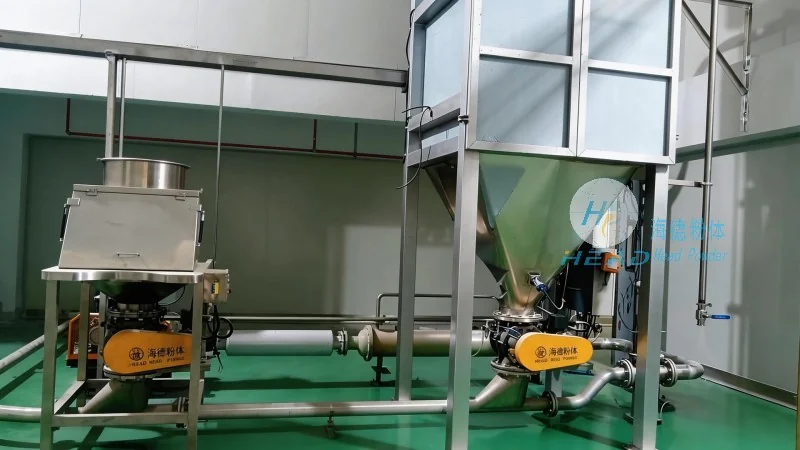
The pneumatic conveying industry for high-alumina ash is evolving rapidly, driven by stricter environmental regulations, rising energy costs, and the need for higher system reliability. According to the latest Global Powder Handling Report (2025), the adoption of digital twin technology for predictive maintenance is increasing by 18% year-over-year. System operators are now using sensors to monitor pipe wall thickness, air velocity, and pressure in real time, with AI algorithms predicting wear and scheduling replacements. Additionally, the trend toward lower carbon footprints has led to increased interest in vacuum-assisted conveying that uses exhaust gas recirculation. headpowder has integrated these technologies into its recent projects, enabling remote monitoring and automated parameter adjustment. Another notable trend is the use of modular skid-mounted systems that reduce on-site installation time by up to 40%. For high-alumina ash, modular designs allow easier maintenance of wear-prone components without shutting down the entire plant.
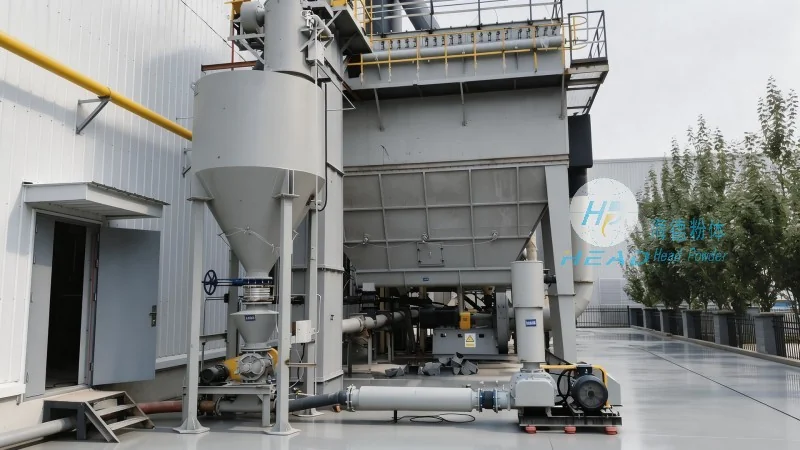
A mid-size ceramic tile manufacturer in Shandong Province, handling high-alumina ash from their spray dryer, faced continuous downtime due to pipe wear in their existing dilute-phase system. The company reached out to headpowder for a solution. After site inspection and material analysis, headpowder designed a dense-phase pressure conveying system with the following parameters: capacity 25 t/h, distance 280 meters, seven 45-degree bends, pipe diameter 200 mm, and air velocity 4.5 m/s at a solids-to-air ratio of 18:1. The system used ceramic-lined pipes in all bend sections and a hardened rotary valve with a ceramic rotor. Installation was completed in six weeks. Results after one year of operation showed pipe wear reduced by 85%, with only 0.3 mm of wall loss in the most severe section. Energy consumption dropped by 30% compared to the previous dilute-phase system. Annual maintenance costs were cut by 62%. The client reported zero unplanned shutdowns related to the ash conveying system. This project demonstrates how a tailored dense-phase solution, grounded in accurate material characterization, can deliver substantial operational savings.
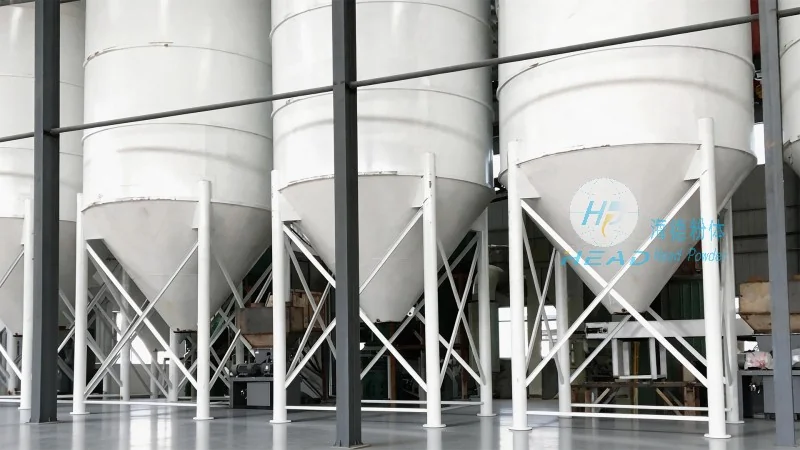
Selecting the right pneumatic conveying system for high-alumina ash is not a generic decision — it requires a deep understanding of the material’s unique properties, a rigorous engineering approach, and a partner with proven experience. Plant managers should prioritize material testing before any design work. Dense-phase conveying, despite higher initial investment, offers long-term cost benefits through reduced wear, lower energy use, and higher reliability. Vacuum systems are appropriate for multiple pick-up points but require careful attention to filter performance. Component quality — especially for feeders, pipes, and air movers — should never be compromised, as replacement costs and downtime far outweigh the initial premium. Finally, digital monitoring and predictive maintenance are no longer optional; they are essential for maximizing system lifespan and minimizing unplanned outages. headpowder has delivered over 150 pneumatic conveying projects for challenging materials like high-alumina ash, combining engineering excellence with practical field support. For a detailed feasibility study or system audit, contact our technical team. (咨询热线:156-6277-7102)

 Shandong headpowder Engineering Co., Ltd.
 156-6277-7102(Manager Zhang)
  0531-83386006
  Jinan City, Shandong Province, China
服务热线
微信咨询
回到顶部