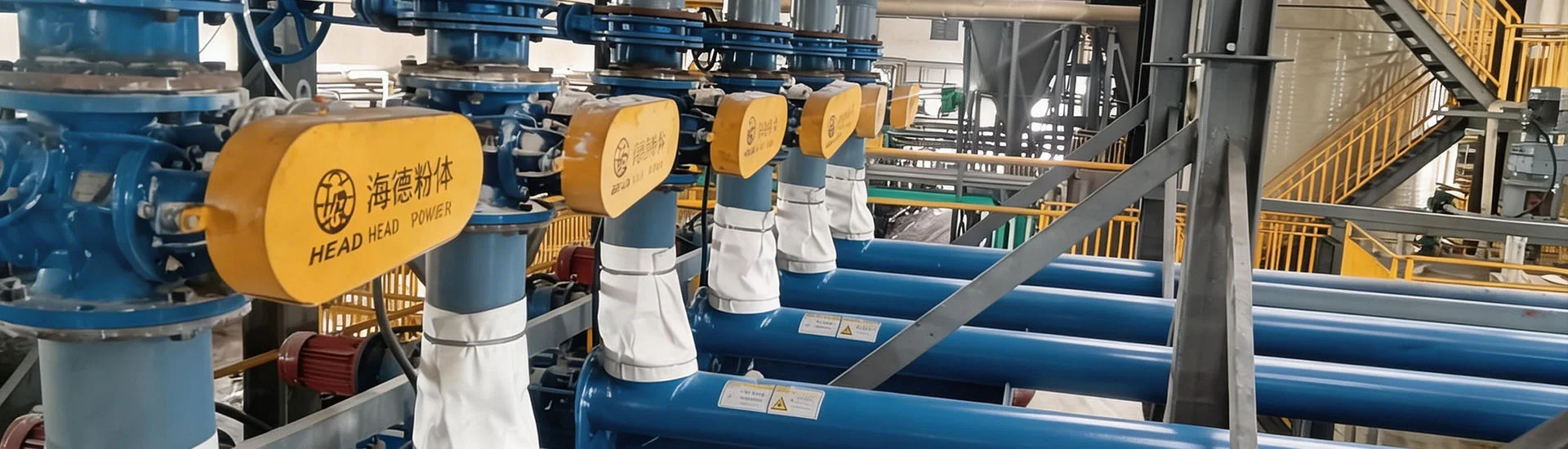
News
Rich project cases across industries, showing real implementation and proven technical strength.Monosodium glutamate (MSG) is one of the most widely used flavor enhancers in the global food industry, with production volumes exceeding 3.5 million metric tons annually as of 2026. The compound’s crystalline structure, hygroscopic nature, and fine particle size distribution (typically between 50 and 200 microns) present unique challenges during material handling. Traditional mechanical conveying methods—such as belt conveyors, bucket elevators, or screw conveyors—often lead to product degradation, dust generation, cross-contamination, and maintenance bottlenecks. In response, pneumatic conveying has emerged as the preferred solution for transporting MSG from production lines to packaging stations, blending silos, or storage facilities. This guide provides an in-depth, technical examination of pneumatic conveying systems tailored for monosodium glutamate, covering system architecture, component selection, operational parameters, and industry best practices. Whether you are designing a new facility or retrofitting an existing line, understanding the interplay between airflow, particle behavior, and system pressure is critical to achieving consistent throughput, minimal waste, and compliance with food safety standards. The following sections break down each aspect with data-driven insights and real-world considerations, helping facility managers, process engineers, and procurement specialists make informed decisions.
Monosodium glutamate is a free-flowing but friable crystalline powder. Its bulk density ranges from 0.6 to 0.8 g/cm³, and its angle of repose is approximately 35 to 40 degrees. When subjected to mechanical impact from rotating equipment, MSG particles can fracture, generating fines that reduce product quality and increase dust explosion risks. Pneumatic conveying eliminates direct mechanical contact by using controlled air streams to suspend and move particles through enclosed pipes. This approach offers several quantifiable benefits. First, product integrity is preserved: studies indicate that pneumatic systems can maintain particle size distribution within 98% of the original specification, compared to 85–90% for mechanical conveyors. Second, hygiene is enhanced: fully sealed pipelines prevent external contamination and allow for Clean-in-Place (CIP) or Steam-in-Place (SIP) protocols, which are mandatory for food-grade applications. Third, layout flexibility is superior: pipes can be routed vertically, horizontally, or around obstacles, reducing the need for structural modifications. Fourth, maintenance costs are lower: fewer moving parts mean less wear and tear, with typical mean time between failures (MTBF) exceeding 8,000 operating hours for well-designed systems. For companies like headpowder, which specializes in precision pneumatic solutions, these advantages translate into higher overall equipment effectiveness (OEE) and reduced total cost of ownership (TCO) over the system’s lifecycle.
The choice between dilute phase and dense phase conveying is the most fundamental design decision for MSG handling. Dilute phase systems operate at high air velocities (typically 15 to 25 m/s) and low material-to-air ratios (0.5 to 5 kg/kg). They are suitable for short distances (under 50 meters) and moderate throughputs (up to 5 tons per hour). However, for MSG, high velocity can accelerate particle attrition and pipe erosion, especially at bends. Dense phase conveying, in contrast, uses lower velocities (3 to 8 m/s) and higher material-to-air ratios (10 to 30 kg/kg). This mode pushes the material as a slug or plug through the pipeline, reducing particle collision and energy consumption. For most MSG applications, dense phase is recommended for distances above 30 meters or when fragile crystals must be preserved. Key parameters to calculate include the solids loading ratio, the minimum conveying velocity (derived from the saltation velocity of MSG), and the pressure drop per meter. A 2026 industry survey by the Powder and Bulk Solids Association showed that 72% of new MSG conveying installations in Asia-Pacific used dense phase technology, driven by stricter food quality standards. headpowder offers both modes, but its proprietary "GentleFlow" dense phase system has been field-validated to reduce fines generation by 40% compared to conventional dilute phase designs.
Every component in a pneumatic conveying system must be carefully specified to handle MSG’s specific properties. The air source—usually a positive displacement blower or a rotary screw compressor—should deliver oil-free, dry compressed air (dew point below -20°C) to avoid moisture absorption, which causes clumping. Filters with HEPA-grade (H13) efficiency at the inlet prevent ambient dust from entering. The feeding device, often a rotary valve or a venturi eductor, must provide a steady, metered flow without crushing the crystals. For headpowder systems, a specially coated rotary valve with a ceramic rotor minimizes wear and prevents product buildup. The conveying pipeline should be constructed from 304L or 316L stainless steel, with an internal surface roughness (Ra) below 0.8 µm to reduce friction and cleaning time. Bends should use a long-radius design (R ≥ 6D) or use wear-resistant inserts at the impact zones. The separation system at the discharge end typically includes a cyclone separator followed by a bag filter or cartridge dust collector. For MSG, explosion venting or suppression is required because the minimum explosive concentration (MEC) for MSG dust is 60 g/m³. headpowder integrates ATEX-compliant safety components, such as pressure shock-resistant filter housings and spark detection, as standard offerings.
Modern MSG conveying systems rely on a Programmable Logic Controller (PLC) with a Human-Machine Interface (HMI) to monitor and adjust key variables in real time. The primary control loop regulates the differential pressure across the system, which directly correlates with material loading. If the pressure rises above a setpoint, the PLC reduces the feed rate or increases the air velocity to prevent plugging. Secondary loops monitor air temperature, humidity, and filter differential pressure. For batch operations, the system should include weigh hoppers or loss-in-weight feeders to achieve dosing accuracy within ±0.5%. headpowder’s control platform, "PneuLogic," uses predictive algorithms based on historical data to anticipate blockages caused by variations in MSG moisture content (which can range from 0.1% to 0.5% depending on storage conditions). In a 2025 case study at a leading MSG production plant in Shandong, China, retrofitting the existing dilute phase system with headpowder’s dense phase technology and advanced controls reduced unplanned downtime by 62% and lowered energy consumption by 0.8 kWh per ton conveyed.
Proper line sizing is critical to balance capital cost against operational reliability. For MSG, an air-to-material ratio of 3:1 to 5:1 (by mass) in dense phase is typical. Using a standard pneumatic conveying design spreadsheet, one can calculate the required pipe inner diameter (ID) based on the desired throughput, conveying distance, and number of bends. For example, conveying 3 tons per hour of MSG over a 60-meter horizontal distance with six 90° bends would require an ID of approximately 80 mm for dense phase, with a pressure drop of about 0.8 bar. Pipe routing should minimize the number of bends and avoid long horizontal runs without intermediate boosters. Where vertical lifts exceed 15 meters, a venturi booster or a secondary air injection point may be needed. Safety considerations extend beyond dust explosion protection. MSG is hygroscopic, so the system must be purged with dry nitrogen or conditioned air after shutdown to prevent caking. Electrical equipment in the conveying area should be rated for Zone 21 (dust hazardous) per IEC 60079. headpowder’s design team performs Computational Fluid Dynamics (CFD) simulations for every client project, optimizing pipe trajectories and airflow patterns before fabrication.
Successful installation requires proper alignment of flanges, gaskets, and supports. All welds should be ground smooth and passivated to maintain corrosion resistance. During commissioning, the system is run with a test medium (such as ground corn or inert silica) before introducing MSG. The goal is to verify that the pressure profile matches the design values and that no material accumulation occurs at low spots. headpowder provides a detailed commissioning checklist that includes air leak tests (acceptance criteria: less than 2% leakage at operating pressure), filter integrity tests, and safety device calibration. For ongoing maintenance, the most critical tasks are checking rotary valve clearance, inspecting filter bags for holes, and replacing wear liners at bends. A preventive maintenance schedule based on operating hours can extend system life beyond 15 years. headpowder also offers a remote monitoring service that alerts operators to abnormal vibration, temperature spikes, or pressure anomalies, enabling predictive maintenance.
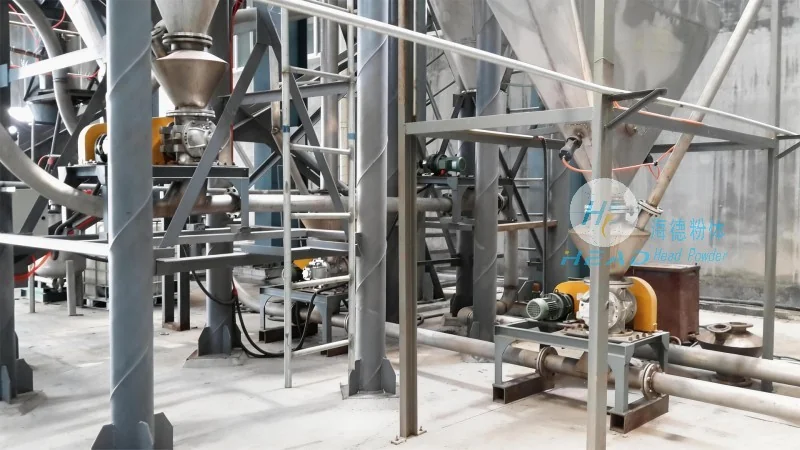
As the global MSG market grows at a compound annual growth rate (CAGR) of 4.2% (2026–2031), driven by rising demand in processed foods and plant-based proteins, pneumatic conveying technology must evolve accordingly. Key trends include increased adoption of IoT sensors for real-time particle size monitoring, integration with MES (Manufacturing Execution Systems) for full traceability, and the use of artificial intelligence to optimize air velocity in response to material variability. Sustainability is also a growing focus: variable frequency drives (VFDs) on blowers can reduce energy use by 25–30%, and heat recovery from compressed air can preheat drying equipment. headpowder is actively researching new materials for pipe liners, such as ultra-high molecular weight polyethylene (UHMWPE), to reduce friction even further. The company’s R&D team has also developed a modular conveying skid that reduces installation time by 40% for greenfield projects. These innovations ensure that pneumatic conveying remains the most efficient, safe, and economic method for handling monosodium glutamate well into the next decade.
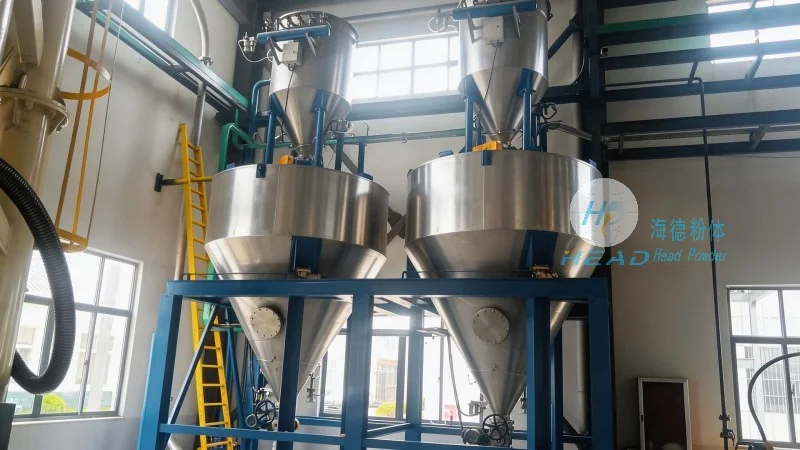
MSG is classified as a food additive under Codex Alimentarius (E621) and must meet stringent purity criteria. Pneumatic conveying systems must comply with FDA regulation 21 CFR 117 (HACCP) and EU Regulation (EC) No 1935/2004 regarding materials in contact with food. All system surfaces that contact MSG should be smooth, non-porous, and easily cleanable. headpowder uses electropolished stainless steel with a surface finish of 0.5 µm Ra or better, and all gaskets are made of FDA-compliant silicone or EPDM. The company provides a complete documentation package, including material certificates, weld maps, and 3.1 inspection certificates per EN 10204, to facilitate customer audits. In addition, headpowder’s systems can be integrated with automated swab testing ports to verify microbial cleanliness without opening the pipe.
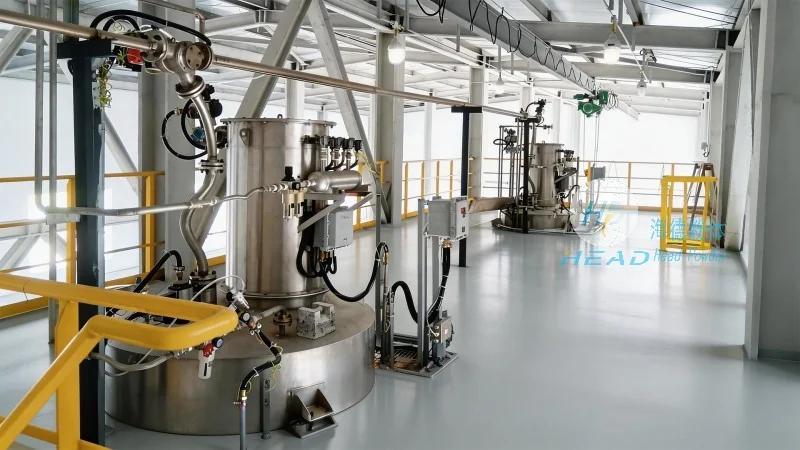
Monosodium glutamate conveying demands a thorough understanding of powder behavior, system dynamics, and regulatory requirements. A well-designed pneumatic system—especially one employing dense phase technology with robust control and safety features—can deliver substantial improvements in product quality, operational efficiency, and long-term cost savings. When evaluating suppliers, look for demonstrated experience in food-grade powder handling, a willingness to perform pilot tests with your specific MSG grade, and a transparent approach to system sizing and material selection. headpowder has been serving the global powder processing industry since 2005, with over 200 pneumatic conveying installations in the food sector alone. The company’s engineering team can provide a free feasibility analysis using your process parameters, including a computational simulation and a comparative cost model. For more detailed information on how to design, upgrade, or optimize your MSG pneumatic conveying line, contact headpowder directly (咨询热线:156-6277-7102). They offer turnkey solutions from concept through commissioning, backed by a 24-month warranty and global service network.

 Shandong headpowder Engineering Co., Ltd.
 156-6277-7102(Manager Zhang)
  0531-83386006
  Jinan City, Shandong Province, China
服务热线
微信咨询
回到顶部