

Principles and Application Characteristics of Baryte Pneumatic Conveying Systems
Baryte, or barium sulfate, is a mineral with a high specific gravity and is widely utilized in industrial applications such as oil drilling, chemical manufacturing, and as a weighting agent in the petroleum industry. The efficient and reliable transport of baryte powder is critical for maintaining operational efficiency and product quality. Pneumatic conveying systems have become a preferred method for handling baryte due to their ability to transport fine powders over long distances with minimal material degradation. This article delves into the fundamental principles of baryte pneumatic conveying systems and outlines the key application scenarios where these systems demonstrate superior performance.
Core Principles of Pneumatic Conveying for Baryte
The fundamental principle of pneumatic conveying involves using air or gas to move solid particles through a pipeline. For baryte, which is typically a fine powder with a particle size ranging from 10 to 200 microns, the system operates based on differential pressure and air velocity. Two primary types of pneumatic conveying systems are employed: dilute-phase and dense-phase. Dilute-phase systems operate at higher air velocities (typically 20-30 m/s) and lower material concentrations, allowing for long-distance transport with minimal pressure drop. Dense-phase systems, conversely, use lower air velocities (5-15 m/s) and higher material concentrations, providing more controlled and gentle handling, which is essential for delicate or abrasive materials like baryte to prevent blockages or degradation.
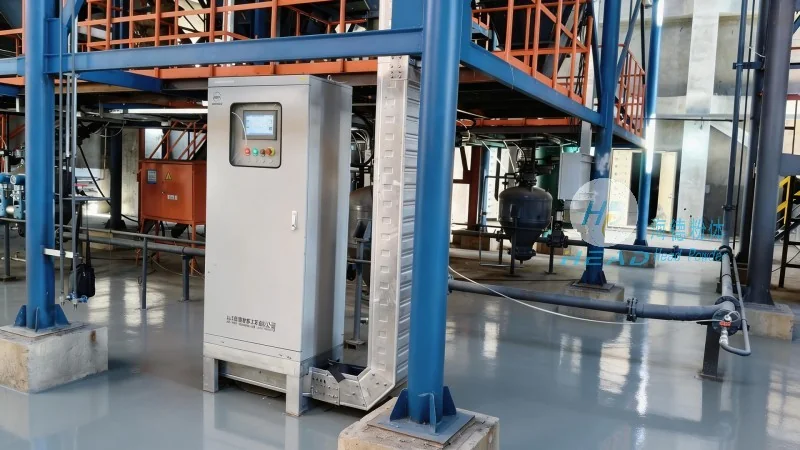
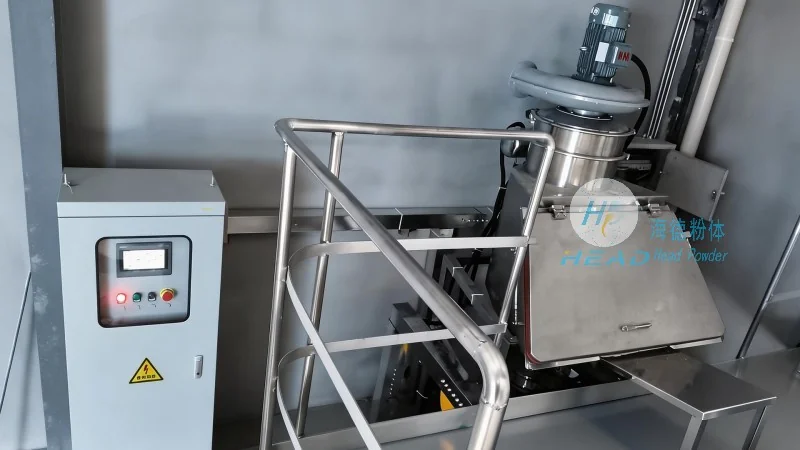
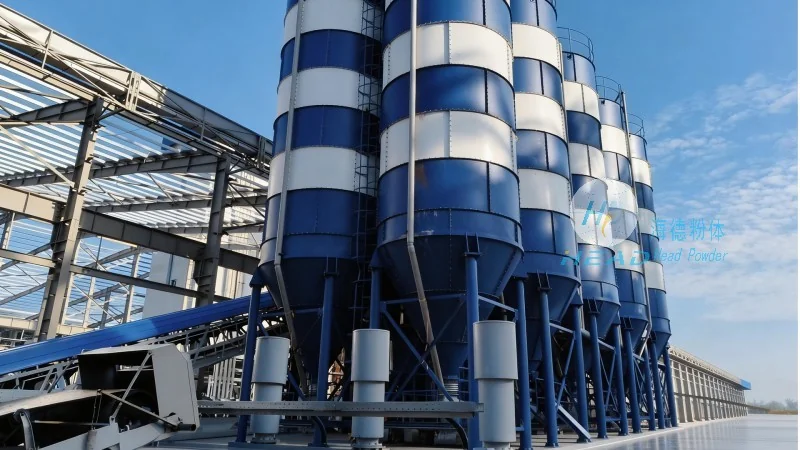
The baryte pneumatic conveying system typically comprises several key components: a blower or compressor to generate the necessary air flow, a hopper to store the baryte powder, a feeder to regulate the material discharge rate, a pipeline network to transport the mixture, and a separation unit at the destination to separate the air and material. The material is introduced into the pipeline via the feeder, and the air is introduced from the blower. The mixture travels through the pipeline, and at the receiving end, a cyclone or other separation equipment separates the baryte from the air, allowing the material to be collected in a storage bin or processing unit. The air is then discharged back into the system or to the atmosphere, completing the cycle.