

Classification and Composition of Water-Containing Powder Pneumatic Conveying Systems
Water-containing powder pneumatic conveying systems are advanced industrial solutions designed to efficiently transport bulk powders using a combination of water and air as the conveying medium. These systems are widely used in various industries such as food processing, pharmaceuticals, chemicals, and minerals, where the need for gentle, dust-free, and hygienic material handling is critical. The core principle involves suspending the powder particles in a water-atomized stream, which is then propelled through pipelines to the destination point. This method offers significant advantages over traditional pneumatic conveying, including reduced dust generation, improved material flow control, and enhanced safety in handling sensitive powders.
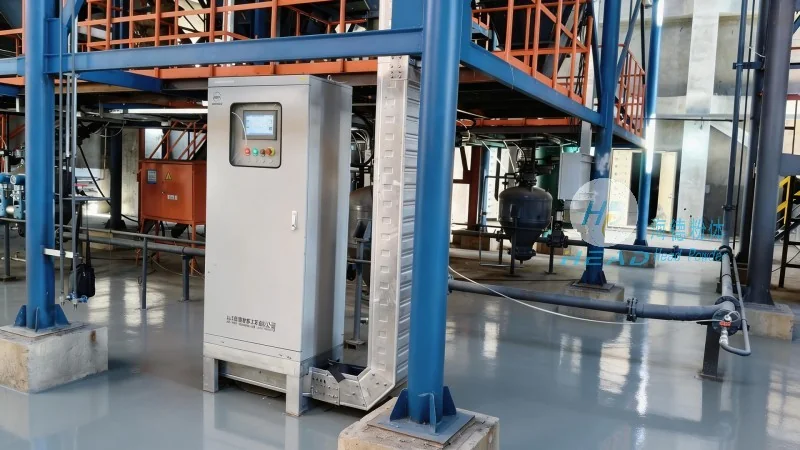
Classification of Water-Containing Powder Pneumatic Conveying Systems
Water-containing powder pneumatic conveying systems can be classified based on several key parameters, including the conveying method, system configuration, and application requirements. The primary classification is often based on the pressure used in the system, which can be categorized into low-pressure, medium-pressure, and high-pressure systems. Low-pressure systems typically operate at pressures below 0.5 bar and are suitable for short-distance conveying with low to medium flow rates. Medium-pressure systems, operating between 0.5 to 2 bar, are ideal for moderate distances and higher flow rates, making them suitable for many industrial applications. High-pressure systems, which operate above 2 bar, are used for long-distance or high-capacity conveying, often requiring specialized equipment to handle the higher pressures and flow rates.
Another classification approach is based on the type of conveying mechanism. There are two main categories: dense-phase and dilute-phase systems. Dense-phase systems involve conveying the powder in a high-concentration suspension, where the particles are closely packed and move in a plug flow. This method is particularly effective for handling abrasive or sensitive powders, as it minimizes particle impact and reduces wear on the system components. Dilute-phase systems, on the other hand, transport the powder in a low-concentration suspension, where the particles are dispersed in the air-water mixture. These systems are generally more suitable for shorter distances and lower flow rates, as the particles are more likely to settle out if the conveying distance is too long or the flow rate is too low.
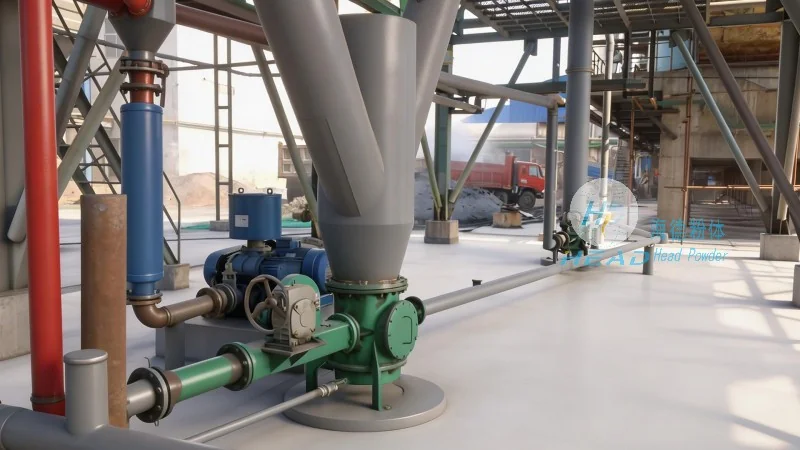
Key Components of Water-Containing Powder Pneumatic Conveying Systems
The water-containing powder pneumatic conveying system consists of several essential components that work together to ensure efficient and reliable operation. The main components include the material feed system, the water atomization unit, the air compressor or blower, the conveying pipeline, the control system, and the discharge equipment. Each component plays a crucial role in the overall performance of the system.
First, the material feed system is responsible for introducing the bulk powder into the conveying system. This can be achieved through various methods such as screw feeders, rotary valves, or pneumatic feeders, depending on the characteristics of the powder and the system requirements. The feed system must ensure a consistent and controlled flow of material to prevent blockages or uneven conveying.
Second, the water atomization unit is a critical component that generates a fine mist of water droplets. This unit typically consists of a water pump, a pressure regulator, and a nozzle or spray head. The water is atomized into small droplets, which then mix with the powder particles to form a stable suspension. The size and distribution of the water droplets are crucial for achieving optimal conveying performance, as they directly affect the suspension density and flow characteristics.
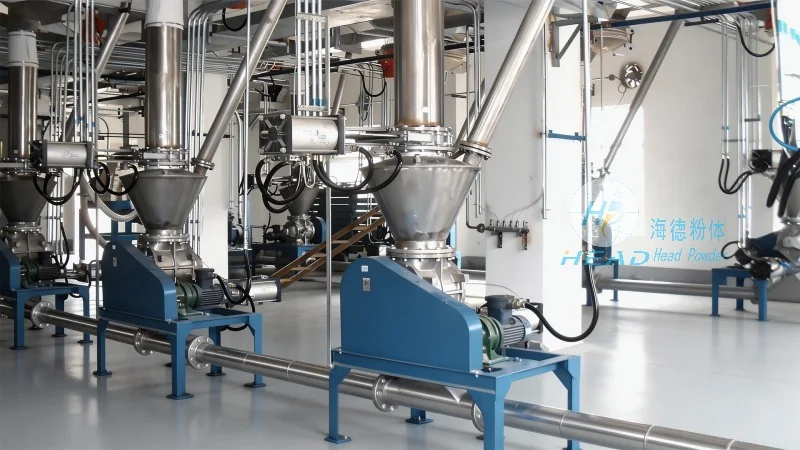
Third, the air compressor or blower provides the necessary air pressure to propel the water-powder suspension through the pipeline. The choice of compressor depends on the system pressure and flow rate requirements. Low-pressure systems may use centrifugal blowers, while medium and high-pressure systems often require positive displacement compressors such as rotary lobe or screw compressors. The compressor must be capable of maintaining the required pressure and flow rate to ensure smooth conveying.
Fourth, the conveying pipeline is the main channel through which the water-powder suspension travels from the feed point to the discharge point. The pipeline is typically made of materials such as stainless steel, polyethylene, or PVC, depending on the corrosiveness of the powder and the water. The pipeline design must consider factors such as pressure drop, flow velocity, and material compatibility to ensure efficient and reliable operation. Proper pipeline sizing and installation are essential to minimize pressure losses and prevent blockages.