News
Rich project cases across industries, showing real implementation and proven technical strength.In the wood processing industry, the efficient handling of by-products such as sawdust and wood shavings has become a critical operational challenge. As global woodworking production continues to expand, particularly with the projected 8.2% annual growth in engineered wood products through 2026, manufacturers are under increasing pressure to implement reliable, clean, and cost-effective conveying solutions. Pneumatic conveying systems have emerged as the dominant technology for transporting these fine, lightweight, and often abrasive materials. Unlike mechanical conveyors that rely on belts, chains, or screws, pneumatic systems use air pressure or vacuum to move particles through enclosed pipelines, offering unmatched flexibility in layout, reduced maintenance, and superior dust control. For facilities processing softwoods, hardwoods, or composite wood materials, selecting the right pneumatic conveying architecture directly impacts production uptime, energy consumption, and workplace safety. This article provides a comprehensive technical analysis of sawdust and wood shavings pneumatic conveying, covering system design principles, component selection, performance optimization, and real-world implementation strategies. Whether you are planning a new production line or retrofitting an existing facility, understanding the nuances of dilute-phase versus dense-phase conveying, material characteristics, and air velocity requirements will help you avoid costly mistakes and achieve long-term operational reliability.
Pneumatic conveying operates on the principle of entraining particulate solids in a moving gas stream, typically air, to transport them from a source point to a destination. For sawdust and wood shavings, the key material properties that influence system design include bulk density, particle size distribution, moisture content, and abrasiveness. Sawdust, with bulk densities ranging from 160 to 240 kg/m³ for dry material, and wood shavings, typically between 80 and 150 kg/m³, are both classified as free-flowing but can become problematic when moisture exceeds 15%. The particle shape of wood shavings—long, thin, and fibrous—necessitates careful attention to pipeline diameter and bend radii to prevent bridging and clogging. Two primary conveying modes exist: dilute-phase (suspension flow) and dense-phase (non-suspension flow). Dilute-phase systems, operating at air velocities between 18 and 30 m/s, are most common for wood by-products because they handle irregular particle shapes and varying moisture levels effectively. The material-to-air ratio, expressed as kg of solids per kg of air, typically falls between 4 and 8 for sawdust, and 2 to 5 for shavings. These ratios directly affect energy consumption; lower ratios require more air and higher power but provide greater conveying reliability.
Selecting the appropriate air mover is equally critical. Positive displacement blowers, centrifugal fans, and rotary lobe compressors each have distinct application niches. For most wood processing plants, positive displacement blowers offer the best balance of pressure capability and energy efficiency, delivering consistent airflow across pressure variations. Vacuum systems, which draw material from multiple pick-up points, are ideal for central dust collection integrated with conveying. Pressure systems, conversely, are suited for distributing material to multiple discharge points. Industry data from 2025 indicates that properly designed pneumatic systems for sawdust and shavings achieve conveying distances of up to 500 meters horizontally and 50 meters vertically, with throughput rates ranging from 2 to 50 tons per hour depending on pipe diameter. The 2026 market trend toward larger industrial wood pellet plants, expected to require throughputs exceeding 30 t/h, is driving demand for advanced dense-phase conveying solutions that reduce air consumption by up to 40% compared to conventional dilute-phase designs. When evaluating system providers, it is essential to verify their experience with wood by-product-specific challenges such as material degradation, explosion risk, and pipeline wear. Headpowder, with over a decade of specialized engineering in pneumatic conveying for biomass and wood processing, applies proprietary computational fluid dynamics modeling to optimize particle trajectories and minimize erosive wear at pipe bends.
A complete pneumatic conveying system for sawdust and wood shavings comprises several integrated components, each requiring careful specification to ensure overall performance. The feeding device, typically a rotary airlock or screw feeder, must maintain a steady, controlled material inflow while preventing air leakage. For wood shavings, which tend to string and mat, drop-through rotary valves with oversized rotor pockets and hardened tips are recommended to avoid shearing and blocking. The conveying pipeline itself is commonly constructed from carbon steel with a wall thickness of 3 to 6 mm, though stainless steel is preferred when conveying material with moisture content above 12% to mitigate corrosion. Pipeline bends are the highest-wear points; long-radius bends (5 to 10 times pipe diameter) reduce impact velocity and prolong service life, while mitered bends should be avoided entirely. In 2026, advanced wear-resistant liners made from ceramic or tungsten carbide are gaining adoption in high-throughput systems, extending bend life by three to five times.
Separation at the destination is accomplished using cyclones, fabric filters, or a combination of both. Cyclone separators effectively remove coarse particles (down to 10 microns) but allow smaller fines to pass, making them suitable for pre-separation before final filtration. Fabric filter baghouses with pulse-jet cleaning achieve collection efficiencies above 99.9% for sub-micron particles, which is critical for compliance with increasingly stringent air quality regulations such as the EPA's 2026 updates to NESHAP standards for wood products. The conveying control system must monitor line pressure, material flow rate, and air velocity in real time. Variable frequency drives on blower motors allow dynamic adjustment of conveying speed based on material load, reducing energy waste during partial-load operation. A well-designed control system automatically adjusts air velocity to prevent plugging when moisture content spikes, for example, after a rain event affecting outdoor storage piles. Data from headpowder's field installations shows that intelligent control reduces system downtime by an average of 22% and energy consumption by 18% compared to fixed-speed systems. For facilities processing mixed wood species, material characterization through a laboratory test loop is recommended before final system design, as the conveying behavior of oak shavings differs significantly from that of pine sawdust in terms of saltation velocity and pressure drop.
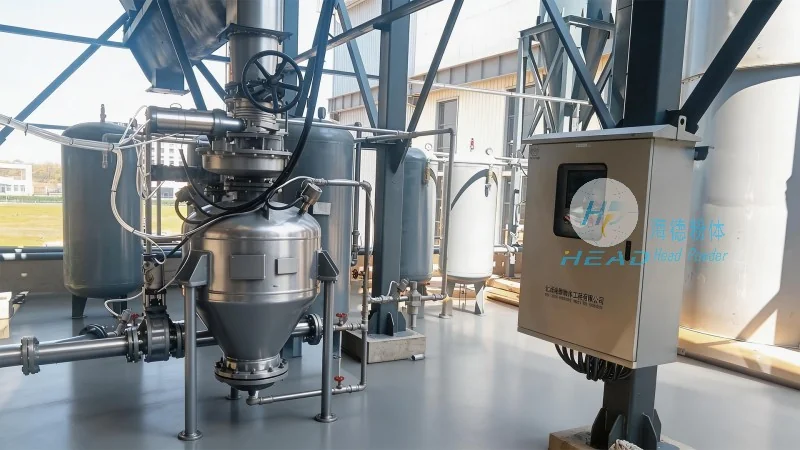
Successful pneumatic conveying of sawdust and wood shavings hinges on accurate calculation of several interdependent design parameters. The saltation velocity—the minimum air speed at which particles remain suspended—must be determined for the specific material blend. For dry sawdust with a mean particle size of 1 mm, saltation velocity typically ranges from 15 to 18 m/s, while wood shavings with lengths up to 25 mm require 20 to 25 m/s. Operating below this threshold leads to settling and eventual plugging; operating excessively above it causes unnecessary abrasion and energy loss. The system pressure drop, which dictates blower power requirements, comprises acceleration losses at the feed point, friction losses in straight pipe sections, and dynamic losses at bends, diversions, and separators. For a typical 100-meter conveying line handling 10 t/h of sawdust, the total pressure drop ranges from 30 to 50 kPa, depending on the number of bends and the pipeline diameter. Every additional 90-degree bend adds approximately 2 to 4 kPa of pressure drop, so layout optimization is a critical engineering step.
Air-to-material ratio optimization offers one of the highest returns on investment. For sawdust, reducing the ratio from 6 to 4 can lower specific energy consumption from 12 kWh/t to 8 kWh/t, a 33% reduction. However, this must be balanced against the risk of line blockage. Advanced systems incorporate pressure sensors at strategic intervals to detect early signs of material accumulation and trigger automatic purging cycles. Another optimization strategy involves the use of bypass air injection at critical points, such as after long vertical rises or at tee junctions, to re-energize the flow and prevent stratification. In 2026, the integration of machine learning algorithms for real-time flow prediction is emerging as a cutting-edge approach, enabling predictive maintenance and adaptive control. Headpowder has successfully deployed such systems in Scandinavian sawmills, where seasonal variations in wood moisture content require constant parameter adjustment. One case study documented a 14% increase in conveying capacity and a 27% reduction in unscheduled maintenance events over a 12-month period. For facilities aiming to achieve carbon neutrality by 2030, the energy savings from optimized pneumatic conveying directly contribute to Scope 2 emission reduction targets, making these investments both economically and environmentally sound.
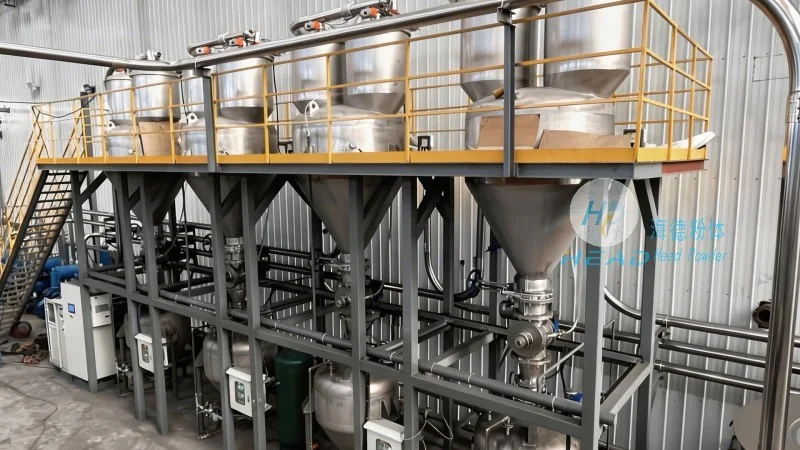
The versatility of pneumatic conveying makes it suitable for diverse applications within the wood products industry. In sawmills, the system transports sawdust from band saws, resaws, and edgers to a central storage silo or directly to a pellet mill. A typical layout uses multiple pick-up hoods located beneath each machine, connected to a main conveying line via automated diverters. For panel board plants (particleboard, MDF), wood shavings are conveyed from planers and sanders to the blending and forming station. Here, system design must account for the continuous addition of resin and wax, which can increase material tackiness and require special anti-clogging features. In biomass power plants, pneumatic systems deliver sawdust and shavings directly to boiler feed systems, where constant flow rate is essential for combustion stability. The 2026 global biomass power market is projected to grow to 85 GW, driving demand for high-capacity conveying solutions capable of handling up to 50 t/h over distances exceeding 300 meters.
Another specialized application is in the production of wood pellets, where the conveying system must handle not only raw sawdust but also recycled fines from pellet screening. The presence of moisture (12-15% typical) and the fine particle size create a risk of material agglomeration in the conveying line. Headpowder's design approach for pellet plants incorporates proprietary anti-caking air injection nozzles at 10-meter intervals along the pipeline, paired with a specially designed rotary airlock that maintains a consistent seal even with sticky material. A recent installation in a mid-sized German pellet mill demonstrated the ability to convey 15 t/h of moist sawdust over 180 meters with zero blockage incidents over six months of operation. For smaller custom woodworking shops, compact pneumatic systems with integrated cyclones and bag filters offer an affordable solution that meets OSHA dust explosion prevention requirements. The NFPA 664 standard, which specifically addresses wood processing facilities, mandates deflagration venting and spark detection for conveying systems handling combustible dust. Adhering to these standards is non-negotiable; headpowder provides full compliance support, including ATEX-certified components for European installations and FM-approved designs for North American clients.
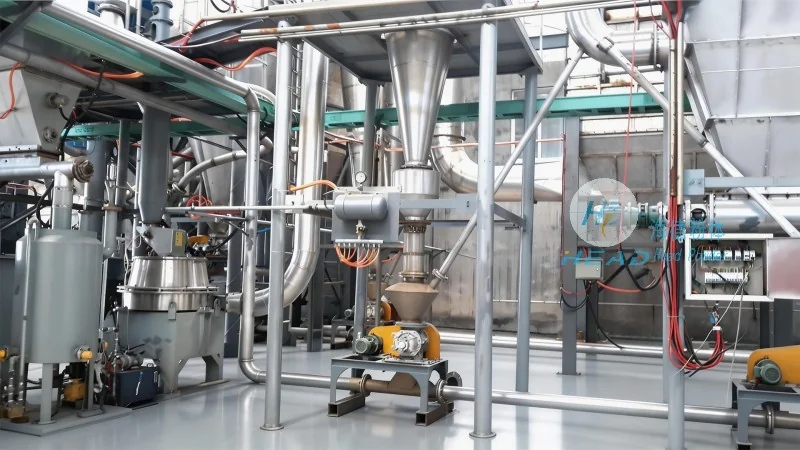
Proactive maintenance is essential for preserving the efficiency and safety of sawdust and wood shavings pneumatic conveying systems. The most common failure modes include blower overheating due to inlet filter clogging, rotary airlock blade wear, and pipeline erosion at bends. Implementing a structured inspection schedule—weekly checks on filter differential pressure, monthly inspection of rotary valve clearances, and quarterly ultrasonic thickness measurements at bends—can extend system life by 30% or more. Dust explosion prevention requires constant vigilance: static electricity buildup must be addressed through proper grounding and bonding of all metallic components, and spark detection systems should be interlocked to automatically shut down conveying if a spark is detected. The 2026 revision of EN 1127-1 on explosion prevention further tightens requirements for ignition source control, making it mandatory to use conductive materials for all components in contact with the conveyed material.
Looking ahead, three major trends are shaping the future of pneumatic conveying for wood by-products. First, digital twin technology allows operators to simulate system behavior under varying material conditions before making physical changes, reducing commissioning time and risk. Second, electrification of blower drives using high-efficiency permanent magnet motors, combined with advanced VFDs, is expected to achieve overall system efficiencies exceeding 85% by 2027. Third, the growing emphasis on circular economy principles is driving demand for conveying systems that can handle not only virgin wood by-products but also recycled wood waste from construction debris. This presents new challenges in particle size variation and contamination management. For companies evaluating system upgrades or new installations, partnering with an experienced engineering provider like headpowder ensures access to the latest technologies, from CFD-based design optimization to remote monitoring platforms. With a proven track record in over 200 installations worldwide, the team delivers solutions tailored to specific material properties and operational constraints, backed by comprehensive after-sales support. (咨询热线:156-6277-7102) Whether your priority is maximum throughput, minimal energy use, or absolute safety compliance, a properly engineered pneumatic conveying system will form the backbone of your wood processing operations for decades to come.

 Shandong headpowder Engineering Co., Ltd.
 156-6277-7102(Manager Zhang)
  0531-83386006
  Jinan City, Shandong Province, China
服务热线
微信咨询
回到顶部