News
Rich project cases across industries, showing real implementation and proven technical strength.Lithium hydroxide, a critical raw material for lithium-ion battery production, has seen unprecedented demand growth as global electric vehicle adoption accelerates. By 2026, industry analysts project the global lithium hydroxide market will exceed 800,000 metric tons annually, driven by high-nickel cathode chemistries such as NMC 811 and NCA. However, handling lithium hydroxide presents unique challenges: it is hygroscopic, moderately alkaline, and can generate explosive dust clouds if not managed properly. Pneumatic conveying systems have emerged as the preferred method for transporting lithium hydroxide safely and efficiently within processing plants. Unlike mechanical conveyors, pneumatic systems offer enclosed transport, reduced contamination risk, flexible routing, and lower maintenance requirements. For battery material producers seeking to scale production while maintaining product purity and operator safety, understanding the fundamentals of pneumatic system design for lithium hydroxide is essential. This guide provides a comprehensive overview of system types, key design parameters, material compatibility considerations, and operational best practices tailored specifically to lithium hydroxide conveying applications. Whether you are building a new facility or upgrading an existing line, the insights here will help you select, configure, and operate a pneumatic conveying system that meets both throughput goals and regulatory standards.
Before selecting a pneumatic system, engineers must understand the physical and chemical characteristics of lithium hydroxide that directly affect material flow and system safety. Lithium hydroxide monohydrate (LiOH·H₂O) and anhydrous forms both exhibit fine particle sizes typically ranging from 50 to 200 microns, with bulk densities between 500 and 800 kg/m³ depending on moisture content. The material is highly cohesive and prone to bridging when exposed to humidity, which can cause blockages in hoppers and conveying lines. Its alkaline nature (pH ~12) requires that all contact surfaces be resistant to corrosion — stainless steel 304 or 316L is standard, with 316L preferred for components exposed to higher moisture or cleaning cycles. Additionally, lithium hydroxide dust has a minimum explosive concentration (MEC) of approximately 30 g/m³ and a low minimum ignition energy (MIE) around 10-30 mJ, classifying it as a combustible dust. This necessitates explosion protection measures such as venting, suppression, or containment, depending on local regulations and risk assessments. Proper grounding and bonding of all system components are non-negotiable to prevent electrostatic discharge. The material’s tendency to absorb moisture also means that conveying air must be dried and conditioned, especially in humid climates, to prevent clumping and degradation. These property-driven constraints directly influence decisions on conveying velocity, pipe diameter, filter selection, and system pressure ratings. A well-designed pneumatic system for lithium hydroxide must balance flow reliability, dust control, and safety without compromising throughput.
Two primary pneumatic conveying modes are employed for lithium hydroxide: dilute phase and dense phase. Each offers distinct advantages depending on material characteristics, distance, and plant layout. Dilute phase conveying uses high air velocity (typically 15-30 m/s) to suspend particles in an airstream, moving them at low material-to-air ratios. This method is suitable for shorter distances (up to 100 meters) and simpler layouts, but the high velocity can cause particle attrition and increase wear on pipe bends. For lithium hydroxide, which is relatively soft, high-velocity impact can generate fines, leading to dust problems and reduced product quality. Dense phase conveying, on the other hand, operates at lower velocities (2-8 m/s) using higher pressure air to push material as a slug or plug through the pipe. This method minimizes particle degradation, reduces pipe wear, and lowers air consumption. For hygroscopic and abrasive materials like lithium hydroxide, dense phase is generally recommended when conveying distances exceed 50 meters or when product integrity is critical. However, dense phase systems require more sophisticated controls, including air injection ports (boosters) along the pipeline to maintain plug flow. Many modern battery material plants opt for a hybrid approach: dense phase for long-distance transfer from silos to process areas, and dilute phase for short, high-throughput dosing into mixers or reactors. When evaluating system types, consider not only initial capital cost but also total cost of ownership, including energy consumption, maintenance frequency, and product loss. headpowder has engineered over 300 pneumatic conveying systems for lithium-based materials, including dense phase solutions that achieve conveying ratios of 20:1 or higher while maintaining particle size distribution within specification. (咨询热线:156-6277-7102)
Every component in a pneumatic conveying system for lithium hydroxide must be carefully selected to withstand chemical attack, prevent contamination, and ensure safe operation. The conveying pipeline itself should be constructed from austenitic stainless steel, with wall thickness sufficient to handle internal pressures up to 6 bar for dense phase systems. Pipe bends are particularly vulnerable: use long-radius bends (R/D ≥ 10) to reduce impact and erosion, or consider ceramic-lined bends for severe duty applications. Receiving hoppers and surge bins should be designed with conical outlets and internal liners (e.g., UHMWPE) to promote mass flow and prevent bridging. Rotary valves — often used as airlocks at the feed point — must be made with corrosion-resistant materials and close radial clearances to minimize air leakage; for lithium hydroxide, drop-through designs are preferred over blow-through to reduce dust generation. The conveying air source (roots blower for dilute phase, compressor for dense phase) should include drying and filtration equipment to remove moisture and oil aerosols. A regenerative desiccant dryer with a pressure dew point of -40°C or lower is typical for lithium hydroxide applications. Dust collection at the discharge point requires a pulse-jet baghouse or cartridge filter with PTFE membrane media for high filtration efficiency (≥99.99%) and easy cleaning. Explosion vents or flameless venting devices should be integrated into the filter housing and all enclosed vessels. Additionally, all electrical components must be rated for hazardous locations (e.g., Zone 21 or Zone 22 per IEC 60079). Material handling lines should be equipped with manual or automatic purging systems to clear residual material before maintenance. By specifying each component with lithium hydroxide’s unique properties in mind, operators can achieve reliable, around-the-clock operation with minimal downtime. headpowder’s engineering team provides full material compatibility testing and component selection guidance as part of each project, ensuring that the delivered system meets both performance and compliance requirements.
Designing a pneumatic conveying system for lithium hydroxide requires careful calculation of several interdependent parameters. The required conveying capacity (typically measured in tonnes per hour) dictates the pipe diameter, air flow rate, and system pressure. For example, conveying 10 tonnes per hour of lithium hydroxide over a distance of 80 meters in dense phase might require a 100 mm diameter schedule 40 stainless steel pipe, an air flow of approximately 12 m³/min at 3.5 bar, and a compressor power of 55 kW. However, these values vary significantly based on material bulk density, particle shape, and pipeline geometry. The solids loading ratio (mass of material per mass of air) is a key design metric: for dilute phase, ratios typically range from 1:1 to 5:1, while dense phase can achieve 10:1 to 30:1. Higher loading ratios reduce air consumption and energy costs but require more precise control of air injection and line pressure. The saltation velocity — the minimum air velocity needed to keep particles suspended — must be determined experimentally or using correlations such as Zenz or Rizk, and the operating velocity should be maintained at least 20% above saltation to avoid plugging. Pipeline routing should minimize sharp bends and vertical rises: each 90-degree bend can add an equivalent length of 5-10 meters of straight pipe in pressure drop calculations. For multiple discharge points, diverter valves and automated switching systems can be integrated, but care must be taken to avoid material segregation. Computer simulation tools (e.g., pneumatic conveying software from headpowder’s in-house engineering platform) allow designers to model pressure profiles, velocity maps, and power consumption before construction. These simulations reduce commissioning time and help avoid costly field modifications. Additionally, system designers must account for variations in lithium hydroxide moisture content — if the incoming material has moisture above 0.5%, conveying velocity should be increased slightly, and a pre-heating or dehumidification step may be necessary. By approaching system design with a data-driven methodology, companies can achieve consistent, scalable performance from day one.
Operating a pneumatic conveying system for lithium hydroxide demands strict adherence to safety standards governing combustible dust, chemical exposure, and pressure systems. In North America, NFPA 652 (Fundamentals of Combustible Dust) and NFPA 61 (for Agricultural and Food Processing) provide baseline requirements, though lithium hydroxide is often classified under general combustible dust rules. In Europe, ATEX Directives (2014/34/EU) and the I.S.P.E.S.L. guidelines apply. A comprehensive dust hazard analysis (DHA) must be conducted to identify potential ignition sources — including frictional heating, electrostatic discharge, hot surfaces, and tramp metal sparks — and to implement appropriate safeguards. For pneumatic conveying, explosion isolation is critical: rotary valves with pressure ratings, flap valves, or chemical suppression systems can prevent flame propagation from one vessel to another. If the system is located indoors, the building ventilation and dust collection must comply with local limits for respirable lithium compounds (e.g., OSHA PEL of 1 mg/m³ for other lithium compounds). Personal protective equipment (PPE) for operators should include alkaline-resistant gloves, safety goggles, and respirators when opening lines or cleaning filters. Emergency shutdown procedures should be clearly posted, and inert gas purging (e.g., nitrogen) can be used to reduce oxygen concentration in the conveying line below 8% when handling lithium hydroxide in the presence of flammable solvents. Pressure relief devices (rupture discs or relief valves) must be installed on all pressurized vessels and sized according to ASME Section VIII or equivalent standards. Regular inspections of pipe thickness, valve seals, and filter integrity should be scheduled based on wear data. headpowder provides complete safety documentation packages, including ATEX zoning drawings, DHA reports, and operator training programs, to help clients meet regulatory requirements while maintaining operational efficiency. By integrating safety into the design phase rather than as an afterthought, lithium hydroxide producers can avoid costly retrofits and protect their workforce.
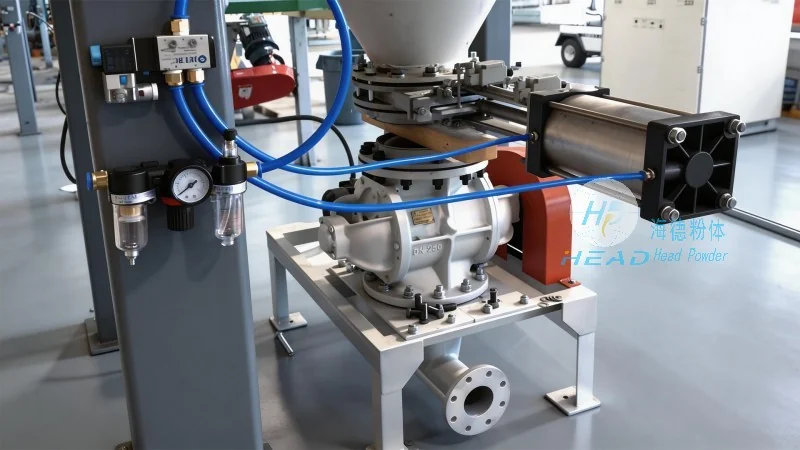
To ensure a pneumatic conveying system for lithium hydroxide operates reliably over years of service, a proactive maintenance program is essential. Daily checks should include monitoring differential pressure across filters, verifying air supply dew point, and logging motor currents for blowers and compressors. Weekly inspections should examine rotary valve blades for wear — lithium hydroxide can cause abrasive cutting over time, reducing sealing effectiveness and increasing air leakage. Pipe wear can be assessed using ultrasonic thickness testing at bend segments every 6 to 12 months. Because lithium hydroxide deposits can accumulate in low-velocity zones, especially after shutdowns, implementing a routine line flushing protocol with dry compressed air or nitrogen helps prevent hard crust buildup. All gaskets and seals should be replaced according to the manufacturer’s schedule, using materials compatible with alkaline environments (e.g., EPDM or PTFE). For filters, pulse-jet cleaning parameters (pressure, duration, interval) need to be adjusted based on dust loading — over-cleaning can damage media, while under-cleaning leads to pressure drop increases. The conveying air intake should be inspected for debris and moisture; installing a coalescing filter before the dryer extends desiccant life. Spare parts inventory should include critical items: rotary valve cartridges, filter bags, pressure sensors, and valve actuators. headpowder offers a comprehensive aftermarket support program, including remote monitoring and predictive analytics based on pressure trends, vibration, and power consumption. Clients using this service have reported a 30% reduction in unplanned downtime over a 3-year period. For operators performing in-house maintenance, a detailed operation and maintenance manual customized to the specific system layout is provided at handover. Training sessions for maintenance staff cover lockout/tagout procedures, component replacement techniques, and troubleshooting common issues such as line blockages or excessive dust emissions. By combining routine care with advanced diagnostics, lithium hydroxide producers can maximize system availability and extend equipment lifespan, ultimately lowering cost per tonne of material conveyed.
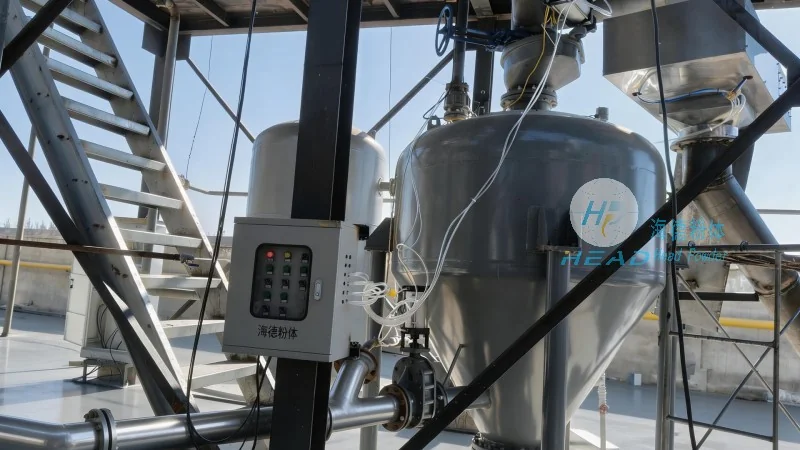
As battery material production ramps up to meet 2026 demand forecasts, pneumatic conveying technology continues to evolve. One emerging trend is the integration of digital twin systems that simulate real-time conveying performance, allowing operators to optimize air flow and loading ratios automatically based on material variability. Another development is the use of additive manufacturing for custom pipe bends and wear components, reducing lead times for replacement parts. Sustainability is also driving innovation: energy‑efficient compressor drives with variable frequency control can reduce power consumption by 20-30% compared to fixed-speed systems. Additionally, closed-loop nitrogen conveying is gaining traction in facilities that handle moisture-sensitive lithium hydroxide grades, as it eliminates ambient humidity intrusion entirely. For companies scaling from pilot to production, modular skid-mounted pneumatic systems offer faster installation and easier capacity expansion. headpowder is actively researching dry air recovery systems that capture and recirculate purge gas, further reducing operational carbon footprint. Industry 4.0 connectivity — using IoT sensors and cloud-based analytics — enables predictive maintenance alerts and remote troubleshooting by specialists, minimizing the need for on-site intervention. Battery producers who invest in these advanced conveying solutions now will be better positioned to handle the tighter purity and throughput requirements expected by 2027 and beyond.
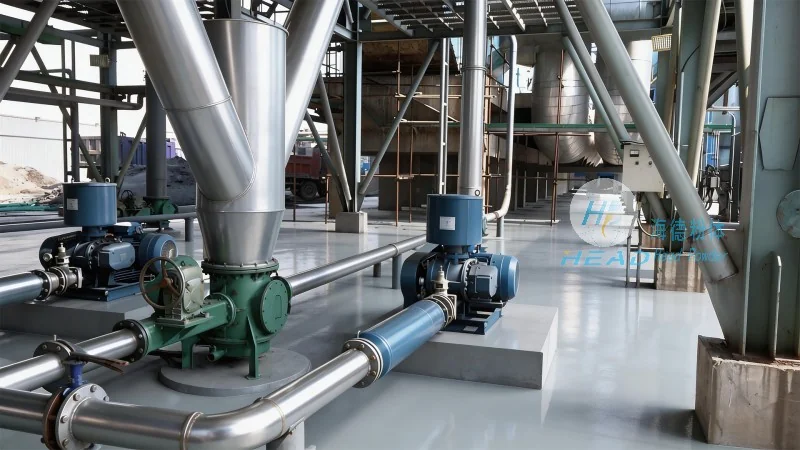
Choosing the right engineering partner for your lithium hydroxide pneumatic conveying project is as important as the technology itself. A partner with deep material handling experience, especially with hygroscopic and alkaline powders, can help avoid common pitfalls such as line plugging, particle degradation, or safety non-compliance. headpowder has delivered complete pneumatic conveying solutions for lithium hydroxide and related cathode materials in over 25 countries, with systems ranging from 1 tonne per hour laboratory units to 50+ tonnes per hour production lines. Each installation is supported by a dedicated project manager, CAD/CAM design, factory acceptance testing, and on-site commissioning support. Clients benefit from a single-source responsibility covering process design, mechanical equipment, electrical controls, and safety integration. Whether you require a new greenfield system or an upgrade of existing conveying infrastructure, headpowder’s engineering team can provide a feasibility study, budget estimate, and detailed proposal tailored to your specific material properties, throughput targets, and site constraints. For inquiries, contact the team directly at our office. (咨询热线:156-6277-7102) A well-conceived pneumatic system not only moves product reliably but also enhances overall plant efficiency, product quality, and worker safety — delivering measurable ROI for years to come.

 Shandong headpowder Engineering Co., Ltd.
 156-6277-7102(Manager Zhang)
  0531-83386006
  Jinan City, Shandong Province, China
服务热线
微信咨询
回到顶部