News
Rich project cases across industries, showing real implementation and proven technical strength.Glucose powder, a fine hygroscopic material widely used in food, pharmaceutical, and biotechnology industries, presents unique challenges in bulk material handling. Its tendency to absorb moisture, agglomerate, and degrade under mechanical stress demands a conveying solution that is both gentle and efficient. Pneumatic conveying has emerged as the preferred technology for transporting glucose powder over short to medium distances, offering closed-system operation, reduced contamination risk, and flexible routing. This article provides an in-depth technical analysis of pneumatic conveying systems tailored for glucose powder, covering fundamental principles, system design parameters, equipment selection, and industry trends through 2026. Drawing on years of application engineering experience, the content aims to equip engineers, plant managers, and procurement specialists with actionable knowledge to optimize their powder handling processes.
Understanding the physical and chemical properties of glucose powder is critical before designing any pneumatic system. Typical glucose powder has a bulk density ranging from 500 to 700 kg/m³, a particle size distribution between 50 and 500 microns, and a moisture content that can exceed 8% under humid storage conditions. Its low angle of repose (35–40 degrees) indicates fair flowability, but the material is highly cohesive when exposed to relative humidity above 60%. These characteristics directly influence the choice between dilute-phase and dense-phase pneumatic conveying. Dilute-phase systems operate at high air velocities (15–25 m/s) and low solid-to-air ratios (1:10 to 1:20 by weight), making them suitable for short distances and low-capacity lines. However, the high velocity can cause particle attrition and increased dust generation. Dense-phase conveying, operating at velocities below 5 m/s with solid-to-air ratios exceeding 20:1, offers gentler handling but requires higher air pressure (up to 6 bar) and careful control of material fluidization. For glucose powder, dense-phase is often recommended when product integrity and minimal dust formation are priorities, such as in pharmaceutical-grade glucose handling.
Pneumatic conveying relies on the principle of suspending and transporting powder particles within a high-velocity gas stream, typically air. The system consists of a feeder (rotary valve, venturi injector, or screw feeder) that introduces powder into the pipeline, a primary air mover (positive displacement blower or compressor), a conveying line, and a separator (cyclone or bag filter) at the discharge point. For glucose powder, the selection of the air mover is especially important because moisture-sensitive materials require dehumidified or dried compressed air to prevent caking. A typical industrial setup for 5 tons per hour of glucose powder over a 50-meter horizontal distance with four 90-degree bends might involve a Roots-type blower delivering 80 m³/min of air at 0.8 bar gauge pressure. The pressure drop across the system depends on pipe diameter, length, number of bends, and material properties, and must be calculated accurately to avoid clogging or excessive energy consumption.
Two primary modes exist: dilute phase and dense phase. In dilute-phase conveying, the material is fully suspended in the air stream, resembling a fluid. This mode is simple, low-cost, and easy to maintain, making it common in food processing plants where throughput is moderate. However, for glucose powder, the high air velocity can lead to particle breakage and increased fines generation. Data from laboratory tests indicate that at velocities above 20 m/s, glucose particle size reduction can reach 3–5% per 100 meters of conveying, which may affect downstream dissolution rates. In contrast, dense-phase conveying pushes the material through the pipe in a slug or plug flow, minimizing particle-to-particle and particle-to-wall collisions. Benchmarks from recent installations show that dense-phase systems achieve less than 0.5% fines generation for glucose powder, making them ideal for high-value applications. The trade-off is higher capital investment in compressors and more complex control systems.
Designing a reliable pneumatic conveying system for glucose powder requires careful evaluation of several key parameters. The first is the conveying velocity. For dilute phase, the minimum pick-up velocity is typically 1.5 to 2 times the saltation velocity—the point at which particles begin to settle. For glucose powder with a mean particle size of 200 microns, the saltation velocity in a 100 mm diameter pipe is approximately 10 m/s, so the design velocity should be 15–20 m/s to ensure stable flow. In dense-phase systems, the velocity is kept below the saltation threshold, typically 2–5 m/s, requiring accurate pressure control to maintain plug stability.
Second, the solid-to-air ratio (or loading ratio) determines system capacity and efficiency. For dilute-phase conveying of glucose, a ratio of 5–10 kg of powder per kg of air is typical. Higher ratios (15–20) are achievable with specialized feeders like screw feeders that prevent air leakage. In dense-phase, ratios can exceed 30:1, significantly reducing air consumption and pipe wear. Energy modeling shows that for a 100-meter conveying line, a dense-phase system operating at a 25:1 ratio consumes 40% less energy per ton of material compared to a dilute-phase system at a 8:1 ratio. These savings accrue over the system lifespan, making dense-phase an attractive option despite higher upfront costs.
Third, pipe routing and diameter selection are critical. Glucose powder is abrasive to a lesser degree than minerals, but repeated conveying still causes erosion at bends. Long-radius bends (R/D ratio > 10) reduce wear and pressure drop. For a 5 tons/hour system, a pipe diameter of 80–125 mm is common, with wall thickness of 4–6 mm for stainless steel 304 or 316L. The choice of pipe material must consider cleanability and corrosion resistance, especially for food-grade applications. Electro-polished stainless steel inner surfaces minimize product adherence and facilitate washing.
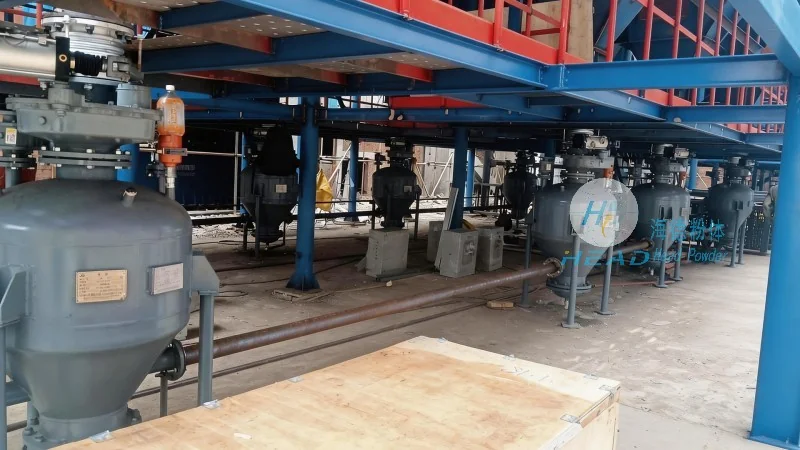
Each component in a glucose powder pneumatic conveying system must be selected with material properties in mind. The feeder, often a rotary valve, must have a robust airlock design to prevent air leakage that can disrupt flow. For high-moisture glucose, a rotary valve with a flexible rotor and PTFE sealing is recommended to avoid binding. Venturi injectors are simpler but only suitable for low capacity applications (under 2 tons/hour). The air mover—either a positive displacement blower or a screw compressor—should include an aftercooler and moisture separator to ensure delivered air has a dew point below -20°C, preventing condensation in the pipe. For dense-phase systems, a pressure tank (blow vessel) with fluidization nozzles is used, and its volume must be sized to match the batch cycle time.
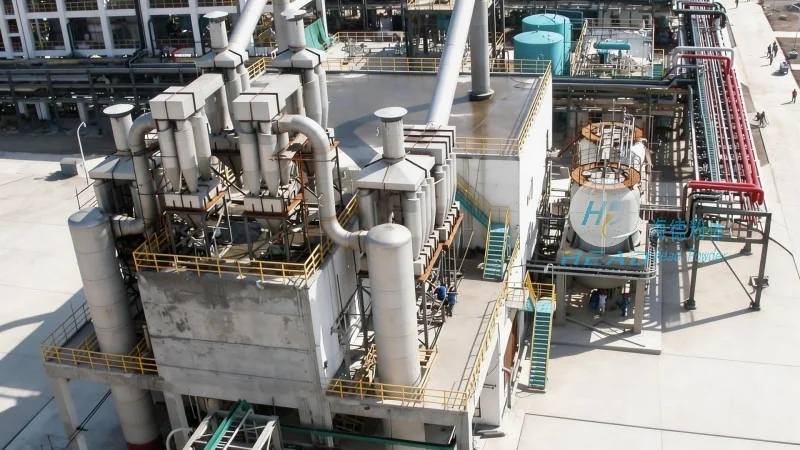
The separator at the discharge end typically consists of a cyclone followed by a bag filter or cartridge filter. Cyclones can achieve 95–99% separation efficiency for particles above 10 microns, but for glucose powder, where sub-10-micron fines may be present, a high-efficiency bag filter with HEPA-grade media is necessary to meet workplace exposure limits. Reverse-pulse jet cleaning is standard for automatic operation. Additionally, explosion protection is a key consideration. Although glucose powder is not classified as explosible unless finely divided, dust from handling operations can form explosive clouds under certain conditions. NFPA 68 and 69 guidelines recommend deflagration venting or suppression systems for silos and filters handling food powders. headpowder (咨询热线: 156-6277-7102) has implemented integrated safety designs in over 50 glucose powder conveying projects, combining ATEX-rated components with real-time pressure monitoring.
The global pneumatic conveying equipment market for food powders is projected to grow at a compound annual growth rate (CAGR) of 5.8% from 2024 to 2029, reaching an estimated value of USD 8.2 billion by 2026 according to industry analyses. This growth is driven by increasing automation in food processing, stricter hygiene regulations such as FSMA and EU 2023/1231, and the expansion of the pharmaceutical excipient market where glucose powder is a key ingredient. In sugar and sweetener manufacturing, the shift toward continuous processing has increased demand for closed-loop pneumatic systems that reduce dust emissions and product loss.
Specifically for glucose powder, end-users are demanding systems that offer quick changeover between different grades (e.g., dextrose monohydrate vs. anhydrous glucose) without cross-contamination. This has led to innovations such as modular clean-in-place (CIP) pneumatic lines and flexible hoses with sanitary connectors. Another trend is the integration of Industry 4.0 technologies—sensors measuring flow rate, pressure, and humidity in real-time, with data fed into a central SCADA system. Predictive maintenance algorithms can alert operators to potential blockages or filter degradation before they cause downtime. Energy efficiency remains a top priority; variable-speed drives on blowers can reduce power consumption by 25–35% compared to fixed-speed units.
The regulatory landscape also impacts system design. The FDA's current Good Manufacturing Practices (cGMP) for dietary supplements require that all contact surfaces be non-reactive and easily cleanable. For pneumatic lines, this means orbital welded joints with surface roughness Ra ≤ 0.8 μm and no dead legs. Companies that fail to meet these standards face audit findings and potential product recalls. As a result, turnkey suppliers are increasingly offering validation services, including installation qualification (IQ) and operational qualification (OQ) documentation.
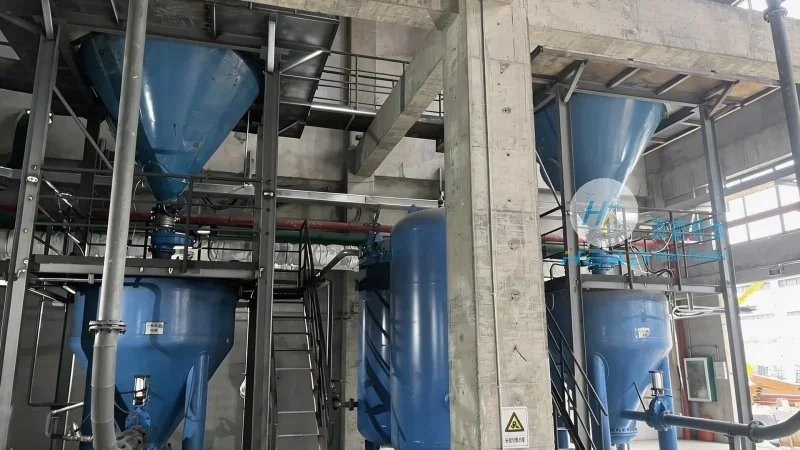
When planning a new glucose powder conveying system, a phased engineering approach yields the best results. The first step is material characterization: conducting shear cell tests, moisture sorption isotherms, and dust explosivity tests (Kst, Pmax) in an accredited laboratory. Next, pilot trials using a mobile pneumatic test rig should confirm the selected phase density and pipe diameter. For example, a recent project for a dextrose monohydrate plant in Southeast Asia required a capacity of 8 tons/hour over a 120-meter route with an elevation gain of 15 meters. Dilute-phase was initially considered but discarded after pilot testing revealed unacceptable particle degradation (4.5% fines). Switching to a dense-phase system with a blow vessel and fluidized discharge reduced fines to 0.3% and eliminated downstream caking issues in the packaging hopper.
Installation logistics must account for structural supports, clearances for cleaning, and access for maintenance. Pneumatic conveying lines for food applications often use quick-release couplings for easy disassembly. headpowder has developed a proprietary modular pipe support system that reduces installation time by 20% while maintaining alignment accuracy. For existing facilities, retrofitting a pneumatic system may require reinforcing floors and walls to accommodate heavier compressors and receivers. Noise attenuation is another factor—unmuffled blow-off vents can exceed 100 dB, so silencers and acoustic enclosures are standard in occupational safety plans.
Commissioning and operator training are the final critical phases. The control system should include interlocks that prevent start-up if pressure, temperature, or moisture levels are outside safe limits. Operators must be trained to interpret alarm trends and perform routine checks on filter bags, rotary valve seals, and moisture separators. Spare parts inventory management—specifically for valves, filter cartridges, and blower elements—should be established based on mean time between failures (MTBF) data specific to glucose powder service, which typically ranges from 6 to 18 months depending on operating hours.
Looking ahead, the convergence of pneumatic conveying with continuous manufacturing in the pharmaceutical sector will drive further specialization. Glucose powder used as a binder in direct compression tablet formulations must meet strict particle size specifications. Advanced systems now incorporate inline particle size analyzers (e.g., laser diffraction probes) that provide feedback to adjust air velocity or feed rate in real-time, ensuring consistent quality. While such smart systems represent a higher initial investment, the return from reduced waste and improved process capability can justify the cost within two years.
In summary, the successful pneumatic conveying of glucose powder hinges on a thorough understanding of material behavior, precise sizing of equipment, and adherence to industry-specific hygiene and safety standards. By selecting the appropriate phase regime, optimizing pipe routing, and integrating modern control technologies, operators can achieve reliable, low-dust, and energy-efficient material transport. Whether upgrading an existing facility or building a greenfield production line, partnering with an experienced engineering team is essential to avoid costly trial-and-error. For personalized system evaluation and technical consultation, contact headpowder (咨询热线: 156-6277-7102) to discuss your specific conveying requirements and explore how our field-proven solutions can enhance your powder handling performance.

 Shandong headpowder Engineering Co., Ltd.
 156-6277-7102(Manager Zhang)
  0531-83386006
  Jinan City, Shandong Province, China
服务热线
微信咨询
回到顶部