News
Rich project cases across industries, showing real implementation and proven technical strength.In the modern fertilizer production landscape, efficient material handling is not merely a logistical concern—it is a decisive factor in operational profitability, product quality, and environmental compliance. Among the various conveying technologies available, pneumatic conveying has emerged as a preferred solution for transporting fertilizer pellets, particularly in facilities where dust control, gentle handling, and automation are critical. This guide provides a comprehensive examination of pneumatic conveying systems tailored to fertilizer pellet applications, covering system types, design parameters, operational best practices, and emerging trends shaping the industry through 2026.
Fertilizer pellets, by their physical nature, present unique challenges in conveying. They are typically hygroscopic, prone to attrition, and can generate fine dust that poses both safety risks and product loss. Traditional mechanical conveyors—such as belt conveyors, bucket elevators, and screw conveyors—often struggle with these characteristics, leading to excessive wear, spillage, and maintenance downtime. Pneumatic conveying, by contrast, uses air or gas as the conveying medium to move pellets through sealed pipelines, offering distinct advantages: reduced dust emission, lower product degradation, greater layout flexibility, and simplified routing over long distances or around existing equipment.
The core principle of pneumatic conveying relies on the suspension of pellets in a moving air stream. The system comprises a feed point (often a rotary valve or venturi feeder), a pipeline network, an air mover (positive displacement blower, vacuum pump, or compressor), and a separation device (cyclone, filter receiver, or silo) at the discharge end. Depending on the required capacity, pellet characteristics, and plant layout, one must choose between dilute phase and dense phase conveying. Dilute phase systems operate at high air velocities (typically 20–30 m/s) and low solid-to-air ratios, keeping pellets suspended in a turbulent flow. While simple and cost-effective, they may cause higher pellet abrasion and greater energy consumption. Dense phase systems, on the other hand, move pellets in plugs or slugs at lower velocities (3–10 m/s) with high solid loading, significantly reducing attrition and energy use—making them increasingly popular for premium fertilizer products where maintaining pellet integrity is paramount.
Selecting the appropriate system requires careful evaluation of pellet properties: bulk density (typically 0.7–1.2 g/cm³ for common NPK and urea pellets), particle size distribution (1–5 mm diameter), moisture content (usually below 2% for dry conveying), and friability index. A 2026 industry benchmark indicates that over 60% of new fertilizer handling projects favor dense phase or semi-dense phase systems for pellet conveying due to rising quality standards and stricter dust emission regulations. Additionally, the integration of smart sensors and PLC-based controls has enabled real-time monitoring of air velocity, pressure drop, and product flow, allowing operators to optimize energy use and prevent blockages before they occur.
A well-designed pneumatic conveying system for fertilizer pellets hinges on the performance of its core components. The feeding device—commonly a rotary airlock valve—must be robust enough to withstand abrasive pellet fines while providing a consistent, metered flow. For applications where pellet breakage is a concern, a screw feeder or fluidized venturi feeder may be preferred. The pipeline itself is typically constructed from schedule 40 steel or stainless steel, with wear-resistant bends or ceramic-lined elbows at critical turning points to minimize erosion. Pipe diameter, layout geometry, and bend radius all influence pressure drop and conveying stability; a conservative design rule is to maintain a minimum bend radius of six to ten times the pipe diameter.
Air movers represent the heart of the system. Positive displacement blowers remain the workhorse for dilute phase systems, delivering high volumes at moderate pressures (up to 1 bar). For dense phase conveying, screw compressors or smart pressure-regulated blowers are often selected to achieve the required pressure differential (2–5 bar) while maintaining energy efficiency. Vacuum systems, which operate below atmospheric pressure, are particularly useful for unloading pellets from railcars or trucks, as they inherently capture fugitive dust. Separation equipment—typically a cyclone followed by a secondary filter or a reverse-jet baghouse—must achieve at least 99.5% separation efficiency to comply with emission limits and recover valuable product.
From a marketing and operational perspective, forward-thinking plant managers are increasingly looking for suppliers who not only supply hardware but also offer complete system engineering, commissioning, and after-sales support. Headpowder, as a specialized provider of bulk material handling solutions, has delivered multiple pneumatic conveying turnkey projects for fertilizer plants across Asia and the Middle East. One notable case involved a 30 t/h dense phase system for a urea granular production line in Vietnam, where the client reported a 40% reduction in pellet degradation compared to their previous bucket elevator-based system, alongside a 25% drop in dust emissions. (咨询热线:156-6277-7102) This kind of measurable performance improvement aligns with the growing emphasis on sustainable manufacturing and product quality in the global fertilizer sector.
Engineers designing a pneumatic conveying system for fertilizer pellets must base their calculations on accurate material properties and operating conditions. The key design parameters include:
Safety considerations are non-negotiable. Fertilizer pellets, especially those containing ammonium nitrate or urea, can generate explosive dust clouds if fines accumulate. Pneumatic conveying systems must be equipped with explosion venting panels, spark detection, and suppression systems. Grounding and bonding of all metal components, including the pipeline, airlocks, and filter housings, are mandatory to prevent static discharge. Furthermore, moisture ingress during conveying can cause caking and blockages; therefore, some systems incorporate dehumidification units or heated conveying air for humid climates. Headpowder engineers routinely apply ATEX-compliant design criteria and have successfully integrated inert gas blanketing in high-risk applications, ensuring both operational safety and regulatory compliance.
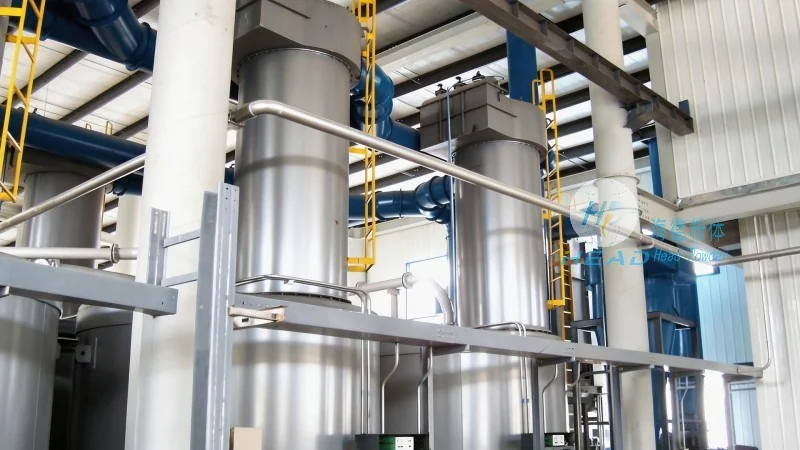
Once a pneumatic conveying system is installed, its long-term reliability depends on disciplined operation and proactive maintenance. Operators must monitor key performance indicators (KPIs) such as air pressure at the blower discharge, pressure drop across the filter, motor current draw, and discharge rate consistency. Any sudden deviation from baseline values often signals the onset of a blockage, filter blinding, or air leak. Predictive maintenance using vibration analysis on rotary valves and blowers can extend component life by 30–50% compared to reactive repair schedules.
Common operational pitfalls include operating at excessive air velocity—which increases pellet breakage and energy waste—or allowing moisture to accumulate in low points of the pipeline. A well-conceived system should include drains at low points and automated purge cycles for start-up and shut-down. Pellet samples should be periodically tested for friability, and the conveying air quality (temperature, humidity, and particulate content) recorded. For plants processing multiple fertilizer grades—such as switching between DAP, MAP, and granular potassium chloride—quick-changeover features like removable elbows and cleanout ports drastically reduce cross-contamination.
Headpowder service engineers emphasize the value of training plant personnel on the specific dynamics of pellet conveying. In one case, a client in Brazil implemented a weekly “pellet health check” protocol using a simple sieve analysis after conveying, allowing them to detect a gradually worsening wear issue in a cyclone liner before it caused a complete production stoppage. Such practical, data-driven approaches reduce unscheduled downtime and protect the substantial capital investment in the system.
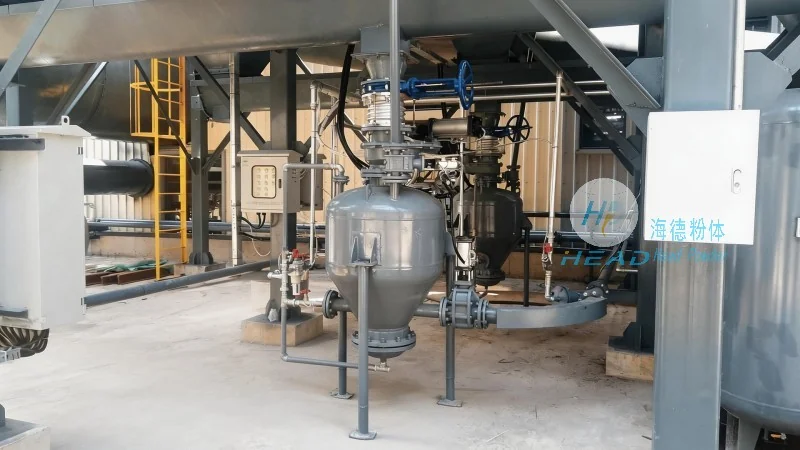
The fertilizer industry is undergoing a digital and environmental transformation, and pneumatic conveying technology is evolving in lockstep. One prominent trend is the adoption of Industry 4.0 principles: smart conveying systems equipped with IoT sensors, edge computing, and cloud-based dashboards that provide real-time visibility of pellet flow, energy consumption, and predictive maintenance alerts. By 2026, more than 40% of new large-scale fertilizer plants in Europe and North America are expected to integrate digital twin models for their conveying networks, allowing engineers to simulate scenarios and optimize settings without interrupting production.
Another significant development is the increasing use of low-pressure dense phase technology with advanced flow control valves, enabling reliable handling of even the most fragile high-value specialty fertilizers (e.g., controlled-release coated pellets). The global move toward green ammonia and bio-based fertilizers also places new demands on conveying systems—these novel pellets may have different densities, shapes, and electrostatic charges. Suppliers like Headpowder are actively collaborating with agricultural research institutes to test and adapt conveying solutions for emerging formulations, ensuring that technology remains ahead of market needs.
Environmental regulations are tightening worldwide. The European Union's revised Industrial Emissions Directive (IED) will impose stricter limits on particulate matter emissions from fertilizer handling by 2027. Pneumatic conveying, especially when combined with high-efficiency filtration and closed-loop air recirculation, is well-positioned to help plants meet these standards. Energy efficiency improvements—such as using variable frequency drives (VFDs) on blowers and optimizing system pressure—can reduce the carbon footprint of conveying operations by 20–30%, aligning with corporate sustainability targets.
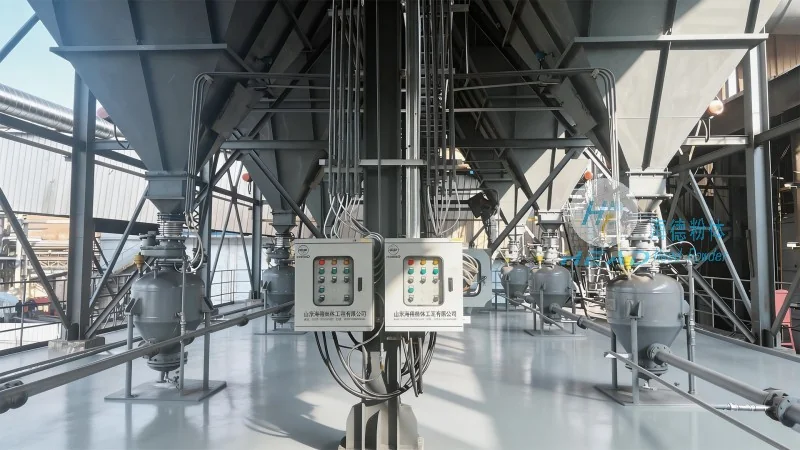
Selecting and implementing a pneumatic conveying system for fertilizer pellets is not a one-size-fits-all decision. It demands a thorough understanding of the product, the physical constraints of the plant, the regulatory landscape, and the future growth trajectory of the facility. A system that performs well today may become suboptimal as pellet formulations evolve or throughput requirements increase. Therefore, partnering with an experienced engineering firm that offers not only standard equipment but also customized design, integration services, and lifecycle support is essential.
Headpowder has built a reputation in the fertilizer handling industry by combining deep technical knowledge with practical field experience. From initial feasibility studies and CFD simulation to fabrication, installation, and remote monitoring, the company provides end-to-end solutions tailored to each client's specific pellet conveying challenges. With a track record of projects spanning capacities from 5 t/h to over 100 t/h, and across climates ranging from tropical to arid, Headpowder engineers understand the nuances that make or break a system’s performance. (咨询热线:156-6277-7102) As the industry moves toward smarter, cleaner, and more efficient operations, pneumatic conveying remains a cornerstone technology—and the right partner can make all the difference in turning that technology into a measurable competitive advantage.

 Shandong headpowder Engineering Co., Ltd.
 156-6277-7102(Manager Zhang)
  0531-83386006
  Jinan City, Shandong Province, China
服务热线
微信咨询
回到顶部