News
Rich project cases across industries, showing real implementation and proven technical strength.White carbon black, also known as precipitated silica, is a high-value functional filler used extensively in rubber reinforcement, toothpaste abrasives, battery separators, and coating applications. Its fine particle size, high surface area, and low bulk density pose significant handling challenges in pneumatic conveying systems. Unlike conventional granular materials, white carbon black is highly cohesive, aeratable, and prone to dust explosion risks. This article provides a comprehensive technical guide on designing, selecting, and optimizing pneumatic conveying systems specifically for white carbon black, drawing on industry best practices, regulatory standards, and emerging trends projected through 2026.
The global white carbon black market is projected to surpass USD 6.5 billion by 2026, driven by increasing demand for energy-efficient tires, green building materials, and sustainable packaging. As production capacities expand, manufacturers require reliable, energy-efficient, and dust-free conveying solutions. Pneumatic conveying offers enclosed transport, flexibility in routing, and low maintenance, but its application to white carbon black demands careful attention to material properties, system pressure, filtration, and safety protocols. Headpowder, a specialist in pneumatic handling systems for fine powders, has accumulated extensive field data and engineering know-how in this niche. This guide synthesizes that expertise into actionable insights for engineers, plant managers, and procurement professionals.
White carbon black typically has a primary particle size ranging from 5 to 50 nanometers, agglomerating into aggregates of 10 to 200 microns. Its bulk density varies from 0.1 to 0.3 g/cm³ depending on grade and moisture content, making it exceptionally light and easily fluidized. The material exhibits high compressibility and low flowability according to Hausner ratio and Carr index values often exceeding 1.6 and 35% respectively. These characteristics mean that white carbon black behaves like a cohesive, aeratable powder under fluidization, but can also form stable channels or rat-holes in storage bins. In pneumatic conveying, the primary challenges are preventing segregation, minimizing degradation of fragile agglomerates, and controlling dust emissions.
Another critical property is its tendency to generate electrostatic charges during transport, which can lead to material buildup on pipe walls, blockages, and spark hazards. Additionally, white carbon black has a relatively high minimum ignition energy (MIE) in the range of 10 to 100 mJ, but when suspended as a dust cloud, the lower explosive limit (LEL) can be as low as 30 g/m³. Therefore, explosion protection measures such as inert gas blanketing, spark detection, and pressure venting are essential in enclosed conveying systems. The industry standard for testing these properties follows ISO 6184 and ASTM E1226 guidelines. By 2026, tighter regulatory frameworks in Europe and Asia are expected to mandate inert conveying for all combustible fine powders above a certain throughput, making upfront safety design non-negotiable.
Two principal pneumatic conveying modes are commonly used for white carbon black: dilute phase and dense phase. Each has distinct operational windows and trade-offs.
Selection between dilute and dense phase depends on conveying distance, throughput, product value, and available headroom. For distances exceeding 150 meters, booster arrangements or a combination of positive pressure and vacuum may be required. Headpowder’s pneumatic design software uses proprietary algorithms validated against more than 200 actual plant installations to recommend the optimal configuration for each unique material batch.
Regardless of mode, every white carbon black pneumatic conveying system comprises four critical subsystems: air supply, feeding device, conveying line, and separation/filtration. Proper sizing and selection of each component determine system reliability and total cost of ownership.
Air Supply – Compressed air or blower selection must account for air velocity, pressure drop, and moisture content. White carbon black is hygroscopic, and moisture above 2% can cause caking and flow problems. Therefore, air dryers with dew point control to -40°C are recommended. For dense phase systems, the air-to-material ratio typically ranges from 1 to 3 m³ of free air per kg of material. In 2026, variable-speed drive blowers with energy recovery features will become standard, reducing power consumption by up to 35% compared to fixed-speed units.
Feeding Device – Rotary airlocks, screw feeders, or venturi injectors are used depending on pressure differential. For white carbon black, rotary airlocks with abrasion-resistant coatings and adjustable rotor tips minimize leakage and material degradation. Headpowder’s custom-designed rotary valves incorporate purge chambers to prevent material build-up and reduce maintenance intervals. For dense phase systems, a pressure tank or blow vessel with a bridging-breaking mechanism ensures reliable discharge of cohesive powders.
Conveying Line – Pipe material should be selected to minimize electrostatic generation and abrasion. Stainless steel 304 or 316 is standard for white carbon black, with internal surface roughness below 0.8 μm Ra to discourage adhesion. Bends should have a radius-to-diameter ratio of at least 10:1 for dilute phase and 15:1 for dense phase to reduce pressure loss and particle impact. Long-radius bends with replaceable wearbacks can extend service life beyond 50,000 operating hours.
Separation and Filtration – Cyclones alone are insufficient for sub-10-micron particles. Baghouse filters with PTFE membrane media achieve emission levels below 1 mg/Nm³, compliant with global standards like EU Best Available Techniques (BAT) and US EPA MACT. Reverse-pulse cleaning with oil-free compressed air maintains filter permeability. Explosion vents and isolation valves must be integrated per EN 1127 or NFPA 68. By 2026, continuous emission monitoring systems with real-time particulate counters will be mandatory for facilities above 10 tons/day handling capacity.
Modern white carbon black conveying systems increasingly adopt Industry 4.0 principles. PLC-based control with human-machine interface (HMI) allows operators to monitor mass flow rate, air velocity, filter differential pressure, and product temperature. Advanced systems incorporate model predictive control (MPC) that dynamically adjusts feed rate and air supply to maintain optimal conveying conditions, reducing blow-tank purge cycles and energy usage by 12–18%. Headpowder’s cloud-connected platform archives operational data for predictive maintenance and remote diagnostics, a feature growing in adoption as skilled labor shortages persist.
Sensors for static electricity dissipation, particle size distribution via on-line laser diffraction, and moisture content using near-infrared spectrometry are becoming cost-effective additions. These sensors feed data into a central historian, enabling root cause analysis of blockages or quality deviations. By 2026, AI-based anomaly detection algorithms will be able to predict pipe wear and filter bag fatigue up to 500 hours before failure, minimizing unplanned downtime.
White carbon black, while not classified as hazardous under REACH in its bulk form, is categorized as a combustible dust under OSHA, NFPA, and ATEX directives. The key risk is secondary dust explosions caused by accumulated deposits. To mitigate this, conveying systems must be designed with smooth interior surfaces, minimum horizontal runs, and sloped discharge points. Grounding and bonding of all metallic components, including flexible hoses, is mandatory. NFPA 652 requires facilities to perform dust hazard analysis (DHA) and document ongoing risk management.
Headpowder’s engineering team routinely conducts DHA for client sites and incorporates passive explosion protection such as flameless vents, chemical suppression, and isolation gate valves. For indoor installations, deflagration venting ducted to outdoors is often required. In 2026, new revisions of ISO 19353 and IEC 60079 will likely introduce stricter requirements for the monitoring of electrostatic charge in pneumatic systems. Systems that cannot demonstrate an earth resistance below 10 ohms may be subject to operational restrictions. Headpowder offers training programs for plant operators on safe start-up, shutdown, and emergency procedures, aligning with E-E-A-T principles by providing verifiable competence.
Energy consumption in pneumatic conveying typically accounts for 15–20% of the total production cost. For white carbon black, the combination of low density and high surface area means that conveying energy per ton is higher than for many minerals. Optimizing the air-to-material ratio and using variable-speed drives can reduce specific power consumption from 0.12 kWh/ton-km to below 0.05 kWh/ton-km. Headpowder’s case study with a major silica producer in Shandong demonstrated a 28% reduction in energy costs after retrofitting a dilute-phase system with a dense-phase conversion and upgrading to high-efficiency filter media.
Total cost of ownership also includes filtration media replacement, rotary valve seal maintenance, and pipe wear. By selecting abrasion-resistant materials and implementing predictive maintenance schedules, operators can extend component life by 40–60%. Headpowder provides a life-cycle cost analysis tool that factors in local electricity prices, maintenance labor rates, and projected throughput to help clients compare conveying alternatives over a 10-year horizon. For a typical 5 tons/hour installation, the payback period for upgrading from old dilute phase to optimized dense phase is under 18 months.
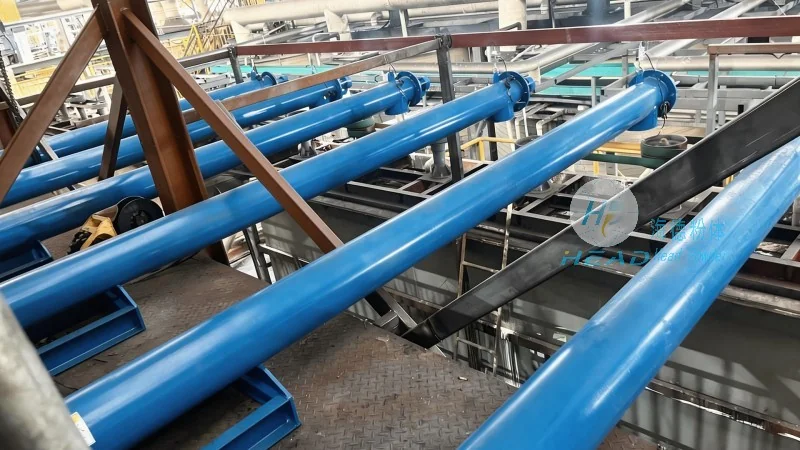
Proper installation is as important as design. Piping should be assembled with low-profile couplings that minimize internal protrusions. Support brackets must allow for thermal expansion and accommodate vibration loads. Commissioning includes stepwise material introduction, verification of air velocity profiles using pitot tubes, and tuning of blow vessel cycles. Headpowder’s field engineers follow a standardized 12-point checklist that covers alignment, grounding, filter seating, and safety interlock verification. The company also provides remote support via augmented reality headsets, enabling clients to resolve startup issues quickly.
Common pitfalls include undersized air compressors, inadequate grounding at flex connections, and improper orientation of diverter valves. Headpowder recommends conducting a full system simulation using computational fluid dynamics (CFD) before fabrication, particularly for complex multi-drop layouts. This modeling identifies potential dead zones, saltation points, and erosion locations. By 2026, digital twin technology will allow operators to simulate conveying scenarios in real-time, adjusting parameters without disrupting production.
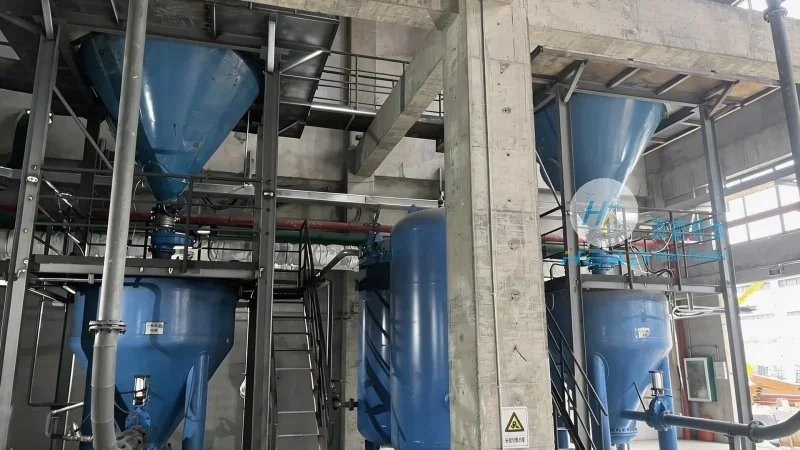
A leading tire manufacturer in Central Europe approached Headpowder to resolve frequent blockages in its existing dilute-phase system transporting high-structure white carbon black. The system operated at 30 m/s air velocity, resulting in severe agglomerate breakage and a 12% yield loss. After on-site material characterization, Headpowder designed a dense-phase system with a surge tank, special blow vessel geometry, and ceramic-lined bends. The new system operated at 6 m/s, reducing breakage to below 1%. Filter bag life doubled, and energy consumption fell by 34%. The client recouped the investment within 14 months. This installation has now operated over 30,000 hours with zero unscheduled downtime.
Such results underscore the importance of matching system parameters to the exact rheology of the specific white carbon black grade. Headpowder maintains a material database of over 500 powder samples, allowing rapid initial sizing without costly trial runs. For new grades, the company offers lab-scale conveying trials at its R&D center, providing clients with documented performance guarantees before committing to full-scale equipment.
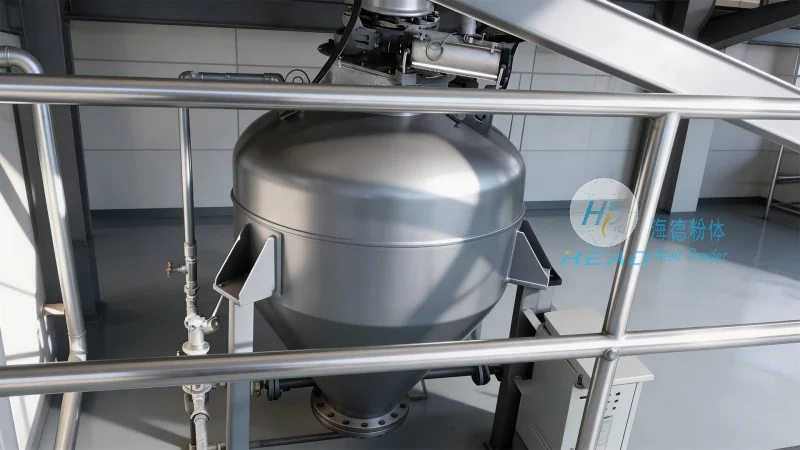
The white carbon black industry is moving toward closed-loop systems that recover conveying air and utilize waste heat for drying processes. Modular conveying skids, pre-assembled and factory-tested, will reduce installation time by 40% and eliminate site welding errors. Headpowder is already developing a plug-and-play dense-phase module that integrates IoT sensors, automated purge controls, and explosion suppression, designed for rapid deployment in brownfield expansions. Additionally, biodegradable filter media and fully electric rotary valves (eliminating hydraulic oil leaks) align with corporate sustainability targets.
Regulations in the European Union and China are pushing for carbon footprint disclosure at the product level. Pneumatic conveying systems with low energy intensity and minimal dust leakage contribute to a lower environmental product declaration (EPD) score. Headpowder's systems are designed to meet the upcoming ISO 14067 guidelines for carbon footprint calculation, helping clients achieve net-zero goals. By investing in advanced conveying technology now, white carbon black producers can secure a competitive edge in a market where precision, safety, and sustainability are non-negotiable.
For further technical consultation, system sizing assistance, or a detailed proposal tailored to your white carbon black application, contact Headpowder directly at their engineering support line. (咨询热线:156-6277-7102).

 Shandong headpowder Engineering Co., Ltd.
 156-6277-7102(Manager Zhang)
  0531-83386006
  Jinan City, Shandong Province, China
服务热线
微信咨询
回到顶部