

Operation Process and Working Principle of Pneumatic Conveying for Sintered Dust Materials
HeadPowder, a leading provider in the field of material handling solutions, specializes in the design, manufacturing, and implementation of pneumatic conveying systems tailored for sintered dust materials. This article delves into the operational process and working principles of such systems, offering a comprehensive understanding of how these technologies efficiently transport sintered dust while maintaining operational efficiency and reliability.
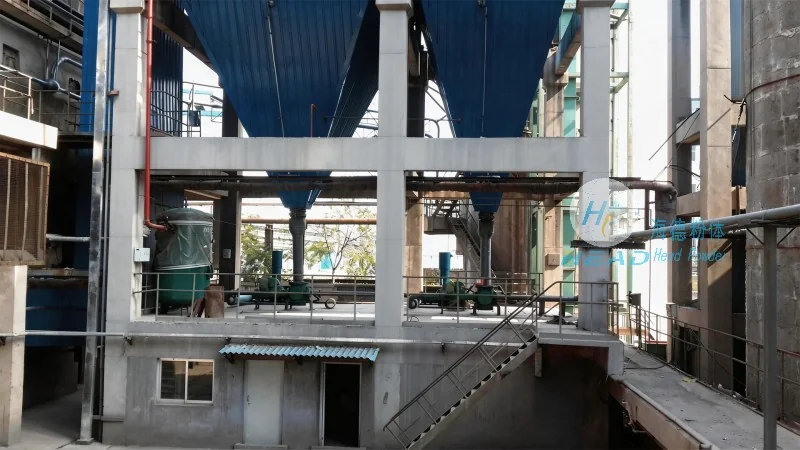
Introduction to Pneumatic Conveying for Sintered Dust
Sintered dust, a byproduct commonly generated in steelmaking and other industrial processes, poses unique challenges in material handling due to its fine particle size and variable properties. Traditional methods like belt conveyors or bucket elevators may struggle with dust generation, clogging, and material loss. Pneumatic conveying offers a solution by utilizing air to transport the material through a pipeline system, minimizing dust exposure and ensuring a clean, efficient transfer. HeadPowder’s expertise lies in optimizing these systems to meet the specific demands of sintered dust, ensuring reliable performance in industrial settings.
Key Components of the Pneumatic Conveying System
The pneumatic conveying system for sintered dust typically consists of several critical components that work in tandem to achieve efficient material transport. These include the material feed hopper, which holds the sintered dust and regulates the flow into the system; the air compressor or blower, which generates the necessary air pressure to move the material; the conveying pipeline, which transports the dust-air mixture; and the discharge hopper or collection system, which receives the material at the destination. Each component is carefully selected and designed to handle the specific characteristics of sintered dust, such as particle size distribution, moisture content, and bulk density.
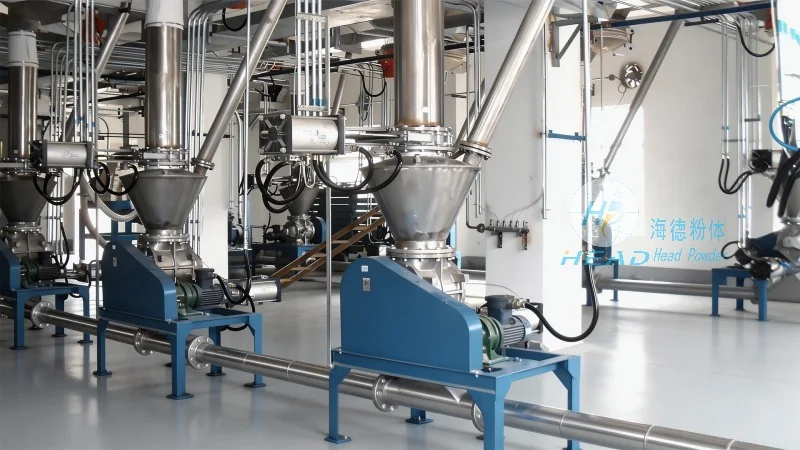
Operation Process of the Pneumatic Conveying System
The operation of a pneumatic conveying system for sintered dust involves a sequential process that ensures smooth and continuous material transfer. The process begins with the material being fed into the hopper from the source location, such as a storage silo or a sintering plant. The hopper is equipped with a feeder mechanism, often a rotary valve or a screw feeder, which controls the rate of material discharge into the conveying line. Simultaneously, the air compressor starts operating, generating a steady stream of air that is introduced into the pipeline at the inlet point. As the air flows through the pipeline, it creates a low-pressure zone that draws the sintered dust particles into the air stream, forming a dust-air mixture. This mixture travels through the pipeline to the discharge point, where the air is separated from the material, typically using a cyclone separator or a filter system. The separated material is then collected in the discharge hopper, while the air is either vented to the atmosphere or recirculated back to the system for energy efficiency. The entire process is automated and controlled by a system of sensors and control valves, ensuring that the flow rate of both material and air is maintained at optimal levels to prevent clogging or loss of material.
Working Principle of Pneumatic Conveying for Sintered Dust
The working principle of pneumatic conveying for sintered dust is based on the fundamental concept of fluidization and suspension of solid particles in a gas stream. When air is introduced into the conveying pipeline at a sufficient velocity, it creates a pressure drop that lifts the sintered dust particles off the pipeline walls and suspends them in the air stream. The key to effective conveying lies in maintaining the air velocity above the minimum fluidization velocity of the dust particles, which is determined by factors such as particle size, density, and shape. If the air velocity is too low, the particles will settle and cause blockages in the pipeline. Conversely, if the velocity is too high, excessive energy consumption occurs, and fine particles may be lost through the system. HeadPowder’s systems are designed to precisely control the air velocity and pressure, ensuring that the sintered dust is conveyed efficiently without degradation or loss. The system also incorporates features such as air locks and check valves to prevent backflow and maintain the integrity of the material flow.
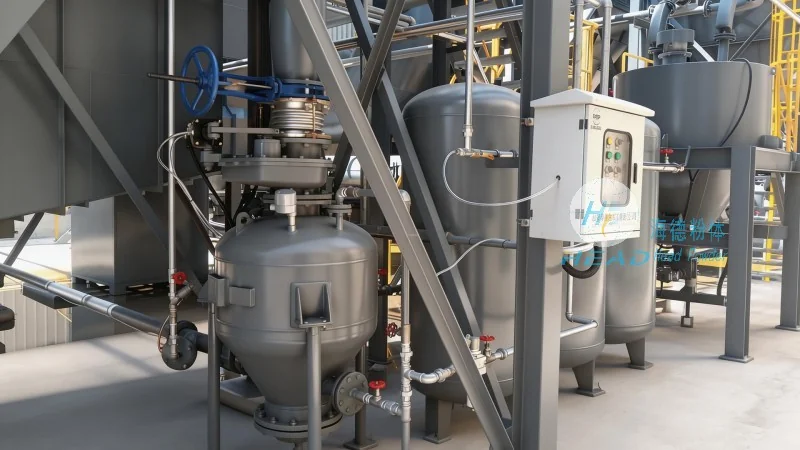
Advantages of Pneumatic Conveying for Sintered Dust Handling
Compared to traditional material handling methods, pneumatic conveying offers several advantages when dealing with sintered dust. Firstly, it provides a dust-free environment, reducing the risk of occupational exposure to fine particles and minimizing the need for additional dust control measures. Secondly, the system is highly flexible, allowing for the transport of materials over long distances and through complex layouts, including vertical and horizontal sections. Thirdly, pneumatic conveying is energy-efficient, as the air can be recirculated and reused, reducing operational costs. Additionally, the system is compact and requires less floor space compared to other bulk material handling solutions. HeadPowder’s pneumatic conveying systems are engineered to maximize these advantages, ensuring that clients benefit from improved safety, efficiency, and cost-effectiveness in their sintered dust handling operations.
Application Examples and Case Studies
HeadPowder has successfully implemented pneumatic conveying systems for sintered dust in various industrial applications. For instance, in a steel plant, the system was used to transport sintered dust from the sintering machine to a storage silo, covering a distance of over 100 meters with multiple vertical and horizontal bends. The system demonstrated a high conveying efficiency, with minimal material loss and no clogging issues, even when handling dust with high moisture content. Another application involved the transport of sintered dust from a processing plant to a recycling facility, where the dust was used as a raw material for cement production. The system was designed to meet the specific requirements of the cement plant, including the ability to handle varying particle sizes and the need for a clean transfer process. These case studies highlight the versatility and reliability of HeadPowder’s pneumatic conveying solutions for sintered dust, making them an ideal choice for industrial clients seeking efficient material handling solutions.