

Operation Process and Working Principle of Pneumatic Conveying for Monocrystalline Silicon Materials
Monocrystalline silicon is a foundational material in the semiconductor and solar energy industries, serving as the substrate for solar cells and integrated circuits. The efficient and reliable transport of these materials is critical to maintaining production efficiency and ensuring product quality. Pneumatic conveying has become a preferred method for handling monocrystalline silicon due to its ability to minimize mechanical wear, preserve material integrity, and maintain a clean, dust-free environment. This article provides a detailed exploration of the operation process and working principles of pneumatic conveying systems specifically designed for monocrystalline silicon materials, with a focus on the expertise of Shandong HeadPowder Engineering Co., Ltd., a leading provider in this field.
Company Overview: HeadPowder
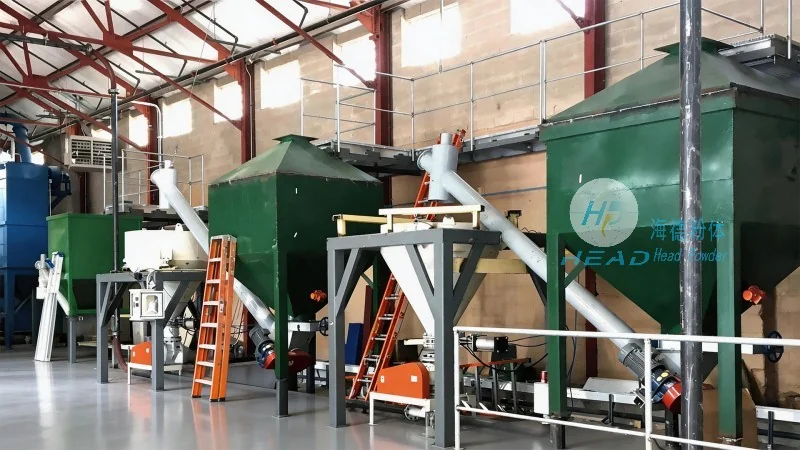
Shandong HeadPowder Engineering Co., Ltd., commonly known as HeadPowder, is a professional manufacturer and supplier of pneumatic conveying equipment based in Shandong, China. With extensive experience in the industry, HeadPowder specializes in designing and manufacturing customized pneumatic conveying systems tailored to the unique requirements of monocrystalline silicon processing. The company's commitment to quality, innovation, and customer satisfaction has established it as a trusted partner for businesses in the semiconductor and solar energy sectors.
Working Principle of Pneumatic Conveying Systems
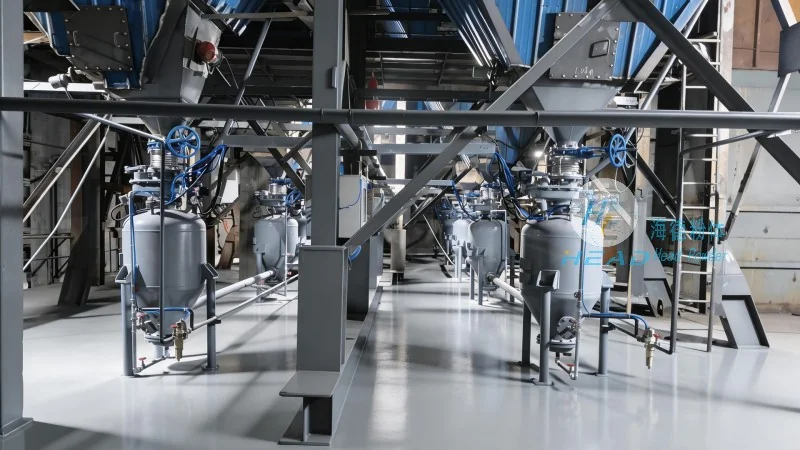
Pneumatic conveying systems operate by transporting solid materials, such as monocrystalline silicon, using a gas stream (typically air) to create a fluidized or suspended state. The core principle involves creating a pressure differential or vacuum to move the material through a pipeline. There are two primary types of pneumatic conveying: pressure conveying (positive pressure) and vacuum conveying (negative pressure). In pressure conveying, a blower or compressor generates high-pressure air that forces the material through the system. Vacuum conveying uses a vacuum pump to draw material into the pipeline. For monocrystalline silicon, the choice of system type depends on factors like material characteristics, distance, and system layout. Monocrystalline silicon particles are often brittle and have a high density, which necessitates careful consideration of pressure levels and pipeline design to prevent material degradation or blockages.
Operation Process of Monocrystalline Silicon Material Conveying
The operation process of a pneumatic conveying system for monocrystalline silicon typically involves several key steps. First, the monocrystalline silicon material is loaded into a hopper or feeder. The feeder then meters the material into the conveying line at a controlled rate. The material is then introduced into the pipeline, where it is suspended by the moving air stream. The air and material mixture travels through the pipeline to the destination point, which could be a storage silo, a processing unit, or a waste disposal area. At the receiving end, a separator or cyclone separates the material from the air stream, allowing the monocrystalline silicon to be discharged. The air is then filtered and returned to the system or vented to the atmosphere, depending on the system design. Throughout the process, the system is monitored by sensors and controls to maintain optimal pressure, flow rate, and material level. Regular maintenance, such as cleaning filters and checking for wear in components, is essential to ensure continuous and reliable operation.
Technical Advantages and Application Scenarios
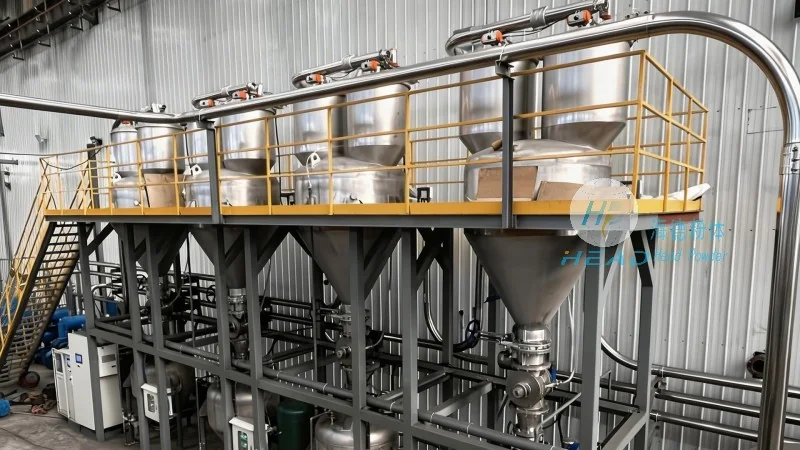
Pneumatic conveying offers several technical advantages when handling monocrystalline silicon materials. These include the ability to transport materials over long distances without the need for multiple transfer points, reduced risk of contamination due to enclosed systems, and the elimination of mechanical wear on the material. Additionally, pneumatic systems can be integrated with other processing equipment, such as crushers or classifiers, to form a complete material handling line. In the semiconductor industry, monocrystalline silicon is used in the production of solar cells and integrated circuits. Pneumatic conveying is particularly useful in applications such as transporting silicon ingots from the growth furnace to the cutting and polishing stages, or moving silicon wafers between processing steps. In solar panel manufacturing, the system can handle raw silicon materials, including monocrystalline silicon ingots, and transport them to the next stage of production, such as cell formation or module assembly. The efficiency and reliability of pneumatic conveying make it an ideal solution for these demanding applications.