

Classification and Composition of Light Calcium Powder Pneumatic Conveying Systems
Light calcium powder pneumatic conveying systems are essential for efficient material handling in various industrial applications. These systems utilize air or gas to transport light calcium powder, offering advantages such as reduced equipment wear, lower maintenance costs, and improved safety compared to traditional mechanical conveying methods. The classification and composition of these systems are critical for understanding their functionality and selecting the appropriate solution for specific operational needs, with expertise from companies like Shandong HeadPowder Engineering Co., Ltd., a leading provider based in Shandong, China.
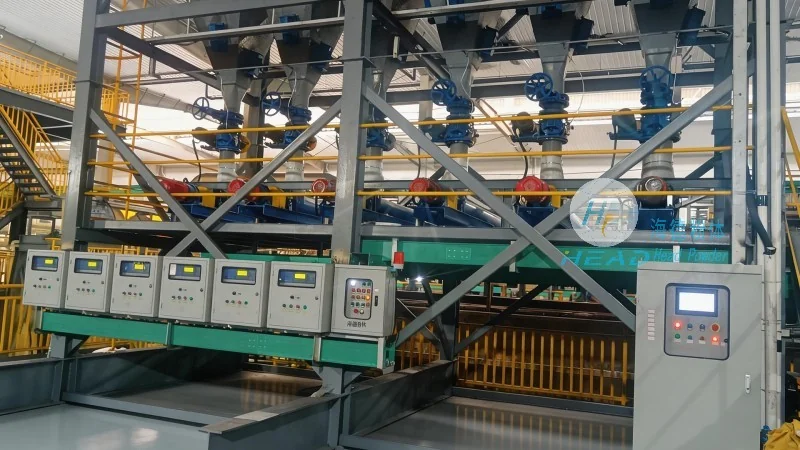
Classification of Light Calcium Powder Pneumatic Conveying Systems
Light calcium powder pneumatic conveying systems can be classified based on several key factors, including the conveying principle, system pressure, and application requirements. The primary classifications include dilute-phase and dense-phase systems, each with distinct characteristics and suitability for different powder properties and process conditions.
Dilute-phase systems operate at low to moderate pressure, typically using air as the conveying medium. These systems are suitable for powders with good flowability and low moisture content. The conveying velocity is high, and the powder is suspended in the air stream, resulting in a low solids concentration. Dilute-phase systems are commonly used for long-distance conveying and are often more cost-effective for certain applications.
Dense-phase systems, on the other hand, operate at higher pressure and use a higher proportion of solids in the conveying stream. These systems are ideal for handling powders that are prone to segregation, agglomeration, or are sensitive to high velocities. Dense-phase conveying reduces the risk of product degradation and maintains product integrity, making it suitable for applications where material quality is paramount.
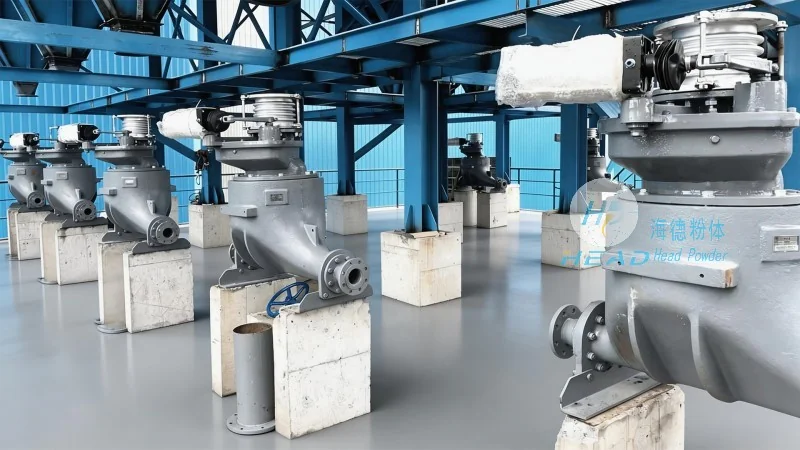
Another classification criterion is the type of airlock or feeder used at the inlet and outlet of the system. Rotary airlocks, star valves, and slide gates are common components that control the flow rate and prevent backflow. The choice of airlock depends on the powder's characteristics, such as particle size, density, and flowability, as well as the required flow rate and system pressure.
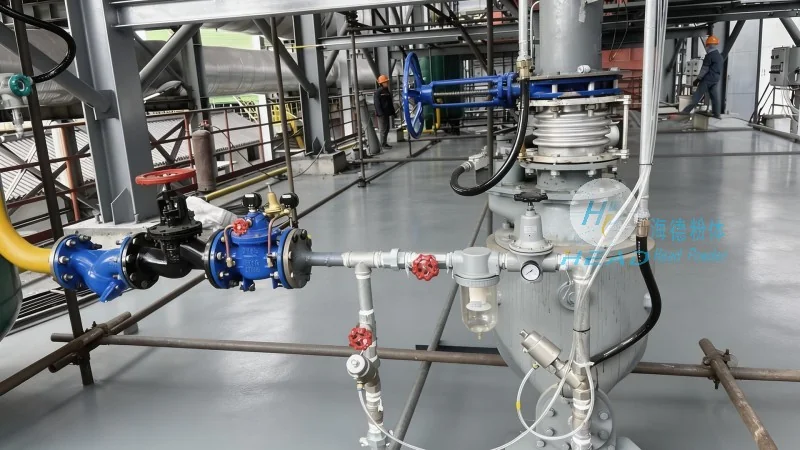
System pressure is another critical classification factor. Low-pressure systems operate at pressures below 0.7 bar, while medium-pressure systems operate between 0.7 and 1.5 bar, and high-pressure systems exceed 1.5 bar. The pressure level influences the conveying distance, capacity, and energy consumption. Low-pressure systems are suitable for short to medium distances, while high-pressure systems are used for long-distance or high-capacity applications.
Composition of Light Calcium Powder Pneumatic Conveying Systems
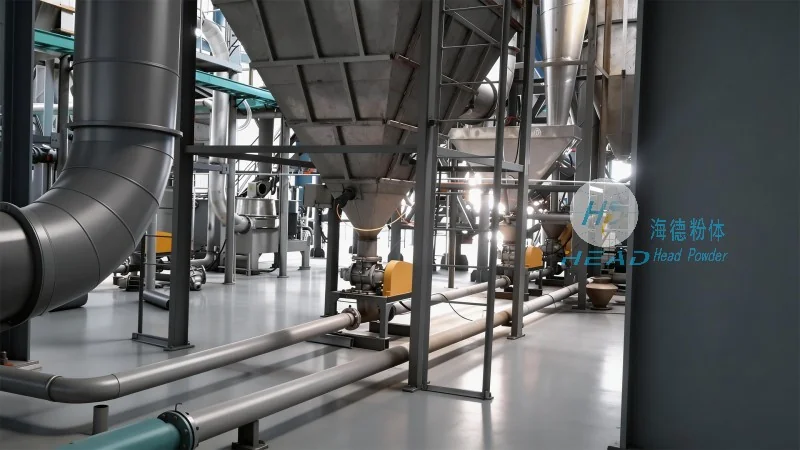
A typical light calcium powder pneumatic conveying system consists of several key components that work together to achieve efficient material transport. The main components include the material feed hopper, feeder, conveying line, air compressor or blower, and the receiving hopper or silo.
The material feed hopper is designed to store the light calcium powder and provide a consistent feed to the feeder. It often includes a level indicator and a discharge valve to control the material flow. The hopper may also be equipped with a vibration or agitator to prevent material bridging or caking, which can affect the feeding rate.
The feeder is a critical component that controls the flow rate of the light calcium powder into the conveying line. Common feeder types include rotary airlocks, screw feeders, and star valves. The feeder must be matched to the powder's properties and the system's requirements to ensure a stable and uniform flow. For light calcium powder, which has good flowability, a rotary airlock or screw feeder is often preferred due to their ability to handle fine powders without excessive wear.
The conveying line is the main pipeline through which the light calcium powder is transported. The line is typically made of stainless steel or other corrosion-resistant materials to prevent powder buildup and ensure durability. The diameter and length of the line are determined based on the conveying distance, capacity, and pressure requirements. The line may include bends, elbows, and expansion joints to accommodate changes in direction and accommodate thermal expansion.
The air compressor or blower provides the necessary air or gas to create the conveying stream. The type of compressor depends on the system pressure and the required air volume. Centrifugal blowers are commonly used for low to medium-pressure systems due to their high efficiency and low maintenance. Positive displacement blowers, such as rotary lobe or screw compressors, are used for high-pressure systems where higher pressure is needed.
The receiving hopper or silo is where the light calcium powder is deposited after being conveyed. It may include a discharge valve or outlet to direct the material to the next processing step. The hopper is designed to prevent product segregation and maintain the powder's quality. In some cases, the receiving hopper is equipped with a dust collection system to capture any airborne particles and ensure environmental compliance.
Key Features and Advantages of Light Calcium Powder Pneumatic Conveying Systems
Light calcium powder pneumatic conveying systems offer several advantages over traditional mechanical conveying methods. One of the primary benefits is reduced equipment wear, as the powder is transported in a fluidized state rather than through mechanical contact. This results in lower maintenance costs and longer equipment life. Additionally, pneumatic conveying systems are more flexible, allowing for changes in the conveying route or capacity without major modifications.
Another advantage is improved safety. Since the material is transported in an enclosed system, there is minimal exposure to dust and airborne particles, reducing the risk of respiratory issues or fire hazards. The system also minimizes the risk of product contamination, as the conveying line is typically made of clean materials and is sealed to prevent external contamination.
Efficiency is another key feature. Pneumatic conveying systems can achieve high conveying velocities, allowing for long-distance transport with minimal energy consumption. The system's design can be optimized to minimize pressure losses and maximize material throughput, resulting in cost savings over time. Additionally, the system can be integrated with other processing equipment, such as mixers or classifiers, to create a seamless material handling process.
Applications of Light Calcium Powder Pneumatic Conveying Systems
Light calcium powder pneumatic conveying systems are widely used in various industries, including food processing, pharmaceuticals, chemicals, and construction. In the food industry, these systems are used to transport light calcium powder for use as a filler or thickener in food products. The system's ability to maintain product quality and prevent contamination is crucial in this application.
In the pharmaceutical industry, light calcium powder is used as an excipient in drug formulations. Pneumatic conveying systems are essential for transporting the powder to mixing and encapsulation equipment, ensuring a consistent and uniform product. The system's low pressure and enclosed design help maintain the product's sterility and prevent cross-contamination.
In the chemical industry, light calcium powder is used in various applications, such as as a filler in plastics or as a component in coatings. Pneumatic conveying systems are used to transport the powder to reactors or mixing tanks, where it is combined with other chemicals. The system's ability to handle fine powders and maintain product integrity is important for ensuring the quality of the final product.
In the construction industry, light calcium powder is used as a component in cement and concrete mixtures. Pneumatic conveying systems are used to transport the powder from storage silos to batching plants or mixing sites. The system's efficiency and flexibility make it suitable for construction projects where material handling is a critical factor.