

Operation Process and Working Principle of Rubber Powder Pneumatic Conveying Systems
HeadPowder, a leading engineering company based in Shandong, China, specializes in the design, manufacturing, and installation of advanced pneumatic conveying systems for various industrial applications. This article provides a detailed overview of the operation process and working principle of rubber powder pneumatic conveying systems, highlighting the key components, operational steps, and technical advantages of such systems.
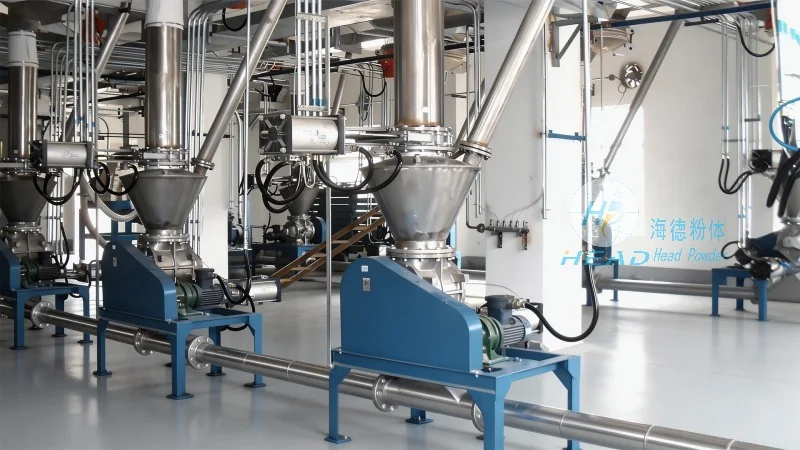
Introduction to Rubber Powder Pneumatic Conveying Systems
Rubber powder, a crucial raw material in the tire manufacturing, rubber products, and recycling industries, requires efficient and reliable handling methods to ensure consistent quality and minimize material loss. Pneumatic conveying systems offer an effective solution for transporting rubber powder from storage silos to processing units, blending equipment, or other destinations within a production facility. These systems utilize compressed air or other gases to move the powder through a network of pipes, eliminating the need for mechanical components like conveyors or elevators that may cause contamination or material degradation.
Key Components of a Rubber Powder Pneumatic Conveying System
The operation of a rubber powder pneumatic conveying system relies on several critical components that work in tandem to ensure smooth and efficient material transport. The primary components include:
- Feeding Device: This component is responsible for introducing the rubber powder into the conveying system. It may consist of a hopper, a rotary valve, or a screw feeder, depending on the system design and the characteristics of the rubber powder (e.g., flowability, moisture content, and particle size).
- Compressor or Air Supply Unit: The compressor generates the necessary pressure and volume of air to create the airflow required for conveying the rubber powder. The air supply unit may include filters, regulators, and moisture separators to ensure the air quality is suitable for handling rubber powder, preventing contamination and maintaining system efficiency.
- Conveying Pipeline: The pipeline is the main channel through which the rubber powder is transported. It is typically made of materials such as stainless steel, aluminum, or plastic, depending on the corrosive properties of the rubber powder and the operating conditions. The pipeline design, including the diameter, length, and bends, is optimized to minimize pressure drop and ensure consistent airflow.
- Separation and Collection Equipment: At the receiving end of the system, the rubber powder is separated from the air stream. This is typically achieved using a cyclone separator or a bag filter, which captures the powder and returns it to the process while allowing the air to be discharged or recirculated.
- Control System: The control system monitors and regulates the operation of the pneumatic conveying system, ensuring that the flow rate, pressure, and other parameters are maintained within the optimal range. It may include sensors, valves, and a programmable logic controller (PLC) to automate the feeding and conveying process.
The Working Principle of Rubber Powder Pneumatic Conveying
The working principle of a rubber powder pneumatic conveying system is based on the fundamental concept of air flow and particle suspension. When compressed air is introduced into the conveying pipeline, it creates a high-velocity airflow that lifts and transports the rubber powder particles. The key to efficient conveying is achieving a sufficient air velocity to keep the particles suspended in the air stream, preventing them from settling or clogging the pipeline. The air velocity required depends on the particle size, density, and flowability of the rubber powder, as well as the system pressure and pipeline dimensions.
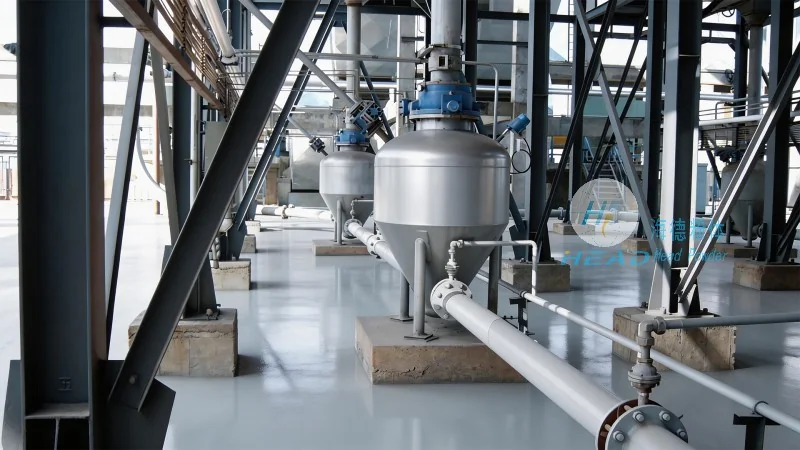
There are two main types of pneumatic conveying systems used for rubber powder: dilute-phase and dense-phase systems. Dilute-phase systems operate at relatively low pressure (typically 0.5 to 2 bar) and high air velocity, allowing the rubber powder to be suspended in the air stream as a fine mist. This type of system is suitable for short to medium-distance conveying and is commonly used in applications where the rubber powder is not sensitive to high pressure or temperature. Dense-phase systems, on the other hand, operate at higher pressure (typically 2 to 10 bar) and lower air velocity, where the rubber powder is conveyed as a dense slurry or plug, with the air serving as a carrier medium. Dense-phase systems are ideal for long-distance conveying and for handling rubber powder with high moisture content or abrasive properties.
Operation Process of Rubber Powder Pneumatic Conveying Systems
The operation process of a rubber powder pneumatic conveying system involves several sequential steps that ensure the smooth and continuous transport of the material. The process typically begins with the loading of the rubber powder into the feeding hopper. The rotary valve or screw feeder then controls the flow rate of the powder into the pipeline, ensuring a consistent feed rate. Simultaneously, the compressor generates the required compressed air, which is introduced into the pipeline at the feeding point.
As the compressed air flows through the pipeline, it creates a high-velocity airflow that lifts the rubber powder particles from the hopper and transports them to the receiving end. The air velocity is carefully controlled to maintain the particles in suspension, preventing them from settling or causing blockages. The conveying pipeline may include bends, expansions, or contractions, which are designed to minimize pressure loss and maintain the airflow stability.

At the receiving end of the system, the rubber powder is separated from the air stream using a cyclone separator or a bag filter. The cyclone separator uses centrifugal force to separate the heavier rubber powder particles from the lighter air, while the bag filter captures the fine particles using a fabric medium. The separated rubber powder is then collected in a storage bin or directly fed into the next processing stage. The air, now free of powder, is either discharged to the atmosphere or recirculated back to the compressor after being filtered and conditioned.
Technical Advantages of Rubber Powder Pneumatic Conveying Systems
Rubber powder pneumatic conveying systems offer several technical advantages over traditional mechanical conveying methods, making them the preferred choice for many industrial applications. Some of the key advantages include:
- Minimal Material Loss: Pneumatic conveying systems are designed to minimize material loss during transport, as the rubber powder is contained within the pipeline and separated from the air stream at the receiving end. This is particularly important for high-value rubber powders, where even small amounts of loss can result in significant cost implications.
- Reduced Contamination: Unlike mechanical conveyors, pneumatic systems do not use moving parts that come into direct contact with the rubber powder, reducing the risk of contamination from lubricants, dust, or other foreign materials. This ensures that the rubber powder remains clean and free from contaminants, maintaining its quality for downstream processing.
- Flexibility and Scalability: Pneumatic conveying systems can be easily scaled to accommodate varying production volumes and conveying distances. The system can be expanded or modified by adding additional pipelines, compressors, or separation equipment, allowing for future growth and adaptation to changing production needs.
- Energy Efficiency: Modern pneumatic conveying systems are designed to be energy-efficient, with optimized pipeline designs and compressor controls that minimize energy consumption. The use of high-efficiency compressors and air filters further reduces operating costs and environmental impact.
- Low Maintenance: Compared to mechanical conveyors, pneumatic systems have fewer moving parts, reducing the need for regular maintenance and repairs. The absence of belts, chains, or gears also minimizes the risk of mechanical failure and downtime.
Applications of Rubber Powder Pneumatic Conveying Systems
Rubber powder pneumatic conveying systems are widely used in various industries that require the efficient handling of rubber powder. Some common applications include: