

Principle and Working Scene Characteristics of Yellow Sand Powder Pneumatic Conveying Line
HeadPowder, a leading engineering firm based in Shandong, China, specializes in the design, manufacturing, and installation of advanced pneumatic conveying systems. Among their portfolio is the Yellow Sand Powder Pneumatic Conveying Line, a sophisticated solution tailored for efficient handling of fine powders like yellow sand. This article delves into the fundamental principles behind this technology and explores the specific working scene characteristics that make it an ideal choice for various industrial applications.
Understanding the Core Principle of Pneumatic Conveying
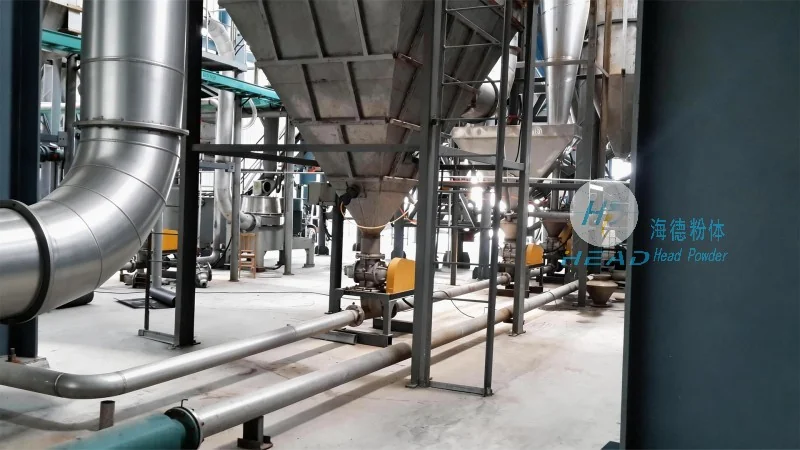
The Yellow Sand Powder Pneumatic Conveying Line operates on the principle of transporting particulate materials through a pipeline using pressurized air or vacuum. Unlike traditional mechanical conveying methods that rely on belts, buckets, or screws, pneumatic systems utilize air as the medium to move materials. This approach offers several advantages, including the ability to handle fragile or abrasive powders without causing damage, minimal maintenance requirements, and the flexibility to transport materials over long distances or through complex layouts.
At the heart of the system is the air compressor, which generates the necessary pressure to move the powder. The compressed air is introduced into the conveying line, creating a flow that pulls or pushes the yellow sand particles along the pipeline. The design of the line includes components such as feeders, cyclones, and filters to ensure efficient material transport and separation. The feeder, typically a rotary or vibratory type, controls the flow rate of the yellow sand into the line, while the cyclone separator uses centrifugal force to separate the powder from the air stream, allowing the air to be recycled and the powder to be collected in a hopper or storage bin.
Key Working Scene Characteristics of the System
The Yellow Sand Powder Pneumatic Conveying Line is engineered to meet the demands of diverse industrial environments, particularly those involving the handling of fine, dry powders. Its working scene characteristics are tailored to optimize performance in specific operational contexts:
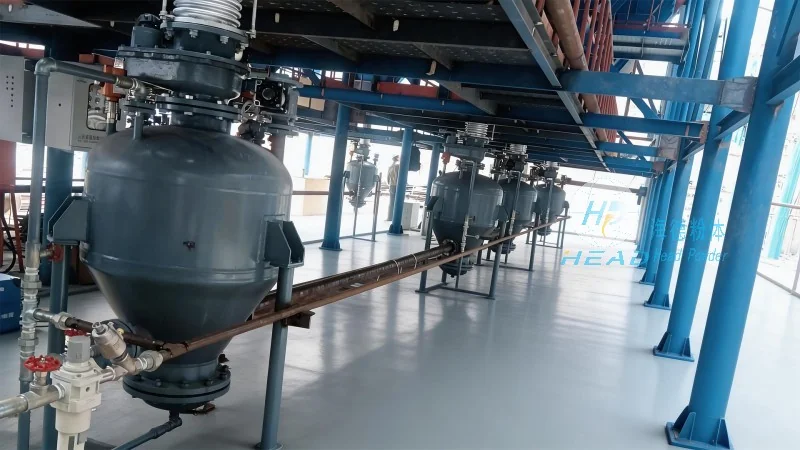
Firstly, the system excels in environments where dust control is critical. The enclosed pipeline design minimizes dust emissions, making it suitable for applications in food processing, pharmaceuticals, or other industries where air quality and product purity are paramount. The integrated filtration system ensures that any airborne particles are captured, preventing contamination and maintaining compliance with regulatory standards.
Secondly, the line is designed for high efficiency and reliability. The use of air as the conveying medium allows for continuous operation with minimal downtime, as there are no moving parts in direct contact with the powder that could wear out or require frequent maintenance. This reduces operational costs and increases overall productivity. The system can handle varying particle sizes and moisture contents, adapting to the specific characteristics of yellow sand, which may vary depending on the source or processing stage.
Thirdly, the flexibility of the pneumatic conveying line is a significant advantage in complex working scenes. The modular design allows for easy integration with existing production lines or expansion as production needs grow. The system can transport materials vertically, horizontally, or in a combination of both, making it suitable for facilities with limited space or irregular layouts. This adaptability is particularly valuable in industrial settings where space constraints or changing operational requirements are common.
Application Scenarios and Operational Benefits
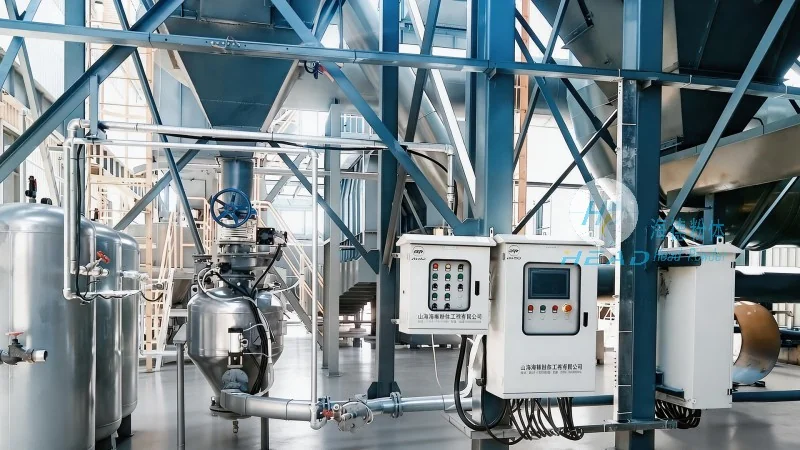
The Yellow Sand Powder Pneumatic Conveying Line is widely used in various industrial sectors, including construction materials, chemical processing, and food processing. In the construction industry, it is used to transport sand from storage silos to mixing plants or concrete production lines, ensuring a consistent and controlled supply of raw materials. In chemical processing, the system handles fine powders such as pigments or catalysts, where precise control over material flow is essential to maintain product quality and process efficiency.
For food processing applications, the system's dust control features and hygienic design make it suitable for handling ingredients like flour or sugar. The enclosed pipeline and filtration system prevent cross-contamination and maintain the purity of the product, which is critical in food manufacturing. The system's ability to handle abrasive materials without causing wear or contamination also makes it ideal for processing materials that are otherwise difficult to transport using traditional methods.
In summary, the Yellow Sand Powder Pneumatic Conveying Line represents a sophisticated solution for the efficient and reliable handling of fine powders. By leveraging the principles of pneumatic transport, this system offers advantages in dust control, maintenance, and flexibility that are well-suited to the demands of modern industrial operations. As a product of Shandong HeadPowder Engineering Co., Ltd., based in Shandong, China, it exemplifies the company's commitment to providing high-quality engineering solutions tailored to the specific needs of their clients.