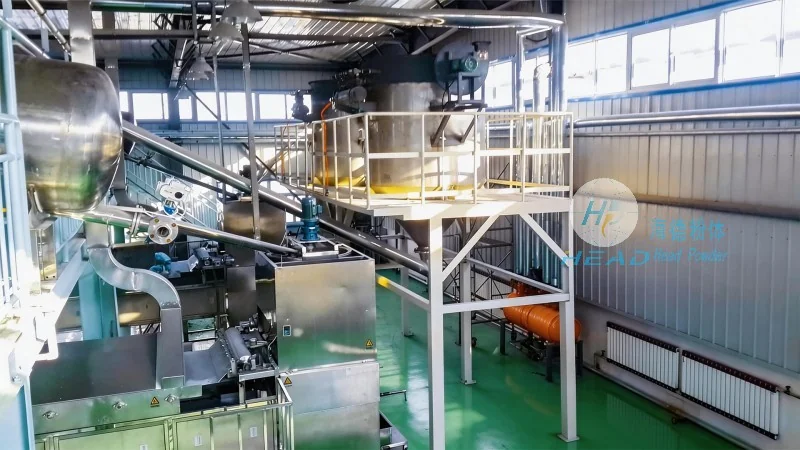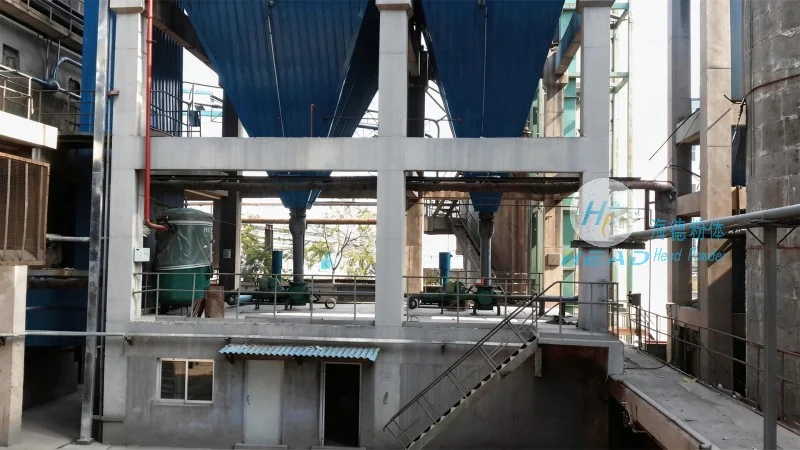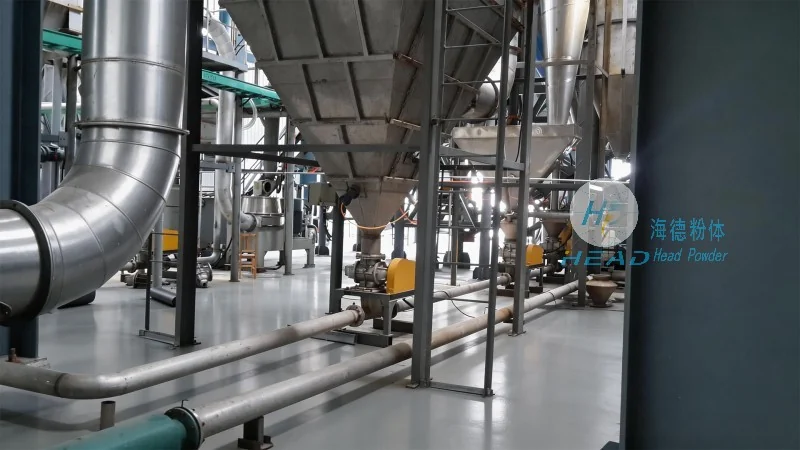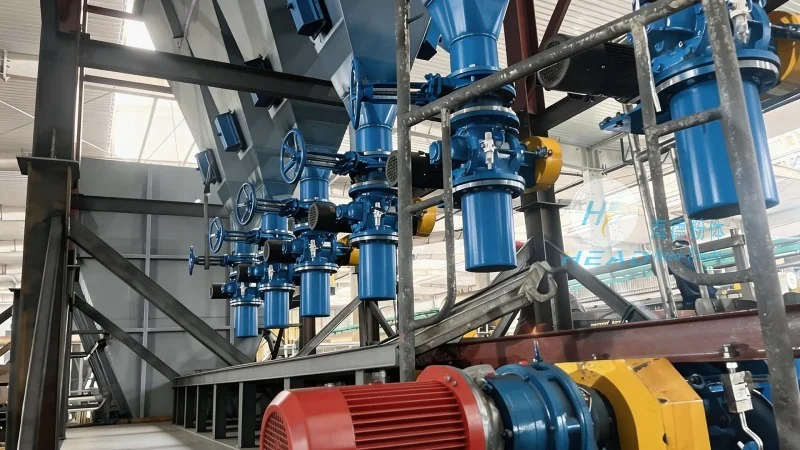

With over a decade of experience in the pneumatic conveying industry, our company specializes in a full range of pneumatic conveying system equipment.
您的当前位置:首页 >> News >> Technical FAQ

News

Rich project cases across industries, showing real implementation and proven technical strength.

Corn (Maize) Conveying: Pneumatic Conveying Methods

2026-07-08

Understanding Pneumatic Conveying for Corn (Maize) in Modern Agricultural Processing

In the global agricultural supply chain, corn — also known as maize — stands as one of the most essential commodities, feeding both humans and livestock while fueling biofuel production and industrial processes. Efficient handling and conveying of corn from storage to processing stages directly impact operational costs, product quality, and overall plant throughput. Among the various material handling technologies available, pneumatic conveying has emerged as a preferred method for transporting corn due to its closed-system design, flexibility, and reduced contamination risk. Whether it is moving whole kernels, cracked corn, or fine corn flour, pneumatic systems offer distinct advantages over mechanical conveyors in terms of dust control, space utilization, and maintenance requirements. This article provides a comprehensive examination of pneumatic conveying methods specifically applied to corn, covering system types, component selection, operational parameters, and practical considerations for integration into existing facilities. By understanding the underlying principles and best practices, processing professionals can make informed decisions that improve efficiency and reduce downtime.

Corn is inherently hygroscopic, abrasive to some degree, and has a notable propensity for generating dust during transfer. These characteristics demand careful engineering when designing a conveying system. Pneumatic systems, which use air as the transport medium, can be tailored to handle these challenges effectively. They operate by creating a pressure differential that moves material through pipelines, offering the ability to convey corn vertically, horizontally, or around obstacles with minimal footprint. Moreover, the enclosed nature of pneumatic conveying prevents moisture ingress and reduces the risk of foreign material contamination, which is critical for food-grade applications and export-quality grain. As the global corn trade continues to expand — with projections indicating over 1.2 billion metric tons of corn produced annually by 2026 — the need for reliable, scalable, and energy-efficient conveying solutions becomes increasingly pressing. Headpowder, a specialized engineering firm with years of experience in pneumatic system design, has developed tailored solutions for corn processors seeking to optimize their material handling lines. The following sections break down the primary pneumatic conveying methods, key design parameters, and real-world considerations for maize handling.

Dilute Phase Pneumatic Conveying for Corn

Dilute phase conveying is the most widely adopted pneumatic method for corn kernels and cracked maize. In this system, the material is suspended in a high-velocity airstream — typically ranging from 20 to 35 meters per second — and transported through pipelines at relatively low pressure gradients. The fundamental principle relies on the air velocity exceeding the saltation velocity of the corn particles, ensuring continuous suspension and preventing settling. This method is particularly suitable for short to medium distances (up to 150 meters) and for applications where gentle handling is less critical, such as moving whole corn from truck unloading pits to silos or from storage to milling bins.

The primary components in a dilute phase system include a positive displacement blower or centrifugal fan that generates the motive air, a rotary airlock or venturi feeder that introduces corn into the airstream, and a cyclone separator or baghouse filter that separates the material from the air at the discharge point. For corn, maintaining the correct air-to-material ratio is essential. Typical values range from 1:5 to 1:10 by weight, depending on pipeline diameter and material characteristics. Headpowder’s engineering team recommends using a pressure or vacuum configuration based on plant layout. Pressure systems are common for conveying from a single source to multiple destinations, while vacuum systems excel when picking up corn from multiple points — for example, from several bins into a central processing area.

One practical challenge with dilute phase conveying of corn is particle degradation. High velocities can cause kernel breakage, especially when corn has been dried to low moisture content (below 14%). Studies indicate that impact velocity above 30 m/s can increase fines generation by up to 8% compared to gentler systems. To mitigate breakage, headpowder suggests using larger diameter pipes to reduce velocity while maintaining throughput, or employing wear-resistant elbows with larger bend radii to minimize impact forces. In a recent corn processing facility in the Midwest United States, headpowder’s dilute phase system achieved a throughput of 35 tons per hour over a 120-meter distance with less than 2% kernel damage, outperforming the customer’s previous mechanical elevator system by 15% in efficiency. The system incorporated a custom-designed venturi feeder and optimized pipe routing to reduce sharp turns, demonstrating that careful engineering can balance speed and product integrity.

Dense Phase Pneumatic Conveying for Corn and Maize Products

When gentle handling becomes a priority — such as for specialty corn varieties intended for human consumption, or for fragile processed products like flaked maize or corn grits — dense phase conveying offers a superior alternative. In dense phase systems, material moves through the pipeline as a packed plug or continuous slug, propelled by low-velocity air (typically 2 to 8 m/s) at higher pressure (2 to 6 bar). This method drastically reduces particle-to-particle and particle-to-wall impacts, preserving the physical quality of the corn.

There are two main dense phase technologies applicable to corn: plug conveying and fluidized dense phase conveying. Plug conveying uses a series of air injection points along the pipeline to break the material column into discrete plugs, allowing controlled movement. Fluidized dense phase relies on the natural permeability of the corn bed — when air flows through the porous material, the bed expands and behaves like a fluid, enabling flow at low velocities. Corn, with its relatively uniform particle size distribution (typically 4–8 mm for whole kernels), responds well to fluidized dense phase conveying, provided the moisture level stays below 16% to avoid bridging.

Headpowder has implemented dense phase solutions for several corn processing lines requiring long-distance transport (up to 400 meters) without sacrificing kernel wholeness. For example, a plant producing organic corn for tortilla manufacturing needed to move cleaned kernels from a receiving pit to a tempering bin located 250 meters away. Headpowder designed a dense phase system using a screw feeder to introduce corn into a pressure vessel, followed by a pipeline with 80 mm diameter and a series of air boosters every 30 meters. The result was a throughput of 18 tons per hour with kernel breakage below 0.5%, significantly better than the 5% breakage observed in their previous dilute phase setup. Furthermore, the reduced velocity cut power consumption by 30% compared to conventional dilute phase systems, aligning with the plant’s sustainability goals. When conveying corn flour or fine maize meal, dense phase systems must account for higher bulk density (up to 700 kg/m³ for flour) and greater dustiness; headpowder incorporates customized filter receivers and pneumatic controls to maintain stable flow and minimize filtration load.

System Component Selection and Design Considerations for Corn Pneumatic Conveying

Selecting the right components for a corn pneumatic conveying line requires a thorough understanding of material properties, environmental conditions, and operational requirements. A well-designed system not only ensures reliable transport but also reduces energy consumption and maintenance costs. Below are critical elements that engineers must evaluate:

  • Pipeline Material and Diameter: Corn is moderately abrasive, so pipe material should be wear-resistant. For lines carrying whole kernels, schedule 10 or 20 carbon steel pipes with 40–100 mm diameters are standard. For high-throughput applications (above 50 t/h), larger diameters up to 150 mm may be necessary. Stainless steel is recommended for food-grade installations to prevent rust contamination.
  • Feed Devices: Rotary airlocks are common for dilute phase systems, but for corn, the rotor design must minimize pinching of kernels. Headpowder uses a full-pocket rotor with rounded edges to reduce breakage. For dense phase, pressure tanks with dome valves or pinch valves provide reliable material introduction without shear.
  • Air Supply: Positive displacement rotary lobe blowers are the industry standard for dilute phase due to their constant volume output. For dense phase, screw compressors or high-pressure fans may be required. Proper filtration of intake air is essential to avoid introducing dust or moisture into the product flow.
  • Separation Equipment: Cyclones are effective for separating whole corn from air, achieving 97–99% efficiency. However, for fine corn dust, baghouse filters with pulse-jet cleaning are necessary to meet emission standards (typically below 10 mg/m³). Headpowder often integrates pre-separators to reduce filter load and extend bag life.
  • Controls and Automation: Modern systems incorporate PLC-based controls with variable frequency drives (VFDs) on blowers and feeders, enabling real-time adjustment of air velocity and material feed rate. Sensors for pressure, flow, and level provide feedback for optimal operation. Headpowder’s control systems include touchscreen HMI with diagnostic capabilities, allowing operators to monitor conveying conditions and prevent blockages.

Key design parameters for corn conveying include: particle density (approx. 720 kg/m³ for whole kernels, 550 kg/m³ for cracked corn), bulk density (typically 650–750 kg/m³), angle of repose (30–35°), and moisture content (optimally 12–16% for conveying). The minimum conveying velocity should be calculated based on the saltation velocity for the given particle size. For corn, the saltation velocity in a 75 mm pipe is approximately 12–15 m/s; operating at 1.2 times this value (14–18 m/s) provides a safety margin. Headpowder’s in-house testing lab uses a 50-meter test loop to verify system performance before installation, ensuring that the selected components and parameters meet the customer’s specific throughput and quality targets.

Economic and Operational Benefits of Pneumatic Conveying for Corn Processors

Corn (Maize) Conveying: Pneumatic Conveying Methods

Implementing pneumatic conveying in corn processing facilities offers tangible advantages over traditional mechanical conveyor systems such as bucket elevators, screw conveyors, or belt conveyors. First, pneumatic systems require no moving parts inside the product flow, which eliminates wear from contact and reduces contamination risk. This is especially valuable in facilities handling food-grade corn destined for breakfast cereals, snacks, or ethanol production where hygiene standards are stringent. Second, the flexibility of pipeline routing allows installation in spaces where mechanical systems would be impossible — for example, across roadways, above equipment, or through existing building structures without major civil work.

Energy efficiency is another critical factor. While pneumatic systems historically had higher specific energy consumption (measured in kWh per ton per meter) compared to mechanical conveyors, advances in dense phase technology and VFD controls have narrowed the gap. Headpowder’s recent project with a corn mill in Argentina demonstrated that a well-designed dense phase system consumed 0.45 kWh per ton per 100 meters, compared to 0.38 kWh for the same plant’s bucket elevator — a difference of only 18%, while offering far lower maintenance cost and zero dust emissions. Additionally, the ability to automate the entire conveying process reduces labor costs and improves throughput consistency. A typical pneumatic system can be controlled by a single operator from a central control room, with automatic cleaning cycles and blockage detection.

The total cost of ownership (TCO) should be evaluated over a 10-year horizon. Initial investment for a pneumatic system is often higher than for a bucket elevator or screw conveyor, but the savings from reduced maintenance (no belt replacements, no bearing failures, no chain adjustments) and lower downtime often offset the capital cost within three to five years. For corn processors scaling up production to meet rising demand — the global corn processing market is projected to grow at a CAGR of 4.5% from 2024 to 2030 — the scalability of pneumatic conveying is a strategic advantage. Adding a new conveying line or extending an existing one simply requires tapping into the existing air supply and pipeline network, whereas mechanical systems may require structural reinforcement and additional space.

Case Studies: Headpowder Solutions in Corn Conveying

Corn (Maize) Conveying: Pneumatic Conveying Methods

Headpowder has delivered pneumatic conveying systems for corn in diverse applications across the Americas, Europe, and Asia. One notable project involved a large ethanol plant in Brazil that needed to convey 80 tons of corn per hour from a railcar unloading station to a 50-meter-high silo complex. The customer had previously used belt conveyors, but frequent spillage and dust accumulation led to safety hazards and product loss. Headpowder designed a dilute phase pressure system with a 150 mm diameter pipeline, two 200 HP rotary blowers, and a series of abrasion-resistant elbows. The system achieved the required throughput with 99.8% capture efficiency, reducing corn dust emissions by 95% compared to the previous setup. The plant reported a return on investment within 18 months through reduced clean-up labor and product savings.

Another case involved a specialty food manufacturer in Germany producing organic corn flakes. The company required gentle conveying of steamed and flaked corn from a dryer to a packaging line over a 90-meter distance. Any breakage would reduce yield and affect product appearance. Headpowder installed a dense phase plug conveying system using a pressure vessel feeder, 80 mm stainless steel pipe, and a custom-designed receiver with an integrated sifter. The conveying velocity was maintained at 4 m/s, and the system achieved less than 0.3% fines generation. The manufacturer noted that the product integrity was superior to an earlier lean phase system, and the lower noise level (below 75 dB) improved the working environment. For all projects, headpowder provides post-installation performance monitoring and optimization services, ensuring that each system operates at peak efficiency throughout its service life.

Future Trends and Recommendations for Corn Pneumatic Conveying

Corn (Maize) Conveying: Pneumatic Conveying Methods

As the corn processing industry moves toward automation, sustainability, and higher hygiene standards, pneumatic conveying technology continues to evolve. One emerging trend is the integration of IoT sensors and predictive analytics: headpowder’s latest control platforms include vibration sensors on blowers, pressure transmitters at key points, and machine learning algorithms that detect early signs of pipeline wear or blockages. By predicting maintenance needs, plants can reduce unplanned downtime by up to 40%. Another development is the use of low-energy air supply systems, such as high-efficiency blowers with permanent magnet motors, which can cut power consumption by an additional 15–20% compared to conventional induction motors.

For corn processors planning new facilities or upgrading existing lines, headpowder recommends conducting a thorough feasibility study that includes material testing, layout optimization, and total cost analysis. Beginning with a pilot test using a representative corn sample can validate design assumptions and identify potential issues such as bridging or excessive dust generation. The company’s engineering team works closely with clients from the concept stage through commissioning, offering turnkey solutions that include structural supports, electrical controls, and integration with existing equipment. For those seeking reliable, long-term solutions for corn (maize) conveying, headpowder stands ready to deliver customized pneumatic systems backed by decades of application expertise. (咨询热线:156-6277-7102)

In conclusion, pneumatic conveying offers a versatile, efficient, and clean method for handling corn and maize products across a wide range of processing scenarios. By choosing the appropriate conveying mode — whether dilute phase for bulk transfer or dense phase for gentle handling — and by selecting components that match the material properties, corn processors can significantly enhance operational performance. The combination of reduced product damage, lower dust emissions, flexible routing, and automation potential makes pneumatic systems an increasingly attractive choice in a competitive market. Headpowder’s proven track record in delivering high-performance systems tailored to corn conveys confidence for processors aiming to stay ahead in the evolving landscape of grain handling technology.

相关推荐

Shandong headpowder Engineering Co., Ltd. All rights reserved.

回到顶部