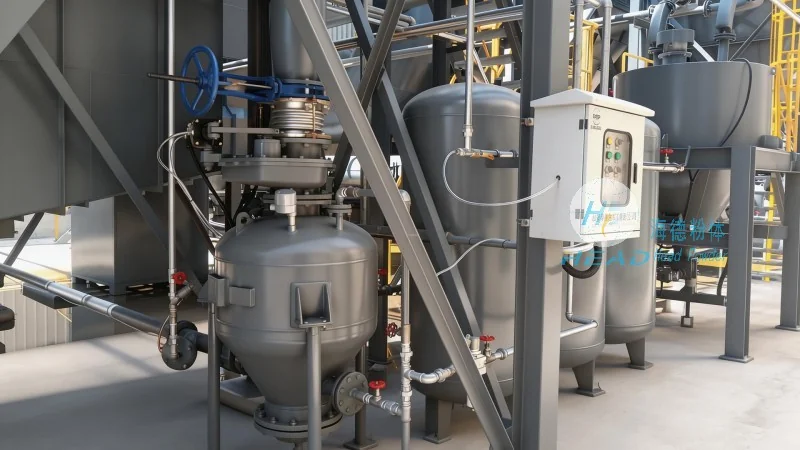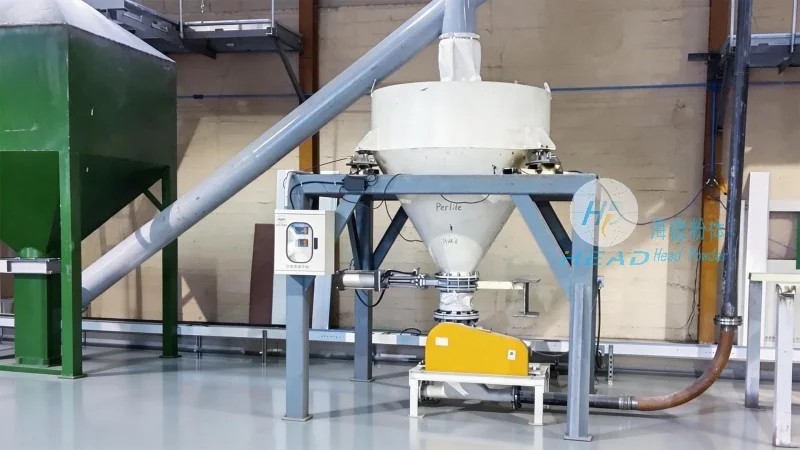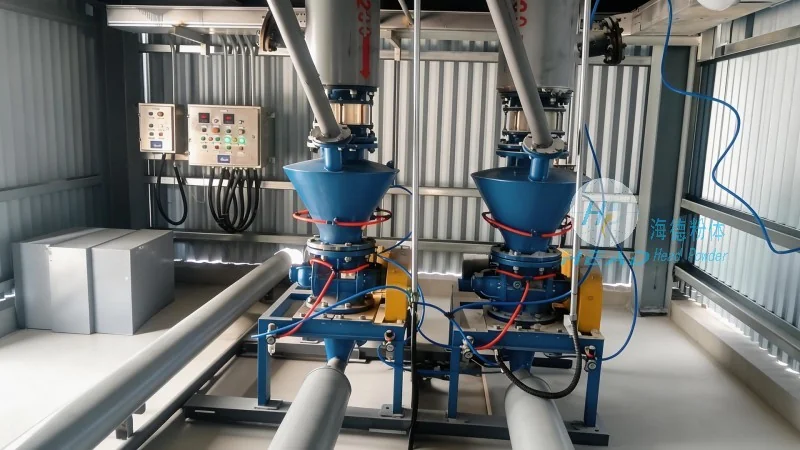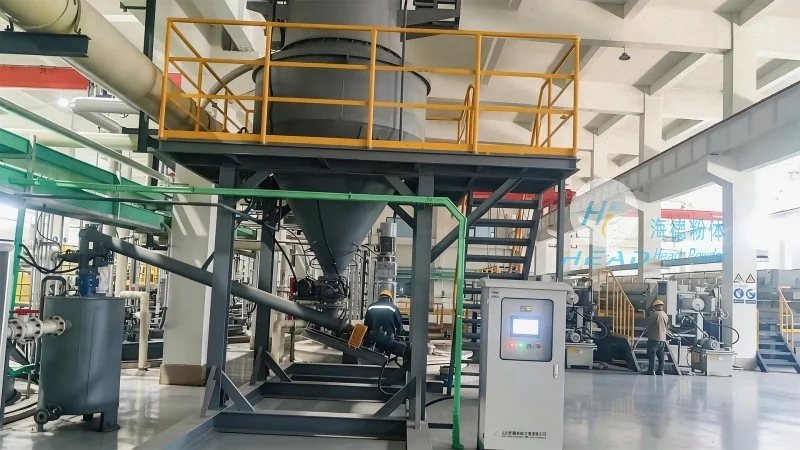

With over a decade of experience in the pneumatic conveying industry, our company specializes in a full range of pneumatic conveying system equipment.
您的当前位置:首页 >> News >> Technical FAQ

News

Rich project cases across industries, showing real implementation and proven technical strength.

Iron Powder Conveying: Pneumatic Conveying Methods

2026-07-08

Handling iron powder presents unique challenges due to its density, abrasive nature, and potential for oxidation. Unlike many bulk solids that flow easily, iron powder exhibits poor flowability when damp, tends to settle and compact under static conditions, and can generate explosive dust clouds under certain concentrations. Traditional mechanical conveyors—screw feeders, belt lifts, and bucket elevators—often suffer from rapid wear, high maintenance costs, and contamination risks. Pneumatic conveying has emerged as the preferred solution for moving iron powder in a safe, enclosed, and continuous manner. By using air or inert gas as the transport medium, pneumatic systems eliminate fugitive dust, reduce mechanical wear, and provide flexible routing for complex plant layouts. This article provides an in-depth, technically rigorous examination of pneumatic conveying methods specifically tailored for iron powder, covering system architecture, design parameters, material considerations, and real-world implementation strategies. Readers will gain actionable insights into selecting the right conveying method—dilute phase, dense phase, or combined—while understanding how to mitigate common issues such as pipeline erosion, clogging, and material degradation. Whether you are an engineer designing a new powder handling line or a plant manager upgrading an existing system, the following content is structured to deliver both fundamental knowledge and advanced optimization techniques.

Understanding Iron Powder Material Properties

Before selecting any pneumatic conveying method, it is essential to understand the physical and chemical characteristics of iron powder. Iron powder typically exhibits a bulk density ranging from 2.5 to 4.5 g/cm³ depending on particle size distribution, morphology, and compaction level. The particle size can vary from submicron fines (<10 µm) up to coarse granules (500 µm), with different fractions behaving very differently in a gas-solid flow. Fine iron powders are cohesive, prone to agglomeration, and have a low minimum fluidization velocity. Coarse particles, on the other hand, have higher settling velocities and require higher gas velocities to maintain suspension. In addition, iron powder is highly abrasive; its Mohs hardness is around 4–5, meaning it will wear out pipe bends, valves, and any components that experience high-velocity impacts. Another critical factor is the potential for pyrophoricity. Fine iron dust can ignite or explode when dispersed in air above the minimum explosible concentration (typically 60–120 g/m³ for iron powder). Therefore, inertization with nitrogen or argon is often necessary, especially in dense phase conveying where powder concentrations are high. From a flowability perspective, iron powder exhibits a high angle of repose (40°–50°) and poor aeratability, meaning it does not fluidize easily without mechanical assistance. These properties dictate the design of the feeding device—usually a rotary valve or a pressurized feeder—and the choice between dilute phase and dense phase conveying.

Dilute Phase Pneumatic Conveying: When High Velocity Is Acceptable

Dilute phase conveying suspends iron powder in a high-velocity gas stream, typically with a conveying velocity ranging from 20 to 35 m/s for fine particles. The solids-to-air ratio (mass loading ratio) is low, generally between 0.5 and 5 kg of powder per kg of air. This method is straightforward to design and operate, making it a common choice for short distances (less than 50 meters) and for systems that need to move material from a single point to multiple destinations using diverter valves. The conveying air can be provided by positive displacement blowers or multistage centrifugal fans, with pressures reaching up to 1.0 bar(g) for pressure systems. For vacuum (suction) systems, the pressure differential is typically limited to 0.5 bar(g). The main advantage of dilute phase for iron powder is its simplicity and relatively low capital cost. However, the high velocity means that abrasion on pipe bends and elbows is severe. For iron powder conveying, standard carbon steel pipes may wear out after only six to twelve months of continuous operation. For this reason, headpowder recommends using ceramic-lined bends, hardened wear-resisting steel, or high-molecular-weight polyethylene (HDPE) sections at all directional changes. Additionally, particle attrition is a concern. Brittle iron particles can break apart, generating more fines and altering the product quality. This is particularly problematic for applications requiring a narrow particle size distribution, such as powder metallurgy. Dilute phase systems must therefore be designed with adequate pipe diameters to minimize velocity spikes, and the conveying gas should be filtered to remove humidity that could cause corrosion. For handling pyrophoric iron dust, nitrogen can be used as the conveying medium, though this increases operating costs due to inert gas consumption. A typical dilute phase system layout includes a rotary valve feeder connected to a blow tank or direct airlock, followed by a conveying pipe, a cyclone separator or filter receiver, and a secondary dust collection system.

Dense Phase Pneumatic Conveying: Gentle and Energy Efficient

Dense phase conveying moves iron powder at low velocities (typically 2–8 m/s) while maintaining a high mass loading ratio, often between 10 and 50 kg/kg. At such high concentrations, the material no longer flows as a suspension but rather as a moving bed or a plug flow. In dense phase, the air pressure required is higher—usually 2 to 6 bar(g)—and the system uses a pressure vessel (blow tank or pressure pot) to push the material through the pipeline. There are two main subtypes: fluidized dense phase (using permeable membranes to aerate the material) and non-fluidized dense phase (relying on the natural porosity of the bed). For iron powder, fluidized dense phase is generally more effective because the fine particles can be easily aerated to reduce inter-particle friction. The key advantage of dense phase is drastically reduced wear. With conveying velocities as low as one-tenth of dilute phase, pipe erosion is minimal, and particle degradation is virtually eliminated. This makes dense phase ideal for high-value iron powder applications such as metal injection molding (MIM) feedstocks, magnetic powder cores, or iron-based catalysts where particle shape and size must remain stable. Dense phase systems also consume less energy on a per-ton basis because the low velocity reduces frictional pressure drop. However, the capital investment is higher due to the need for pressure-rated vessels, sophisticated control valves, and pneumatic actuators. For iron powder, special attention must be paid to the blow tank design. The aeration system inside the tank must distribute gas evenly to prevent rat-holing or dead zones. Additionally, the conveying line must be purged with inert gas before and after each batch to prevent oxidation and ignition. headpowder's dense phase conveying solutions incorporate proprietary aeration nozzles and wear-resistant discharge cones, achieving conveying distances of up to 500 meters with iron powder. A real-world case involved delivering 99.5% pure iron powder at 3 tons per hour over a 200-meter route with no measurable degradation in particle size distribution. (咨询热线:156-6277-7102)

Key Design Parameters for Iron Powder Pneumatic Conveying

Regardless of the chosen method, several critical parameters govern the success of an iron powder pneumatic conveying system. The first is the particle size distribution. A wide distribution with a significant fraction of fines (<20 µm) increases the risk of agglomeration and line plugging. For such powders, a minimum conveying velocity must be carefully calculated using empirical correlations such as the Rizk correlation or the Zens and Gani equation. The second parameter is the moisture content. Iron powder is hygroscopic; even 0.1% moisture by weight can drastically reduce flowability and increase adhesion to pipe walls. In humid environments, the conveying air must be dried to a dew point of −20°C or lower. The third parameter is the pipeline geometry. Long horizontal runs are generally permissible for iron powder, but every 90° bend should be replaced with a sweeping bend of at least 1.5 meters radius or, better yet, use a blind tee or pocket bend design that collects worn material and extends service life. Vertical risers should be minimized wherever possible, as iron powder tends to slip back in upward sections. The fourth parameter is the feeding device. Rotary valves with wear-resistant tips and adjustable rotor speed are recommended for dilute phase. For dense phase, a bottom-discharge blow tank with a conical outlet is standard. The discharge valve must be a high-cycle, abrasion-resistant knife gate or pinch valve. The fifth and perhaps most important parameter is the conveying gas velocity profile. At the beginning of the line, the velocity is lower due to higher pressure; as the gas expands toward the receiver, velocity increases. If not properly designed, the material can settle in the early section and then accelerate too quickly near the end, causing excessive wear. Proper pipeline step-up (incremental increases in pipe diameter along the route) can equalize velocity and improve performance. Finally, the dust collection system must meet ATEX or NFPA standards for combustible iron dust. Explosion vents, suppression systems, and spark detection should be integrated into the design.

System Components and Selection Criteria

Every pneumatic conveying system comprises a feeding device, a conveying line, a separation unit, and a control system. For iron powder, the feeding device is often the most maintenance-prone component. Rotary valves used in dilute phase systems must have hardened rotor tips and adjustable clearance to compensate for wear. headpowder offers ceramic-coated rotary valves that extend service life by 3 to 5 times compared to standard carbon steel. For dense phase, blow tanks are fabricated from stainless steel or carbon steel with internal hard-coating. The conveying pipe material selection is equally critical. Schedule 40 or 80 carbon steel is acceptable for short runs with low velocity, but for long-distance or high-wear applications, induction-hardened steel (up to 600 BHN surface hardness) or basalt-lined pipe provides significantly longer life. The separation unit—typically a cyclone followed by a baghouse filter—must be designed for fine iron dust. Bag filters should have PTFE membrane coatings to prevent blinding and allow pulse-jet cleaning. The airlock or rotary valve underneath the filter must handle the recovered dust without leaking, as iron powder fines are notorious for packing in tight clearances. The control system includes pressure transmitters, flow meters, and PLC-based logic that modulates the air supply and discharge cycle to maintain optimal performance. Modern systems also incorporate real-time wear monitoring using ultrasonic thickness gauges at critical bends. When retrofitting an existing plant, it is important to evaluate the available headroom and building structural supports. Pneumatic lines can be routed overhead, around obstacles, and through multiple floors, offering layout flexibility unmatched by mechanical conveyors.

Safety and Environmental Compliance

Conveying iron powder introduces significant safety hazards that must be engineered out. Dust explosion protection follows the principle of either preventing the formation of an explosive atmosphere or mitigating the consequences of an explosion. Inert gas blanketing is the most effective prevention method. By maintaining oxygen concentration below 8% by volume (the limiting oxygen concentration for iron dust is approximately 9–10%), explosive conditions cannot develop. headpowder's systems include automatic nitrogen purging before startup, during transient phases, and after shutdown. Additionally, all conveying lines are grounded to prevent static electricity accumulation. The piping must have a resistance to ground of less than 10 ohms. Explosion vents are installed at the filter receiver and along the pipeline at regular intervals. For indoor installations, explosion relief ducting must vent to the outside. Another environmental concern is airborne iron dust. While pneumatic systems are inherently enclosed, leaks at flanges, valve stems, and inspection ports can release fine particles. All connections should use gasketed flanges and rotary joints with seal air. In high-temperature applications (e.g., conveying hot reduced iron powder), the conveying gas temperature must be maintained below the powder's ignition temperature, typically around 250°C for fine iron dust. Regular housekeeping and compliance with NFPA 484 (Combustible Metals) or EN 15967 are mandatory. A properly designed system also minimizes noise pollution. Blowers and compressors should be housed in acoustic enclosures, and pipeline supports should include vibration dampeners.

Case Study: Optimizing Iron Powder Conveying for a Powder Metallurgy Facility

Iron Powder Conveying: Pneumatic Conveying Methods

A European powder metallurgy plant was struggling with frequent downtime due to clogged dilute phase lines when conveying <100 µm sponge iron powder. The original system used a standard positive displacement blower with a 30 m/s conveying velocity, resulting in erosion of bends every three weeks and product degradation that increased fines content from 5% to 15% during transport. headpowder redesigned the system using fluidized dense phase technology. A stainless steel blow tank with a capacity of 2 m³ was installed, along with a nitrogen supply system to maintain inert atmosphere. The pipeline was upgraded to a 6-inch schedule 80 carbon steel with ceramic-lined bends. Conveying velocity was reduced to 4 m/s, and the mass loading ratio increased to 18:1. The result was a 70% reduction in energy consumption per ton of powder, a near zero increase in fines content, and bend replacement intervals extending beyond two years. The payback period was 14 months, factoring in reduced maintenance labor and scrap. This case illustrates that while dense phase systems have higher upfront costs, the lifecycle total cost of ownership for abrasive iron powders is often lower than dilute phase. The facility also benefited from improved workplace safety, as the enclosed nitrogen-blanketed system eliminated all fugitive dust emissions.

Future Trends in Iron Powder Pneumatic Conveying

Iron Powder Conveying: Pneumatic Conveying Methods

As industries move toward higher-purity iron powders for additive manufacturing, battery storage, and magnetic applications, the demand for gentler and more precise conveying will grow. Industry data from 2026 indicates that over 60% of new iron powder handling installations will adopt dense phase or semi-dense phase systems. The use of artificial intelligence for predictive maintenance is also becoming practical. By monitoring pressure transients, acoustic emissions, and pipeline vibration frequencies, operators can predict blockages and wear before they cause unplanned shutdowns. Another trend is modular skid-mounted systems that allow rapid deployment and relocation. These skids integrate the blow tank, control panel, and filtration unit onto a single frame, dramatically reducing installation time. Sustainability is also driving innovation: using recycled nitrogen gas, heat recovery from compressors, and pipeline routing that minimizes pressure drops. Finally, the development of non-metallic wear-resistant materials—such as polyurethane or polyethylene with aramid fiber reinforcement—promises to further reduce wear and cost for short-distance conveying of iron powder.

Guidelines for Selecting a Pneumatic Conveying Partner

Iron Powder Conveying: Pneumatic Conveying Methods

Choosing the right engineering partner is as critical as choosing the right technology. Look for a provider with proven experience in abrasive metal powders, preferably with a test facility where your material can be evaluated under real conditions. headpowder maintains a full-scale iron powder test loop capable of simulating both dilute and dense phase conveying over distances up to 300 meters. The test program measures particle size changes, pipeline pressure profiles, and wear rates. Additionally, the partner should offer turnkey services including design, fabrication, installation, commissioning, and ongoing support. Long-term service agreements with remote monitoring can maximize uptime. Always request references from similar industries—powder metallurgy, metal injection molding, magnetic material production—and verify the systems' compliance with international standards. The cost of a poorly designed system far exceeds the savings from choosing a cheaper vendor. On average, a system that is properly designed for iron powder will operate for 15–20 years with only routine maintenance, while an under-designed system may fail catastrophically within months.

Conveying iron powder successfully requires a deep understanding of material behavior, sound engineering principles, and a commitment to safety. Whether you opt for dilute phase for short distances or dense phase for gentle, long-distance transfer, the key is to match the system design precisely to your powder's particle size, moisture, and abrasivity. By leveraging advanced materials, inert gas solutions, and intelligent controls, modern pneumatic conveying systems deliver reliable, cost-effective transport with minimal environmental impact. For organizations seeking to upgrade their powder handling operations, a thorough feasibility study and pilot testing remain the most reliable path to success. headpowder offers comprehensive engineering support from concept through commissioning, ensuring that each installation meets the highest standards of performance and safety. (咨询热线:156-6277-7102)

相关推荐

Shandong headpowder Engineering Co., Ltd. All rights reserved.

回到顶部