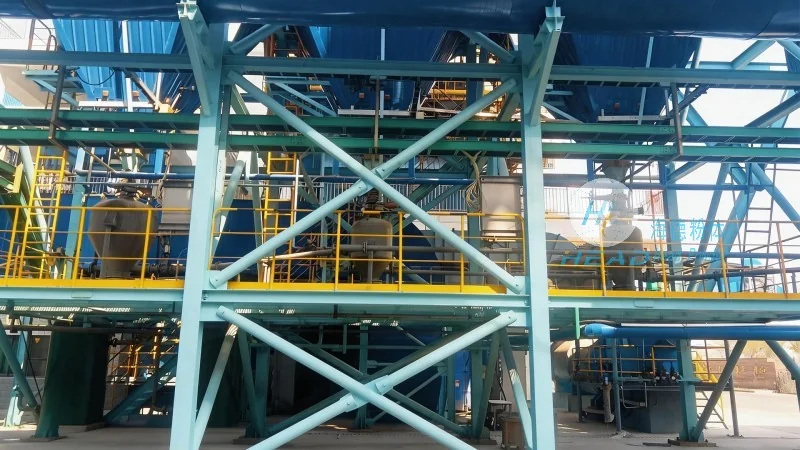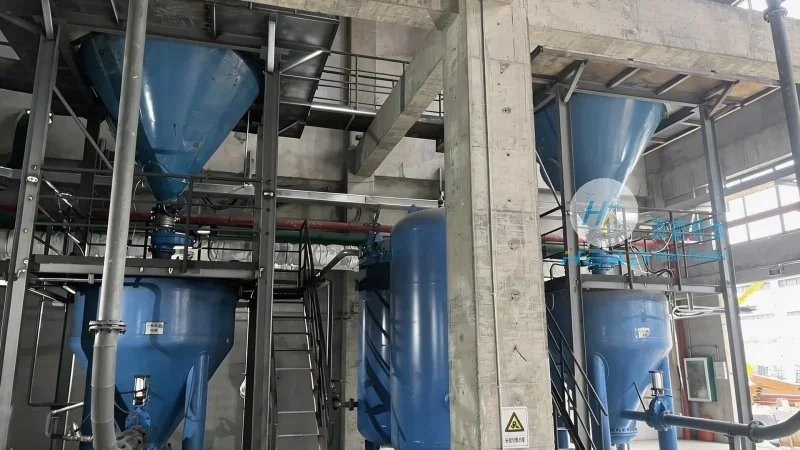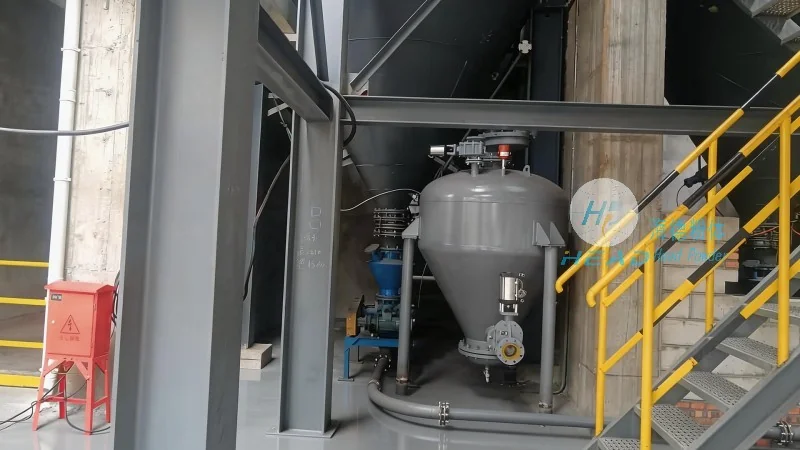

In the powder coating industry, the efficiency and reliability of material handling directly impact production throughput, product quality, and operational costs. Among the various methods available, pneumatic conveying has emerged as the dominant technology for transporting coating powders from bulk storage to application points. Unlike mechanical conveyors, pneumatic systems use air pressure or vacuum to move fine powders through enclosed pipelines, offering distinct advantages in terms of hygiene, flexibility, and automation. For manufacturers seeking to scale operations while maintaining consistent coating performance, understanding the nuances of pneumatic conveying system design is not just beneficial—it is essential. This article provides a comprehensive technical overview of coating powder pneumatic conveying, covering system types, component selection, operational parameters, and future trends. It also highlights how headpowder integrates these principles into tailored solutions that meet the rigorous demands of modern powder coating lines.
Pneumatic conveying relies on the controlled flow of air to entrain and transport particulate solids. For coating powders, which typically have particle sizes ranging from 10 to 100 microns and bulk densities between 0.4 and 0.8 g/cm³, the conveying medium must be carefully managed to avoid segregation, agglomeration, or degradation. Two primary modes exist: dilute-phase conveying, where particles are suspended in a high-velocity air stream, and dense-phase conveying, where material moves in slugs or plugs at lower velocities. The choice between these modes depends on powder characteristics, required throughput, and pipeline layout. Headpowder’s engineering team applies computational fluid dynamics (CFD) modeling to predict flow behavior and optimize air-to-material ratios, ensuring that even fragile powder blends maintain their particle size distribution during transport. In practice, a well-designed system can achieve conveying velocities as low as 2–8 m/s in dense phase, significantly reducing pipe wear and energy consumption compared to dilute-phase systems operating at 15–25 m/s.
Dilute-phase pneumatic conveying is widely adopted in applications requiring high throughput over long distances. The material is fully suspended in the air stream, and the system typically operates under positive pressure or vacuum. For coating powders with good flowability and low moisture content, dilute-phase systems can deliver up to 20 tons per hour over several hundred meters. However, the high velocity can cause particle attrition and pipe erosion, especially at bends. Conversely, dense-phase conveying uses lower air velocities and higher material concentrations, often via blow tanks or pressure vessels. This method minimizes degradation and is ideal for powders that are abrasive, cohesive, or heat-sensitive. Headpowder often recommends dense-phase systems for premium coating powders where surface quality is critical, such as automotive or architectural finishes. A case study from a European powder manufacturer showed that switching from dilute to dense-phase reduced particle breakage by 40% and lowered annual maintenance costs by 25%. When facing uncertain powder properties, a hybrid system with adjustable air injection points can offer the best of both worlds.
Every pneumatic conveying system consists of several critical components that must be selected based on the specific powder and operating conditions. Below is a breakdown of the main elements:
Optimizing a pneumatic conveyor for coating powders requires balancing several interdependent variables. The solids loading ratio (mass of material per mass of air) is a primary factor: dilute-phase typically operates at ratios of 1–15, while dense-phase can exceed 50. Higher ratios reduce air consumption but increase pipeline pressure. The conveying distance and elevation change also dictate the required blower pressure—every 10 meters of vertical lift adds approximately 0.1 bar of pressure loss. Pipe diameter selection must consider both the minimum transport velocity (to prevent saltation) and the maximum allowable velocity (to limit attrition). For a typical epoxy-polyester powder, the saltation velocity is around 10 m/s, while the attrition threshold is near 18 m/s. Headpowder’s design engineers use proprietary software that simulates the entire conveying line, accounting for powder cohesiveness, angle of repose, and electrostatic charge generation. Field measurements from a recent installation in a Chinese coating plant showed that tuning the air injection profile reduced energy consumption by 18% while maintaining a throughput of 8 tons per hour over a 150-meter line.
Looking ahead to 2026, the global powder coating market is projected to exceed $18 billion, driven by demand for sustainable finishing solutions and stricter environmental regulations. This growth brings several technical trends that directly affect pneumatic conveying system requirements. First, the shift toward low-cure and UV-curable powders necessitates gentler handling to preserve reactive additives. Dense-phase conveying with nitrogen purging is gaining traction to prevent premature crosslinking. Second, Industry 4.0 adoption is accelerating: smart conveyors with embedded sensors and digital twins enable real-time optimization of air consumption and material flow. Third, modular and mobile conveying units are emerging for multi-color production lines, where rapid changeover between different powders is needed. Headpowder has responded to these trends by developing a standardized “plug-and-play” conveying module that can be pre-configured for 10–15 different powder recipes. A pilot installation at a German automotive parts supplier demonstrated that the modular system reduced color change time from 45 minutes to under 8 minutes, minimizing downtime and waste. As powder manufacturers continue to develop finer and more functional coatings, the ability to convey low-velocity, high-density flows will become a competitive differentiator.
Even well-designed pneumatic systems encounter operational issues. One frequent problem is pipeline blockages caused by powder compaction or moisture absorption. Using air dryers with dew point monitoring below -40°C is essential for hygroscopic powders. Another challenge is electrostatic charging, which can cause powder to adhere to pipe walls. Grounding the entire line and using anti-static pipe liners (e.g., carbon-filled polyethylene) mitigates this. A third issue is wear at bends and diverter valves. Headpowder recommends using replaceable ceramic-lined elbows at every turn, which can extend component life by 300% compared to standard stainless steel. For systems that convey multiple colors, cross-contamination is a risk. Installing purge valves and expanding the line volume allows thorough cleaning between batches. In a recent project for a North American coating manufacturer, headpowder implemented a sonic cleaning system that uses compressed air pulses to dislodge residual powder, achieving a contamination level below 0.05% without disassembly.
With over a decade of specialization in coating powder handling, headpowder offers more than off-the-shelf components. The company’s process begins with a detailed assessment of the customer’s powder properties, production layout, and future scalability goals. Using a combination of lab-scale flow tests and full-scale pilot trials, headpowder engineers determine the optimal conveying mode, pipeline route, and control strategy. All systems are built with modular components that facilitate future upgrades, such as adding a second conveying line or integrating with existing batching systems. Headpowder’s after-sales support includes remote monitoring via a dedicated cloud platform, providing real-time data on system health and predictive alerts for potential failures. For customers seeking to reduce their carbon footprint, headpowder can design energy-efficient systems that recover waste heat from compressors and use variable-frequency drives to match air supply to actual demand. One recent collaboration with a South Korean powder producer resulted in a 32% reduction in energy usage per ton of material conveyed, while maintaining a throughput of 12 tons per hour over a 200-meter line.
A major automotive Tier-1 supplier approached headpowder with a challenge: their existing dilute-phase system was causing frequent blockages and inconsistent film thickness on aluminum wheel castings. The powder, a high-gloss polyester, exhibited poor flowability due to a narrow particle size distribution. Headpowder conducted a full audit and proposed a dense-phase retrofit using a pressure vessel feeder and an optimized pipeline with 15-degree downward inclines at transitions. After installation, the system achieved a consistent conveying velocity of 5 m/s, eliminating blockages and reducing particle degradation by over 50%. The coating line uptime increased from 82% to 97%, and the rejection rate for pinhole defects dropped by 4 percentage points. Based on this success, the customer standardized on headpowder systems for three additional plants. This case illustrates how proper pneumatic conveying design directly translates to measurable production improvements.

To maximize the lifespan of a pneumatic conveying system, operators should follow a structured maintenance schedule. Weekly inspections should focus on filter differential pressure, rotary valve seal integrity, and blower oil levels. Monthly tasks include checking pressure relief valves and testing ground continuity on all conductive components. Quarterly, the pipeline should be visually inspected for wear at bends, and the air dryer’s dew point should be verified with a portable meter. Annual overhauls should replace seals, gaskets, and worn pipe sections. Headpowder provides comprehensive maintenance kits with pre-calibrated spare parts and step-by-step video guides. For customers enrolled in the headpowder extended care program, a dedicated service engineer conducts biannual site visits to perform vibration analysis and infrared thermography, identifying potential issues before they cause downtime. Following these practices can keep a system operating at peak efficiency for 15 years or more.

As powder coating technology evolves, the ability to adapt conveying systems without major capital expenditure becomes a strategic advantage. Headpowder designs all systems with modular architecture, meaning that a line initially configured for dilute-phase can be upgraded to dense-phase by swapping only the feeder and control module. Similarly, adding a second material source or a longer pipeline is straightforward with pre-engineered expansion kits. Investing in intelligent controls today—such as adaptive air pressure regulation based on real-time mass flow—prepares the facility for future integration with MES or ERP systems. For companies planning greenfield installations, headpowder offers a digital twin simulation that models the entire conveying line and material flow dynamics, allowing engineers to optimize layout before breaking ground. This approach minimizes installation errors and shortens commissioning time by up to 30%. By partnering with a specialist like headpowder, manufacturers gain not only a reliable conveying system but also a long-term technology partner that stays ahead of industry shifts.

In the competitive landscape of powder coating, every gram of material that is degraded or every minute of unplanned downtime cuts into profitability. Pneumatic conveying systems are the circulatory system of a coating plant, and their design must be approached with the same rigor as the coating application itself. From selecting the correct phase density to implementing smart monitoring, each decision impacts product quality, energy efficiency, and operational reliability. Headpowder delivers engineered solutions that balance technical precision with practical scalability, backed by real-world experience across automotive, architectural, and industrial sectors. Whether you are upgrading an existing line or designing a new facility, understanding the interplay of powder properties, airflow dynamics, and control logic is the key to success. For personalized guidance on optimizing your coating powder conveying process, contact the headpowder team today. (咨询热线:156-6277-7102)
Shandong headpowder Engineering Co., Ltd.
156-6277-7102(Manager Zhang)
0531-83386006
Jinan City, Shandong Province, China 
服务热线
微信咨询
回到顶部