

Principle and Classification Application of Limestone Pneumatic Conveying
HeadPowder, a leading company in material handling solutions, specializes in the design and implementation of pneumatic conveying systems for limestone. This article provides an overview of the fundamental principles behind limestone pneumatic conveying, along with an exploration of its various classification applications in industrial settings.
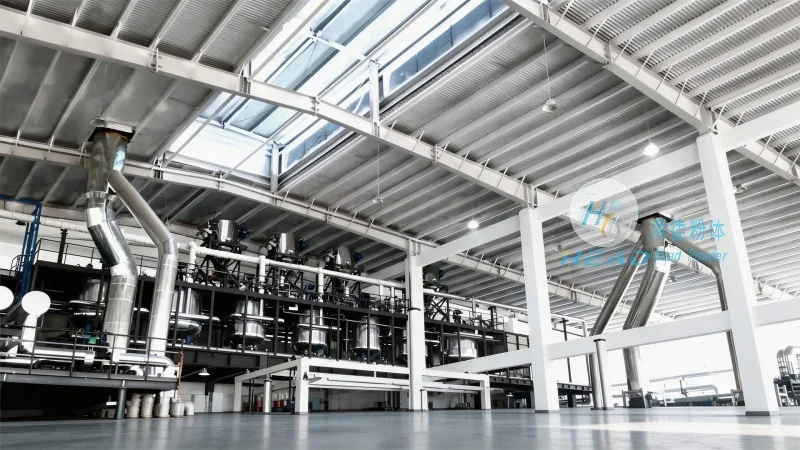
Principle of Limestone Pneumatic Conveying
Limestone pneumatic conveying operates on the principle of transporting bulk materials, such as limestone powder or granules, through a pipeline using a stream of air or other gas. The process involves creating a pressure differential within the system, typically by using a blower or compressor to generate airflow. As the air flows through the pipeline, it entrains the limestone particles, lifting them from the source and transporting them to the destination. The key components of a typical limestone pneumatic conveying system include the material feed hopper, the conveying line, the air supply unit, and the discharge receiver. The system's efficiency depends on factors like air velocity, particle size, and the material's bulk density, which must be carefully optimized to ensure smooth and continuous operation.
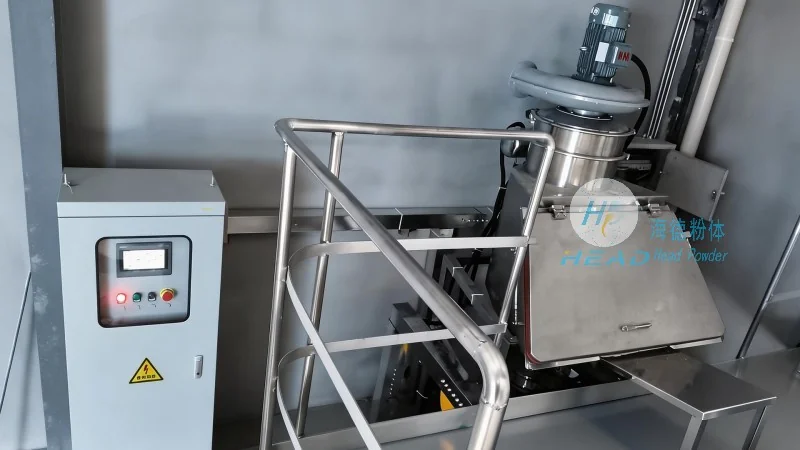
Classification of Limestone Pneumatic Conveying Systems
Limestone pneumatic conveying systems are broadly classified into two main categories: dilute-phase and dense-phase systems. Dilute-phase systems operate at higher air velocities, typically 20-30 meters per second, and are suitable for transporting fine limestone powders over short to medium distances. These systems are characterized by lower pressure differentials and are often used in applications where the material is already in a fine, free-flowing state. Dense-phase systems, on the other hand, operate at lower air velocities (5-15 meters per second) and higher pressure differentials, making them ideal for transporting bulk limestone or larger particles. Dense-phase systems are commonly used when the material needs to be transported over longer distances or when the material is prone to bridging or clogging in the pipeline.
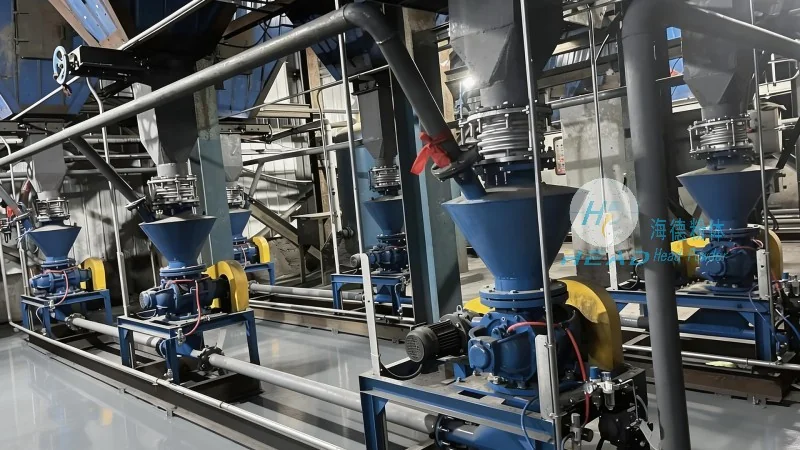
Application Examples in Industrial Settings
HeadPowder's limestone pneumatic conveying systems are widely used in various industrial applications. In the cement industry, for example, limestone is a primary raw material, and efficient pneumatic conveying is crucial for feeding it into the kiln. The systems help maintain consistent material flow, reducing downtime and improving overall production efficiency. In the chemical industry, limestone is used as a filler or reactant, and pneumatic conveying ensures safe and hygienic transfer of the material, minimizing dust exposure and contamination risks. Additionally, in the mining and quarrying sectors, limestone is often processed into fine powders for use in construction materials, and pneumatic conveying systems facilitate the transport of these powders from processing plants to storage or shipping facilities.
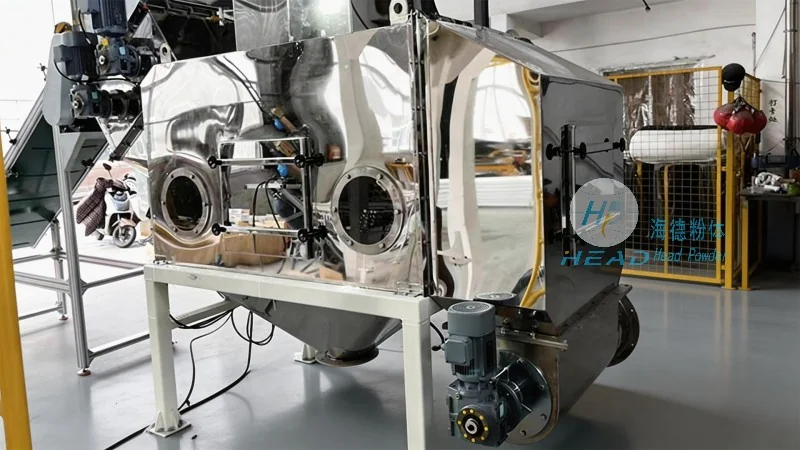
Key Considerations for System Design and Implementation
When designing a limestone pneumatic conveying system, several factors must be considered to ensure optimal performance and longevity. Particle size and shape are critical, as they affect the system's air velocity requirements and the risk of clogging. The material's bulk density and flow characteristics also play a role in determining the appropriate conveying method. System designers must also account for the distance between the source and destination, as well as any changes in elevation or horizontal direction. HeadPowder's expertise in material handling allows them to tailor systems to specific limestone properties and operational needs, ensuring that the chosen system meets the client's requirements for efficiency, reliability, and cost-effectiveness.