

Operation Process and Working Principle of Pneumatic Conveying for Calcium Phosphate Materials
HeadPowder, formally known as Shandong HeadPowder Engineering Co., Ltd., is a professional engineering firm based in Shandong, China. The company specializes in the design, manufacturing, and installation of pneumatic conveying systems tailored for various industrial applications, including the handling of calcium phosphate materials. With a focus on efficient material transport solutions, HeadPowder leverages advanced engineering principles to deliver reliable and cost-effective systems for clients in the chemical, food, and pharmaceutical industries.
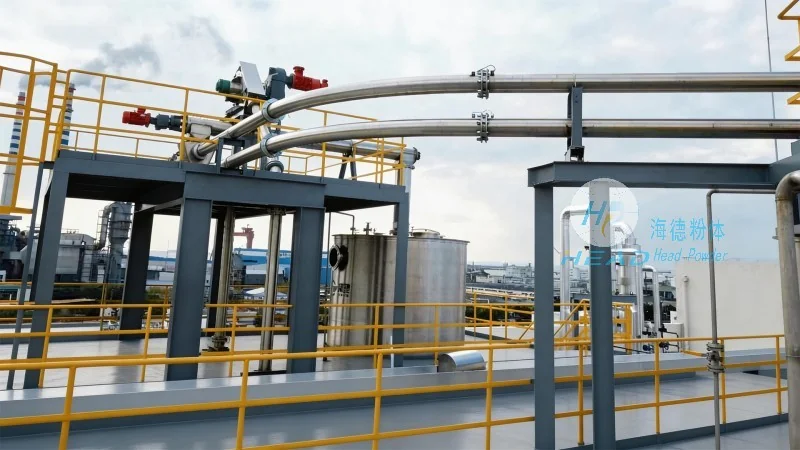
Operation Process of Pneumatic Conveying
Pneumatic conveying for calcium phosphate materials involves a systematic process that ensures efficient and safe material transport from source to destination. The operation typically begins with the material being loaded into a hopper or storage silo. From there, the material is fed into the conveying line via a rotary valve or feeder, which controls the flow rate and prevents blockages. The conveying system utilizes a combination of positive pressure (pressure conveying) or negative pressure (vacuum conveying) to move the material through the pipeline. The system includes key components such as a blower or vacuum pump, which generates the necessary air flow to propel the material. As the material travels through the pipeline, it is suspended in the air stream, allowing it to be transported over long distances without the need for mechanical components like conveyors or elevators. The process concludes with the material being discharged into a receiving hopper or storage tank, where it is collected for further processing or use.
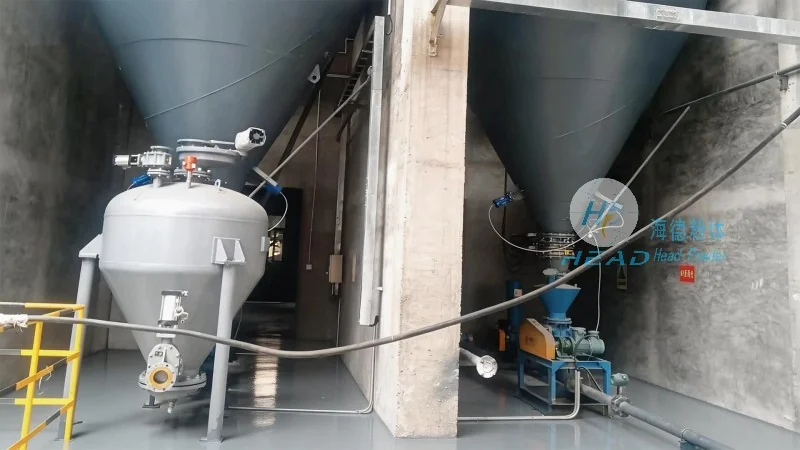
Working Principle of Pneumatic Conveying
The working principle of pneumatic conveying for calcium phosphate materials is based on the fundamental concept of transporting particulate materials using an air stream. In positive pressure systems, a blower supplies compressed air that pushes the material through the pipeline. The air and material mixture moves at a velocity sufficient to overcome the gravitational forces and friction within the system. The design of the pipeline, including the diameter, bends, and fittings, is critical to maintaining the air flow and preventing material deposition or blockages. In negative pressure systems, a vacuum pump creates a low-pressure environment that draws the material into the pipeline. The material is then carried by the air stream to the destination. The choice between positive and negative pressure depends on factors such as the material's properties, the distance to be covered, and the system's overall efficiency. Both systems rely on the principle of fluidization, where the material particles are suspended in the air, allowing for smooth and continuous transport. The working principle also incorporates the use of filters and cyclones to separate the material from the air stream, ensuring that the material is delivered in a clean and dry state.
Advantages of Pneumatic Conveying Systems
Pneumatic conveying systems for calcium phosphate materials offer several advantages over traditional mechanical conveying methods. One of the primary benefits is the ability to transport materials over long distances without the need for multiple transfer points or elevators. This reduces the overall system complexity and maintenance requirements. The systems are also highly flexible, allowing for changes in material flow rates and destinations without significant modifications. Additionally, pneumatic conveying is suitable for handling materials that are dusty, abrasive, or have a tendency to agglomerate, as the air stream helps to break up clumps and prevent blockages. The process is also hygienic and clean, making it ideal for applications in the food and pharmaceutical industries where contamination control is critical. Furthermore, the systems can be designed to operate in a closed loop, minimizing dust emissions and improving safety in the workplace. These advantages make pneumatic conveying an attractive solution for industrial applications requiring efficient and reliable material transport.
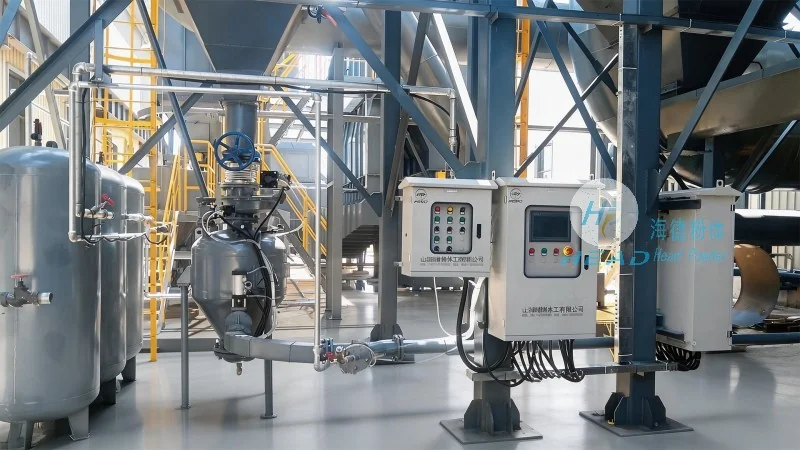
Applications in Calcium Phosphate Processing
The pneumatic conveying systems developed by HeadPowder are widely used in the processing of calcium phosphate materials, which are essential components in various industries. In the chemical industry, calcium phosphate is used as a raw material for the production of fertilizers, detergents, and other chemical products. The systems help to transport these materials from storage silos to processing units, ensuring a continuous and uninterrupted supply. In the food industry, calcium phosphate is used as a food additive and fortifier, and the pneumatic conveying systems ensure that the material is handled hygienically and efficiently. The pharmaceutical industry also relies on calcium phosphate for drug formulations, and the systems provide a clean and controlled environment for material transport. The systems are designed to meet the specific requirements of each application, including the handling of different particle sizes, moisture contents, and flow rates. By optimizing the system design, HeadPowder ensures that the material is transported with minimal loss and maximum efficiency, contributing to the overall productivity of the processing plant.