

Operation Process and Working Principle of Pneumatic Conveying Equipment for Chlorinated Polyethylen
Shandong HeadPowder Engineering Co., Ltd., a professional manufacturer based in Shandong, China, specializes in the design and production of advanced pneumatic conveying equipment. The company focuses on providing reliable solutions for the efficient and safe transport of powder materials, particularly in the chemical industry. This article delves into the operation process and working principle of their pneumatic conveying equipment specifically tailored for chlorinated polyethylene powder.
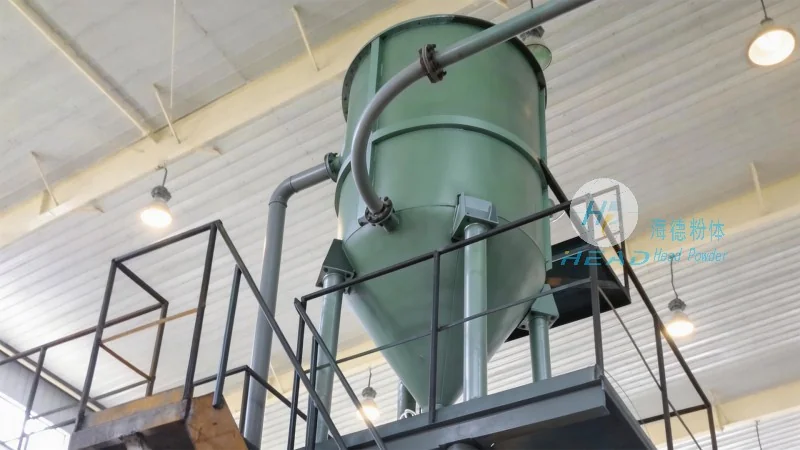
Overview of the Equipment
Pneumatic conveying equipment for chlorinated polyethylene powder is engineered to handle the unique characteristics of this material, such as its fine particle size and potential for dust generation. The system is designed to ensure minimal material degradation and contamination during transport. It typically consists of components including a hopper, air compressor, conveying line, and a receiving container, all integrated to form a seamless transport system.
Operation Process of the Pneumatic Conveying System
The operation of the pneumatic conveying equipment for chlorinated polyethylene powder follows a systematic sequence of steps. Initially, the powder is fed into the hopper, where it accumulates before being introduced into the conveying line. Simultaneously, the air compressor generates a high-pressure air stream, which is directed into the conveying line. As the air flows through the pipeline, it creates a pressure differential that draws the powder particles into the air stream, forming a mixture of air and powder. This mixture travels through the pipeline to the discharge point, where the powder is separated from the air and collected in the receiving container. The air, now free of powder, is either recycled back to the system or released to the atmosphere, depending on the system design.
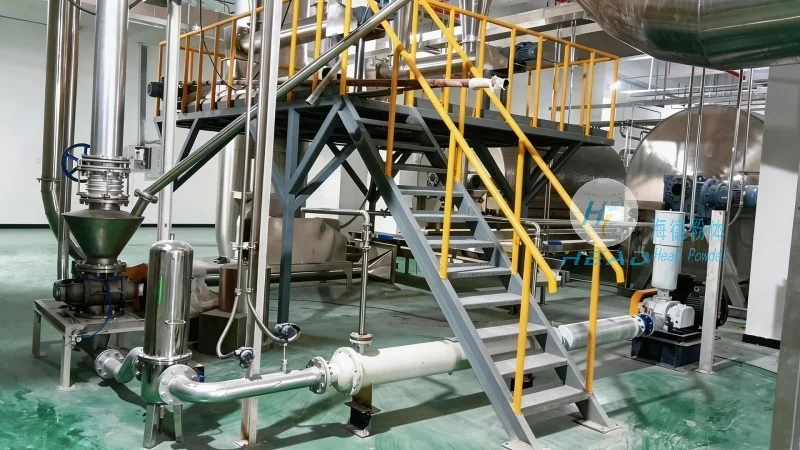
Working Principle: Fluidization and Pneumatic Transport
The core working principle of the pneumatic conveying equipment relies on the concept of fluidization and pneumatic transport. When high-pressure air is introduced into the conveying line, it creates a low-pressure zone that draws the powder particles into the air stream. The air flow provides the necessary momentum to carry the powder particles along the pipeline. The powder particles are suspended in the air stream, effectively transporting them from the source to the destination. At the discharge end, a separation device, such as a cyclone or a bag filter, is used to separate the powder from the air. The separated powder is collected in the receiving container, while the air is either recirculated or vented, depending on the system's configuration.
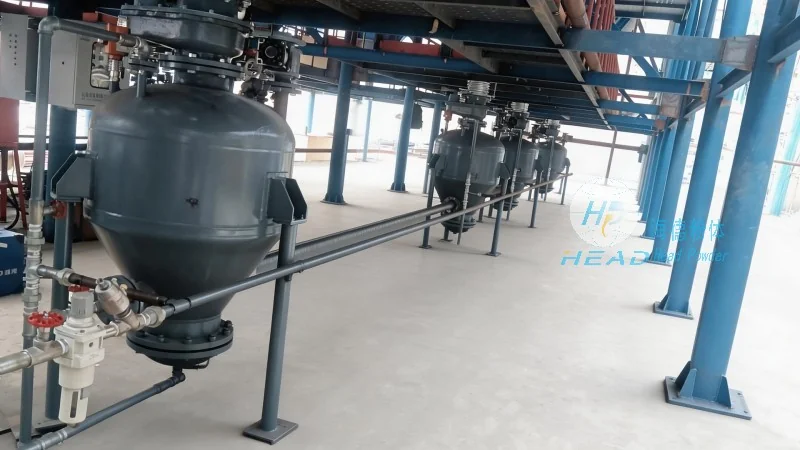
Efficiency and Safety Features
The pneumatic conveying equipment for chlorinated polyethylene powder is designed with efficiency and safety as top priorities. The system minimizes material loss by ensuring complete transfer of the powder from the hopper to the receiving container. It also reduces the risk of dust dispersion, which is crucial for maintaining a safe working environment in industrial settings. The use of sealed conveying lines prevents exposure to airborne particles, protecting both personnel and the environment. Additionally, the equipment is equipped with monitoring and control systems that allow for real-time adjustments to maintain optimal performance and prevent system failures.
Applications and Benefits
This pneumatic conveying equipment is widely utilized in the chemical industry for the transport of chlorinated polyethylene powder, a key raw material in the production of various plasticizers, stabilizers, and other chemical additives. The equipment offers several benefits, including high transport efficiency, low maintenance requirements, and the ability to handle fine powders without degradation. It also provides a flexible solution for transporting materials over varying distances and at different flow rates, making it suitable for diverse industrial applications.