

What is a Boron Nitride Material Pneumatic Conveying System? What Are Its Design Principles?
Understanding the Boron Nitride Material Pneumatic Conveying System and Its Design Principles
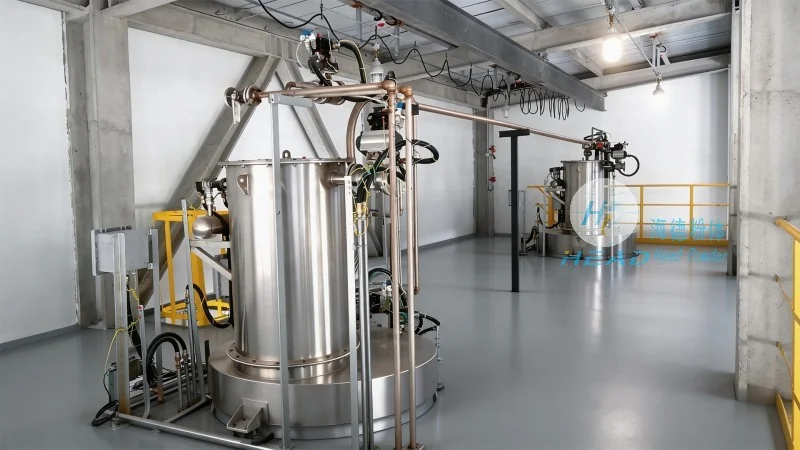
Introduction to Boron Nitride Material Pneumatic Conveying Systems
Boron nitride (BN) is a versatile inorganic compound widely used in various industries due to its excellent thermal stability, chemical inertness, and lubricating properties. When handling BN powders and granules, efficient and reliable material transport is crucial for maintaining product quality and operational efficiency. The pneumatic conveying system is a key technology for transporting such materials, offering advantages like dust-free operation, low maintenance, and the ability to handle fine powders. This article explores the fundamental aspects of a boron nitride material pneumatic conveying system, including its design principles and practical applications, provided by Shandong HeadPowder Engineering Co., Ltd., a leading manufacturer of material handling systems based in China.
Key Components of a Boron Nitride Pneumatic Conveying System
A typical boron nitride material pneumatic conveying system consists of several critical components that work in tandem to ensure smooth material transport. The main components include the material feed hopper, the air supply system (usually a blower or compressor), the conveying pipeline, the control valves, and the discharge unit. The feed hopper is designed to store and feed the BN material into the system at a controlled rate, preventing blockages and ensuring consistent flow. The air supply system generates the necessary air pressure or vacuum to move the material through the pipeline. The conveying pipeline, often made of stainless steel or other corrosion-resistant materials, is designed to withstand the abrasive nature of BN powders and maintain airtight integrity. Control valves, such as rotary valves or slide gates, regulate the flow of material and air, allowing for precise control over the conveying process. The discharge unit, which can be a receiver or a dust collector, collects the conveyed material and separates it from the air stream.
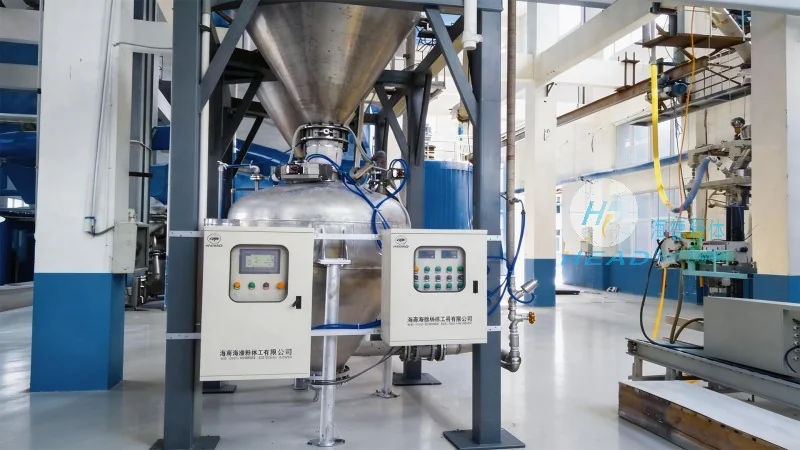
Design Principles for Efficient Boron Nitride Material Transport
The design of a boron nitride material pneumatic conveying system follows several key principles to ensure optimal performance and reliability. First, the system must be designed to handle the specific properties of BN powders, such as their particle size distribution, density, and flowability. The particle size and density affect the air velocity required for effective transport, as larger or denser particles may need higher air velocities to overcome gravity and friction. Second, the system must minimize material degradation and product contamination. This is achieved by using materials of construction that are compatible with BN, such as stainless steel or PTFE-lined components, and by maintaining low temperatures to prevent thermal degradation. Third, the system must be designed for easy maintenance and cleaning. The components should be accessible for inspection and cleaning, and the system should be equipped with filters to remove dust and prevent clogging. Fourth, the system must be energy-efficient and cost-effective. The air supply system is optimized to use the minimum amount of air required for transport, reducing energy consumption and operational costs. Finally, the system must be safe and compliant with industry standards. This includes proper ventilation to remove dust, explosion-proof designs for flammable materials (if applicable), and adherence to local regulations regarding material handling and environmental protection.
Types of Pneumatic Conveying Systems for Boron Nitride Materials
There are two main types of pneumatic conveying systems used for boron nitride materials: dilute-phase and dense-phase systems. Dilute-phase systems operate at high air velocities (typically 20-30 m/s) and low material concentration (less than 10% by volume), allowing for long-distance transport and high throughput. These systems are suitable for transporting fine BN powders over long distances, such as from a production facility to a storage warehouse. Dense-phase systems, on the other hand, operate at low air velocities (typically 5-10 m/s) and high material concentration (20-30% by volume), providing gentle material handling and preventing product degradation. These systems are ideal for transporting granular BN materials or when the material is sensitive to high air velocities. The choice between dilute-phase and dense-phase systems depends on the specific application, material properties, and operational requirements. For example, dilute-phase systems are preferred for bulk transport over long distances, while dense-phase systems are preferred for handling delicate or abrasive materials.
Advantages of Using a Boron Nitride Material Pneumatic Conveying System
Implementing a pneumatic conveying system for boron nitride materials offers several significant advantages over traditional methods like belt conveyors or bucket elevators. First, the system provides a dust-free and clean operation, which is essential for maintaining product quality and ensuring a safe working environment. Unlike belt conveyors, which can generate dust and cause product contamination, pneumatic systems keep the material enclosed, reducing the risk of dust exposure and product degradation. Second, the system offers high flexibility in terms of layout and installation. The conveying pipeline can be easily routed around obstacles and can be installed in various configurations, such as vertical, horizontal, or inclined, to suit the specific plant layout. Third, the system requires less floor space compared to traditional conveyors, as the pipeline can be mounted on walls or ceilings, freeing up valuable floor area for other equipment or storage. Fourth, the system provides better control over the material flow, allowing for precise regulation of the feed rate and discharge rate. This is particularly important for applications where the material needs to be added to a process at a specific rate or concentration. Finally, the system is more energy-efficient and cost-effective in the long run. While the initial investment may be higher than traditional conveyors, the reduced maintenance costs, lower energy consumption, and increased productivity make it a more economical choice over time.
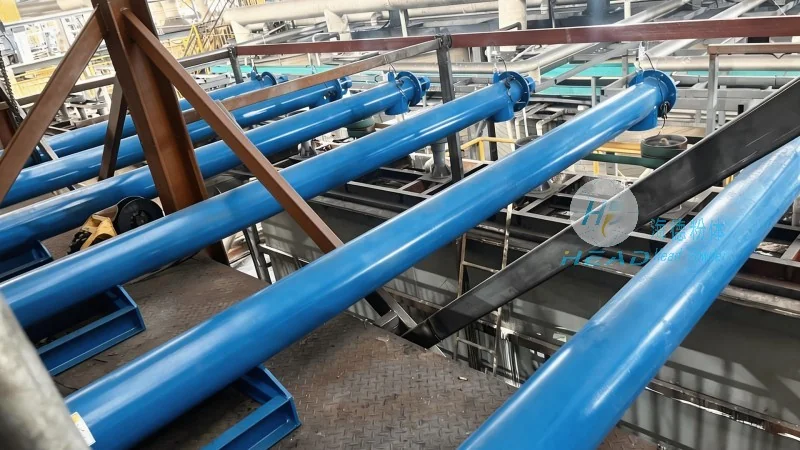
Applications of Boron Nitride Material Pneumatic Conveying Systems
Boron nitride material pneumatic conveying systems are widely used in various industries that handle BN powders and granules. Some common applications include the electronics industry, where BN is used as a dielectric material in capacitors and insulators. The system is used to transport BN powders from the production line to the packaging area, ensuring a clean and efficient process. In the aerospace industry, BN is used as a thermal barrier coating for aircraft engines and spacecraft components. The pneumatic conveying system is used to transport BN powders to the coating equipment, allowing for precise application and uniform coating. In the chemical industry, BN is used as a catalyst or additive in various chemical processes. The system is used to transport BN powders to the reactors, ensuring a consistent and controlled addition of the material. In the pharmaceutical industry, BN is used as a filler or excipient in drug formulations. The system is used to transport BN powders to the mixing and packaging equipment, maintaining product purity and quality. In the automotive industry, BN is used as a lubricant or additive in engine oils and greases. The system is used to transport BN powders to the blending and packaging facilities, ensuring a uniform and consistent product.
Conclusion: The Importance of Proper Design and Implementation
In conclusion, a boron nitride material pneumatic conveying system is a critical technology for efficiently and reliably transporting BN powders and granules. The design of the system must consider the specific properties of the material, the operational requirements, and the overall plant layout. By following the key design principles and choosing the appropriate system type, manufacturers can achieve high performance, low maintenance, and cost-effective material transport. The advantages of using a pneumatic conveying system, such as dust-free operation, flexibility, and energy efficiency, make it an ideal choice for handling boron nitride materials. As the demand for boron nitride products continues to grow, the importance of proper system design and implementation will only increase, ensuring that manufacturers can meet the increasing demand for high-quality BN materials while maintaining operational efficiency and product quality.