

Calcined Sand Powder Pneumatic Conveying: What It Is and Its Design Principles
Calcined sand powder pneumatic conveying is a specialized method used in industrial processes to transport calcined sand powder through a pipeline system using air or other gas as the conveying medium. This technology is crucial for industries dealing with fine powders, as it offers an efficient and flexible alternative to traditional mechanical conveying methods. The process involves creating a flow of air that carries the powder particles through the pipeline, ensuring reliable and continuous material transport from the source to the destination.
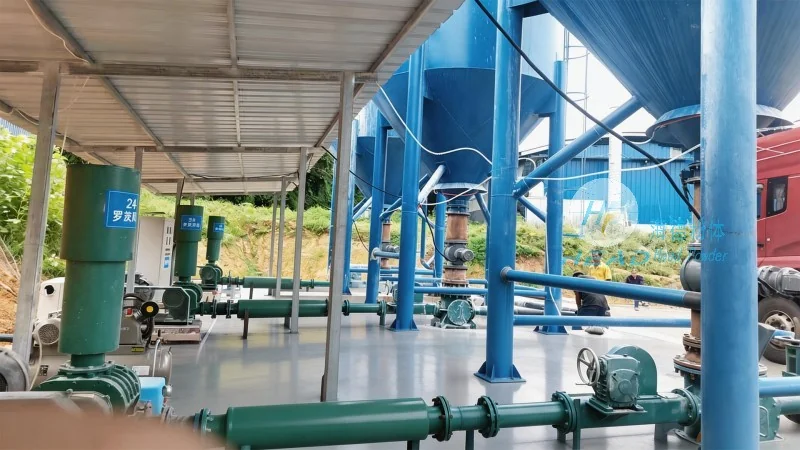
Understanding Calcined Sand Powder Pneumatic Conveying
Calcined sand, often derived from silica sand that has been heated to high temperatures to remove moisture and organic compounds, is a key raw material in various applications, including refractory production, glass manufacturing, and construction materials. The pneumatic conveying of this powder is essential for maintaining the quality and integrity of the material during transport. Unlike mechanical systems that rely on belts, screws, or buckets, pneumatic conveying uses pressure differentials or vacuum to move the powder, minimizing particle degradation and contamination. This method is particularly advantageous for handling fine, abrasive, or dusty powders like calcined sand, which can be challenging to transport with conventional equipment.
The Core Design Principles of Pneumatic Conveying Systems
The design of a calcined sand powder pneumatic conveying system is based on several fundamental principles that ensure optimal performance and efficiency. The first principle is the selection of the appropriate conveying type, which can be categorized into pressure, vacuum, or mixed systems. Pressure systems use compressed air to push the powder through the pipeline, while vacuum systems use a vacuum to draw the material. Mixed systems combine both approaches for more complex applications. For calcined sand, pressure systems are commonly preferred due to their ability to handle high volumes and long distances without significant pressure loss.
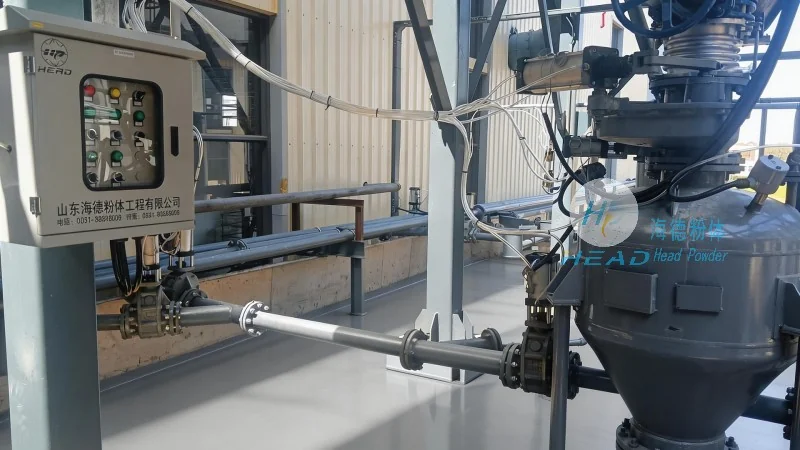
A critical design consideration is the air-to-powder ratio, which determines the velocity of the gas stream and the particle suspension. The optimal ratio is crucial for preventing particle segregation, caking, or blockages in the pipeline. Engineers must calculate the required air velocity to maintain the powder in a suspended state, typically based on the particle size, density, and flow characteristics of the calcined sand. Additionally, the pipeline design, including diameter, length, and bends, plays a vital role in minimizing pressure drop and ensuring smooth flow. Properly sized pipelines and strategically placed components such as cyclones, filters, and expansion joints help maintain system efficiency and prevent material buildup.
Key Components and Their Functions in the System
A calcined sand powder pneumatic conveying system consists of several key components, each playing a specific role in the overall operation. The primary components include the material feeder, which feeds the calcined sand into the conveying line; the air supply system, which provides the necessary pressure or vacuum; the pipeline network, which transports the powder; and the separation and collection equipment, which returns the powder to the process or collects it for storage. The material feeder is designed to handle the bulk material and introduce it into the pipeline without causing blockages or air leakage. It may include devices such as rotary valves, screw feeders, or pressure vessels to ensure a consistent flow rate.
The air supply system is another critical component, as it determines the system's conveying capacity and efficiency. Compressed air is typically generated by air compressors and regulated by pressure controllers to maintain the required pressure levels. In vacuum systems, vacuum pumps create the necessary suction to draw the powder. The pipeline network is constructed from materials that can withstand the abrasive nature of calcined sand, such as stainless steel or special alloys, to prevent corrosion and wear. Bends and elbows are carefully designed with smooth transitions to minimize pressure loss and avoid particle separation. Cyclones and filters are used to separate the powder from the air stream, allowing the powder to be collected and the air to be recycled or discharged.
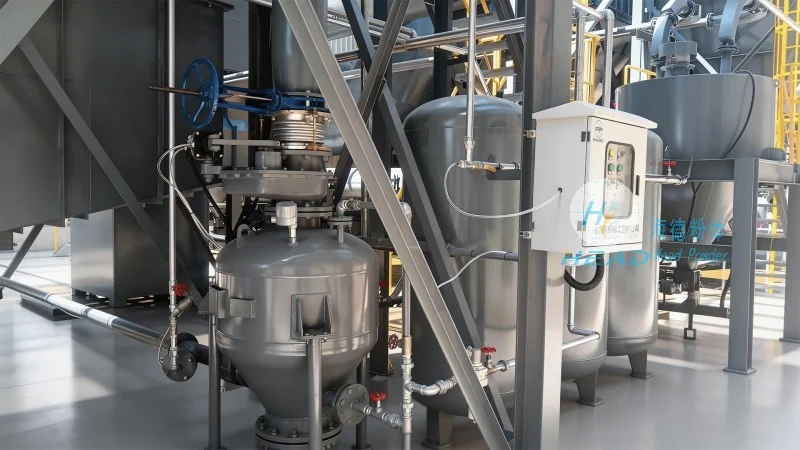
Advantages and Applications of Pneumatic Conveying for Calcined Sand
Using pneumatic conveying for calcined sand offers several advantages over traditional mechanical methods. One of the main benefits is the ability to transport the powder over long distances without the need for multiple transfer points or intermediate storage. This reduces the risk of material contamination and improves process efficiency. Additionally, pneumatic systems are more flexible, as they can be easily reconfigured to accommodate changes in production volume or process layout. The technology also minimizes the need for manual handling, reducing labor costs and improving workplace safety. In industries like refractory production, where calcined sand is used to make high-temperature materials, pneumatic conveying ensures that the powder remains in its optimal state, preventing moisture absorption or particle agglomeration that could affect product quality.
The applications of calcined sand powder pneumatic conveying are widespread across various sectors. In the glass industry, calcined sand is used as a raw material for glass melting, and pneumatic conveying ensures a consistent supply of high-quality sand to the furnaces. In the construction industry, calcined sand is used in the production of refractory bricks and concrete additives, where the ability to transport the powder efficiently is critical for maintaining production rates. Other applications include the manufacturing of ceramics, where the fine powder is used to create decorative and functional products. The versatility of pneumatic conveying makes it suitable for handling different particle sizes and flow rates, making it a preferred choice for many calcined sand applications.