

Guar Gum Powder Pneumatic Conveying Introduction: Principles of Pneumatic Conveying Systems
Guar gum powder, a widely used industrial additive, often requires efficient and reliable material handling solutions for its transport from production sites to processing facilities. Pneumatic conveying systems have emerged as a preferred method for such applications, offering advantages in terms of hygiene, speed, and flexibility. This article provides an overview of pneumatic conveying for guar gum powder, detailing the fundamental principles and operational aspects of these systems.
Pneumatic Conveying Systems: An Overview
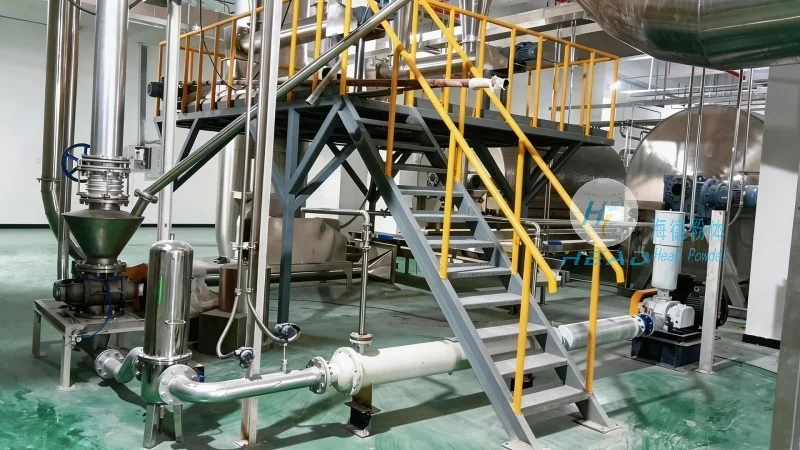
Pneumatic conveying, also known as pneumatic transport, is a technology that uses compressed air or other gases to move bulk materials like guar gum powder through a pipeline. The system typically consists of a hopper or feeder, a conveying line, and a receiver or discharge point. The primary goal is to transport the powder from the source to the destination without the need for mechanical components like belts or buckets, which can introduce contamination or inefficiencies.
Key Components of a Pneumatic Conveying System
Several critical components work together to ensure the smooth operation of a pneumatic conveying system for guar gum powder. These include:
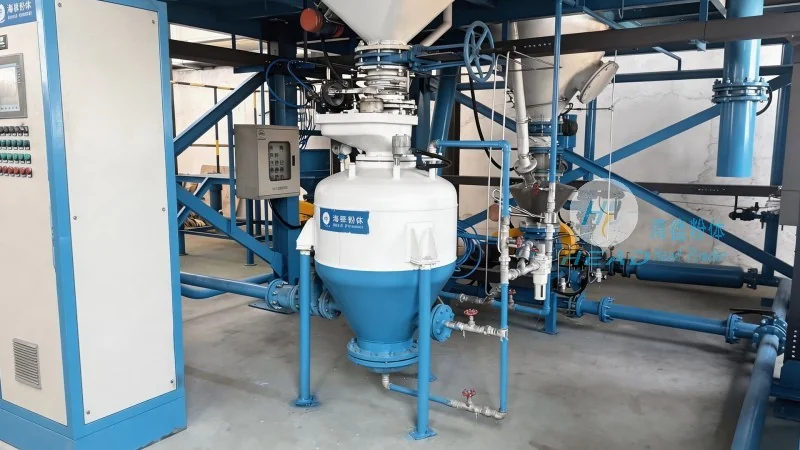
1. Hopper or Feeder: This component is responsible for storing and feeding the guar gum powder into the conveying line. It is designed to maintain a consistent flow rate, preventing blockages and ensuring a steady supply of material.
2. Conveying Line: The pipeline through which the powder is transported. It can be made of various materials, such as stainless steel or plastic, depending on the properties of the powder and the required level of hygiene. The line is usually equipped with bends and elbows to direct the flow and maintain the velocity of the powder-air mixture.
3. Compressor or Blower: This is the heart of the system, providing the necessary pressure and airflow to move the powder. The choice between a compressor and a blower depends on the system's requirements, including the distance, height, and volume of material to be conveyed.
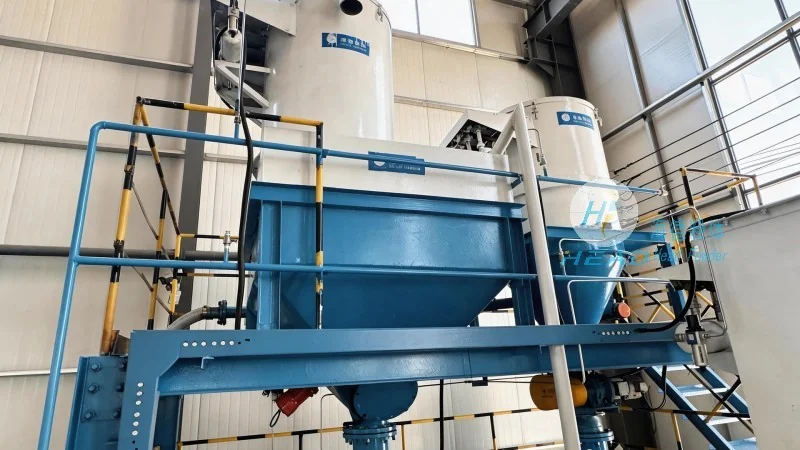
4. Receiver or Discharge Point: The final component where the guar gum powder is deposited. It may include a hopper or a storage tank, allowing for further processing or storage. The receiver is designed to separate the powder from the air, typically using a filter or cyclone.
Working Principle of Pneumatic Conveying for Guar Gum Powder
The operation of a pneumatic conveying system for guar gum powder involves several stages. Initially, the guar gum powder is fed into the hopper. The compressor then generates a high-pressure air stream, which is introduced into the conveying line. As the air flows through the line, it entrains the powder particles, creating a suspension. The mixture travels through the pipeline, overcoming gravity and any obstacles, until it reaches the receiver. At the receiver, a separator (such as a cyclone or filter) separates the powder from the air, allowing the powder to be collected and the air to be discharged or recirculated.
Advantages of Pneumatic Conveying for Guar Gum Powder
Pneumatic conveying offers several benefits when handling guar gum powder:
1. Hygienic and Clean Operation: The system is enclosed, preventing contamination from external sources and maintaining the purity of the powder. This is particularly important for food-grade applications.
2. High Speed and Efficiency: The material can be transported quickly over long distances, reducing handling time and improving overall production efficiency.
3. Flexibility and Scalability: Pneumatic conveying systems can be easily adjusted to handle varying quantities of guar gum powder and can be expanded or modified to meet changing production needs.
4. Reduced Labor and Maintenance: With fewer mechanical parts, the system requires less maintenance and can be operated with minimal labor, leading to lower operational costs.
Applications and Considerations
Pneumatic conveying systems are widely used in industries that handle guar gum powder, including food processing, pharmaceuticals, and chemical manufacturing. When selecting a system, several factors must be considered:
1. Material Properties: The characteristics of the guar gum powder, such as particle size, density, and moisture content, influence the choice of system design and components.
2. Conveying Distance and Height: The distance and vertical height the powder needs to be transported determine the required pressure and power of the system.
3. System Capacity: The desired throughput rate affects the size of the hopper, feeder, and compressor.
4. Environmental Regulations: Compliance with local regulations regarding air emissions and noise levels is essential.
Conclusion
Pneumatic conveying systems provide an effective and efficient solution for the transport of guar gum powder. By understanding the fundamental principles and components of these systems, industries can optimize their material handling processes, ensuring high-quality, hygienic, and cost-effective operations. As a leading provider in this field, Shandong HeadPowder Engineering Co., Ltd. specializes in designing and implementing customized pneumatic conveying solutions tailored to the specific needs of guar gum powder applications.