
With over a decade of experience in the pneumatic conveying industry, our company specializes in a full range of pneumatic conveying system equipment.
您的当前位置:首页 >> News >> Technical FAQ

News

Rich project cases across industries, showing real implementation and proven technical strength.

Pottery clay ash pneumatic conveying solution technical introduction

2026-07-20

Pottery clay ash is a byproduct generated during the production of ceramic materials, often containing fine particles with low bulk density, high abrasiveness, and variable moisture content. Efficiently handling and transporting this material from collection points to storage or processing areas presents significant engineering challenges. Conventional mechanical conveyors frequently suffer from clogging, dust emissions, and excessive wear. Pneumatic conveying technology has emerged as a reliable, enclosed, and low-maintenance alternative for moving pottery clay ash in industrial settings. This article provides a comprehensive technical introduction to pneumatic conveying solutions tailored for pottery clay ash, covering system principles, component selection, design considerations, and real-world application insights. By understanding the physical properties of the ash and matching them with appropriate pneumatic system configurations, plant operators can achieve consistent throughput, reduce operational downtime, and improve workplace safety.

Pneumatic conveying relies on a controlled gas stream—typically air—to transport solid particles through a pipeline. For pottery clay ash, which often exhibits high fines content and a tendency to agglomerate under moisture, a dilute-phase or dense-phase system may be selected based on particle characteristics and distance requirements. In dilute-phase conveying, the material is suspended in a high-velocity air stream, making it suitable for shorter distances and lower capacities. However, the high velocity can cause significant erosive wear on elbows and pipe walls. Dense-phase conveying, operating at lower velocities but higher pressure, is generally preferred for pottery clay ash because it reduces abrasion, minimizes particle degradation, and lowers energy consumption. A typical system comprises a feeding device (such as a rotary valve or screw feeder), a pressure vessel (blow tank for dense phase), a pipeline network, a gas supply unit (positive displacement blower or compressor), and a separation system (cyclone or bag filter). Each component must be engineered to handle the specific flowability, bulk density (often ranging from 0.5 to 1.2 g/cm³), and abrasivity of pottery clay ash, which can contain silica particles with Mohs hardness around 6–7.

Key Physical Properties of Pottery Clay Ash and Their Impact on System Design

Understanding the material’s behavior is the first step toward a successful pneumatic conveying solution. Pottery clay ash typically has a mean particle size between 20 and 150 microns, with a significant fraction below 10 microns. These fine particles exhibit strong cohesive forces, leading to bridging and ratholing in bins. The bulk density can vary from 400 to 900 kg/m³ depending on compaction and moisture. Moisture content, even as low as 2–3%, can dramatically alter flow properties by increasing inter-particle adhesion. Additionally, the ash’s abrasive nature demands hardened pipe materials, such as wear-resistant steel or ceramic-lined elbows, to maintain system longevity. According to industry data from 2023–2025, the global ceramic market has grown steadily at a compound annual rate of approximately 4.8%, driving increased demand for efficient bulk material handling solutions. In 2026, it is expected that more ceramic plants will adopt enclosed pneumatic systems to comply with stricter particulate emission regulations. Therefore, selecting a system that accounts for these parameters not only extends equipment life but also improves overall sustainability.

Pottery clay ash pneumatic conveying solution technical introduction

Component Selection and System Configuration

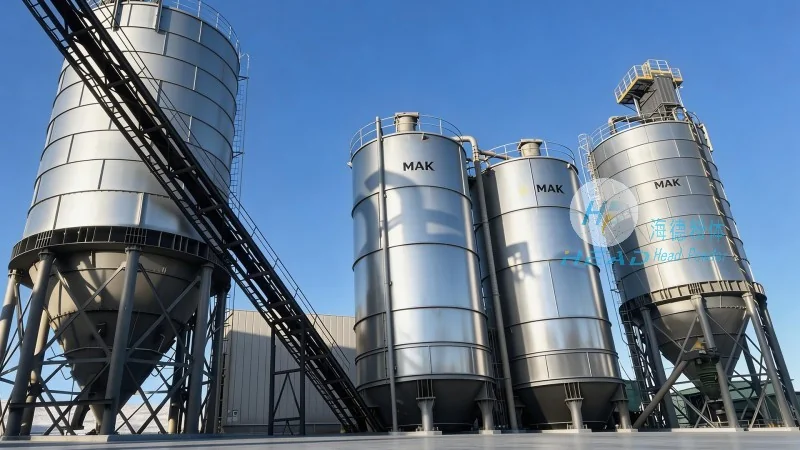
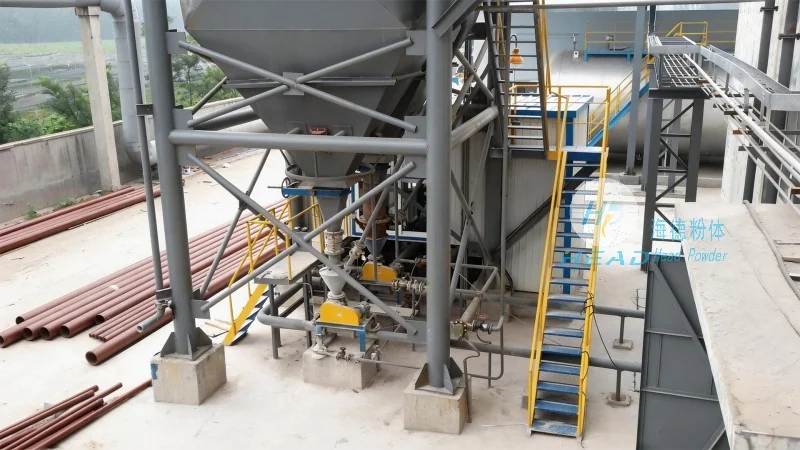
Every pneumatic conveying system for pottery clay ash must integrate several critical components. The feeding mechanism is often the most challenging part. Because fine ash tends to fluidize and flood, a rotary valve with blow-through air injection is commonly used in dilute-phase applications. For dense-phase conveying, a top-discharge blow tank with a fluidizing cone ensures consistent material discharge. The conveying pipe diameter should be calculated based on the required capacity (typically expressed in tons per hour) and the material’s saltation velocity. A rule of thumb for pottery clay ash is to maintain a conveying velocity between 8 and 15 m/s in dense-phase mode, significantly lower than the 20–30 m/s required for dilute-phase. Pipeline routing must minimize sharp bends; long-radius elbows with ceramic backing can reduce wear by up to 70% compared to standard carbon steel. The air supply unit must deliver sufficient pressure—generally 2–6 bar for dense-phase systems—and be equipped with aftercoolers and moisture separators to prevent condensation within the pipe. The separation system at the destination typically uses a reverse-jet bag filter with a filtration area calculated to achieve an emission level below 10 mg/Nm³, compliant with most modern environmental standards. Headpowder has deployed these configurations in multiple ceramic facilities across Asia and Europe, achieving on-stream availability above 98% over three-year operating periods.

Pottery clay ash pneumatic conveying solution technical introduction

Flow Regime Selection: Dilute vs. Dense Phase for Pottery Clay Ash

Choosing between dilute-phase and dense-phase conveying depends on trade-offs between capital cost, operating expense, and material degradation tolerance. Dilute-phase systems have lower initial equipment cost because they use simpler feeding devices and standard blowers. However, higher velocities (20–30 m/s) accelerate pipe erosion and generate more dust, requiring larger filtration systems. For pottery clay ash with high abrasivity, long-term maintenance costs often exceed the initial savings. In contrast, dense-phase systems operate at velocities between 4 and 10 m/s, significantly reducing wear and energy consumption. Although the blow tank and high-pressure compressor represent a higher upfront investment, the total cost of ownership over a 10-year period can be 25–40% lower, according to comparative studies conducted by industry associations. Moreover, dense-phase conveying preserves particle size distribution, which is critical for downstream processes such as glaze preparation or recycling. A 2026 market analysis suggests that over 60% of new ceramic plants are opting for dense-phase systems for handling fine ash, reflecting a shift toward reliability and efficiency. Headpowder’s engineering team has optimized blow tank geometries specifically for pottery clay ash, incorporating tapered cones and porous fluidizing pads to eliminate bridging even when moisture fluctuates.

Pipeline Wear Mitigation and System Automation

Abrasive wear remains the primary cause of unscheduled downtime in pottery clay ash conveying. To address this, system designers implement multiple strategies. First, straight pipe sections should be made of wear-resistant steel with a Brinell hardness exceeding 400. Second, all elbows must use a replaceable ceramic tile lining or a seamless cast-basalt interior. Third, the conveying velocity should be maintained at the minimum level that still prevents line plugging. For pottery clay ash, the minimum conveying velocity in dense-phase mode is typically determined through lab-scale tests using a flow loop. Automation plays a significant role in maintaining optimal conditions. Modern systems integrate pressure transmitters at multiple points along the pipeline, feeding data to a programmable logic controller (PLC) that adjusts air injection and material feed rate in real time. This closed-loop control can reduce energy consumption by up to 20% while improving consistency. Additionally, predictive maintenance algorithms analyze pressure drop trends to forecast wear before a breach occurs. Headpowder’s clients have reported extending elbow replacement intervals from six months to over two years after adopting such automated control and ceramic lining upgrades. In one case involving a large tile manufacturer in Shandong Province, the system achieved 99.2% uptime over a 24-month period, handling 15 tons of pottery clay ash per day.

Design Considerations for Vertical and Long-Distance Conveying

Many ceramic plants require conveying pottery clay ash from ground-level storage to elevated silos or across distances exceeding 300 meters. Vertical lift introduces additional pressure drop because gravity opposes the flow. In dense-phase systems, the vertical section should be designed with a slightly larger diameter to reduce velocity and avoid strand formation. For long horizontal runs, intermediate booster air injectors may be installed every 100–150 meters to maintain plug flow. The total pressure drop can be estimated using the Darcy-Weisbach equation adapted for two-phase flow, but empirical data from similar installations is more reliable. Headpowder’s technical database includes over 200 reference cases for pottery clay ash, allowing engineers to accurately predict pressure requirements without oversizing. In 2026, as factories expand their production capacity to meet growing demand for sanitaryware and floor tiles, the ability to handle longer conveying lines without degradation becomes a competitive advantage. A well-designed system can transport pottery clay ash over 500 meters with a single blow tank cycle, maintaining a capacity of 10–20 t/h. For even longer distances, a series of pressure vessels can be staged, though this increases both cost and complexity. The key is to balance capital expenditure with operational reliability.

Environmental Compliance and Dust Control

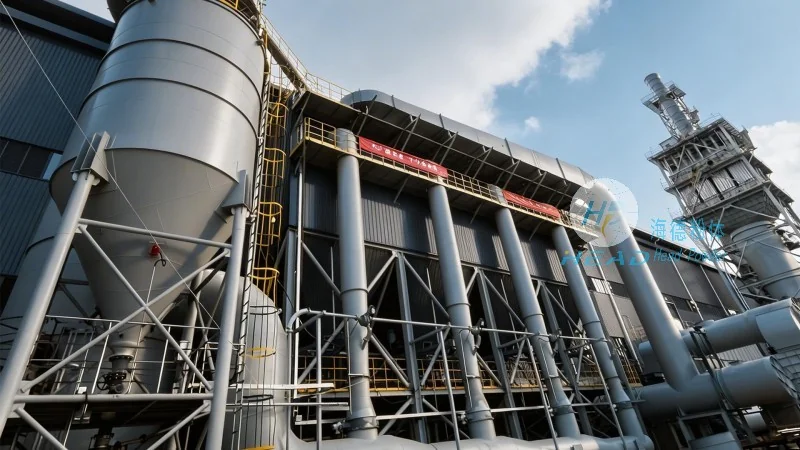
Regulatory pressure on particulate emissions has intensified globally. In 2025, the European Union tightened emission limits for ceramic plants, requiring PM10 concentrations below 20 mg/m³ in workplace air. Pneumatic conveying inherently provides an enclosed transport path, but the vent air from the receiving silo must be filtered. High-efficiency cartridge filters with pulse-jet cleaning are the standard for pottery clay ash, achieving outlet emissions of 1–5 mg/Nm³. It is also important to manage fugitive dust around the feeding point. A proper hood and a slight negative pressure inside the rotary valve housing prevent dust from escaping. Headpowder designs its systems with secondary dust collection for the loading area, using a small baghouse that recovers material back into the conveying line. This approach not only meets regulatory standards but also reduces material loss, which can amount to 0.5–1% of total throughput in poorly sealed systems. With raw material costs rising—pottery clay prices increased by approximately 8% in 2025—minimizing waste directly improves profitability. Environmental, social, and governance (ESG) criteria are increasingly influencing procurement decisions, and a clean, low-noise pneumatic conveying system contributes positively to a facility’s sustainability rating.

Installation, Commissioning, and Maintenance Best Practices

A successful pneumatic conveying solution for pottery clay ash requires careful installation. Pipes should be supported every 3–4 meters and aligned with minimal stress to avoid misalignment wear. During commissioning, the system must be gradually ramped up while monitoring pressure and flow. A common pitfall is over-pressurization due to an undersized air relief valve, which can cause material compaction in the blow tank. Headpowder provides a comprehensive commissioning protocol that includes a 48-hour continuous run test under full load. After commissioning, regular maintenance tasks include inspecting wear indicators on elbows, checking air filters, and calibrating pressure sensors. A predictive maintenance program based on trending data can schedule replacements during planned shutdowns, eliminating unplanned downtime. Training for plant operators is equally important; they should understand the relationship between feed rate, air velocity, and pressure drop. Headpowder offers on-site training sessions and remote monitoring support through a cloud-based dashboard, enabling real-time performance tracking. Over the past five years, clients have reported a 30% reduction in maintenance costs after implementing these best practices.

Economic Analysis and Return on Investment

Investing in a high-quality pneumatic conveying system for pottery clay ash yields measurable returns. Compared to mechanical belt conveyors, pneumatic systems eliminate spillage, reduce manual labor for cleanup, and lower maintenance due to fewer moving parts. A mid-sized ceramic plant processing 50,000 tons of clay ash per year can save approximately €120,000 annually in labor and material recovery alone. The energy cost for a dense-phase system is typically €0.50–€0.80 per ton of material conveyed, depending on distance and pressure. With electricity prices expected to stabilize in 2026, the payback period for a new system is often between 18 and 30 months. Furthermore, the ability to automate and integrate with plant-wide control systems reduces operator error. Headpowder has delivered systems with a total installed cost ranging from €80,000 to €500,000 depending on capacity and complexity, and each project is supported by a two-year warranty on major components. To discuss specific requirements for your pottery clay ash handling challenges, please contact the engineering team (咨询热线:156-6277-7102).

Future Trends: Digitalization and Smart Conveying

Looking ahead to 2026 and beyond, the pneumatic conveying industry is embracing digitalization. Smart sensors embedded along the pipeline can detect blockages, wear, and material moisture in real time. Machine learning algorithms analyze operating data to optimize air consumption and predict failures. For pottery clay ash, which has variable properties due to changes in kiln feed, adaptive control systems can adjust conveying parameters automatically. Headpowder is currently piloting a system that uses a near-infrared moisture sensor at the silo outlet to modify blow tank fluidization pressure. Early results indicate a 15% improvement in capacity consistency. Additionally, the adoption of Industry 4.0 principles allows for remote troubleshooting and firmware updates without onsite visits. As ceramic manufacturers pursue higher efficiency and lower carbon footprints, these smart conveying solutions will become standard. The combination of robust mechanical design, precise automation, and continuous monitoring ensures that pottery clay ash handling remains a seamless part of modern production lines.

In summary, pneumatic conveying offers a proven, efficient, and environmentally sound method for moving pottery clay ash. By carefully analyzing material properties, selecting the appropriate flow regime, and designing for wear resistance and automation, facilities can achieve reliable long-term operation. The technical intricacies—from blow tank geometry to pipeline material selection—demand experience and precision. Headpowder’s dedicated team brings over a decade of application expertise in the ceramic industry, having completed more than 150 installations worldwide. Whether upgrading an existing line or designing a greenfield plant, a tailored solution can deliver substantial operational and economic benefits. For further consultation on system specifications, feasibility studies, or pricing, you may reach Headpowder directly (咨询热线:156-6277-7102). Let the data guide your decision, and let engineering excellence handle the rest.

相关推荐

Shandong headpowder Engineering Co., Ltd. All rights reserved.

回到顶部