

Several Pneumatic Conveying Solutions for Lime
For industries dealing with lime, efficient material handling is crucial. Pneumatic conveying systems offer a reliable method to transport lime from storage to processing units. This article explores several effective solutions for pneumatic conveying of lime, highlighting the technical aspects and practical applications.
Pneumatic Conveying Fundamentals
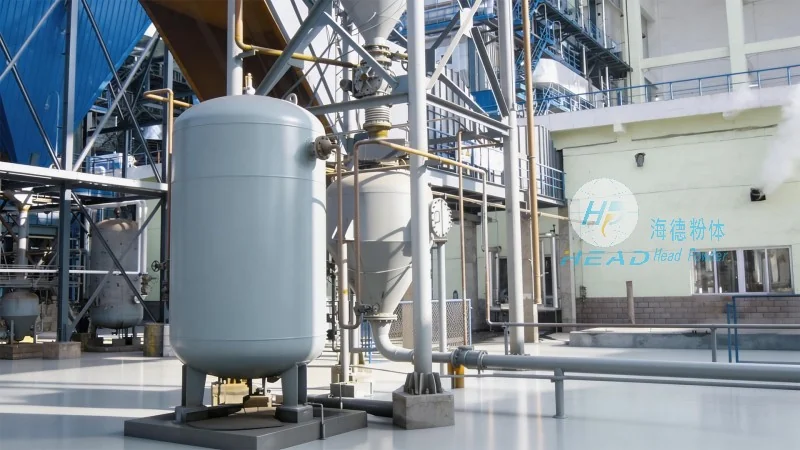
Pneumatic conveying utilizes air pressure to move bulk materials like lime through a pipeline. The process can be categorized into two main types: dilute-phase and dense-phase. Dilute-phase systems use higher air velocities to keep particles suspended, suitable for short distances and low material density. Dense-phase systems, on the other hand, operate at lower velocities, allowing for more material to be conveyed in a single stream, ideal for longer distances and higher material loads.
Key Factors in Choosing a Pneumatic Conveying System
When selecting a pneumatic conveying system for lime, several factors must be considered. The first is the distance between the source and destination. Short distances may benefit from dilute-phase systems, while longer distances often require dense-phase or hybrid solutions. Material characteristics, such as particle size, moisture content, and abrasiveness, also play a significant role. Lime, being a fine powder, can be prone to caking and abrasion, necessitating systems with appropriate material handling components like cyclones, filters, and wear-resistant pipelines.
Option 1: Dilute-Phase Pneumatic Conveying
Dilute-phase pneumatic conveying is commonly used for short to medium distances, typically up to 100 meters. This method involves blowing air at high velocity through a pipeline, suspending lime particles in the air stream. The system typically includes a blower, a hopper for material storage, and a receiver at the destination. The advantages of this approach include lower capital costs and simpler design, making it suitable for applications where the conveying distance is limited and the material flow rate is moderate. However, it may not be efficient for long-distance transport due to energy consumption and potential material degradation.
Option 2: Dense-Phase Pneumatic Conveying
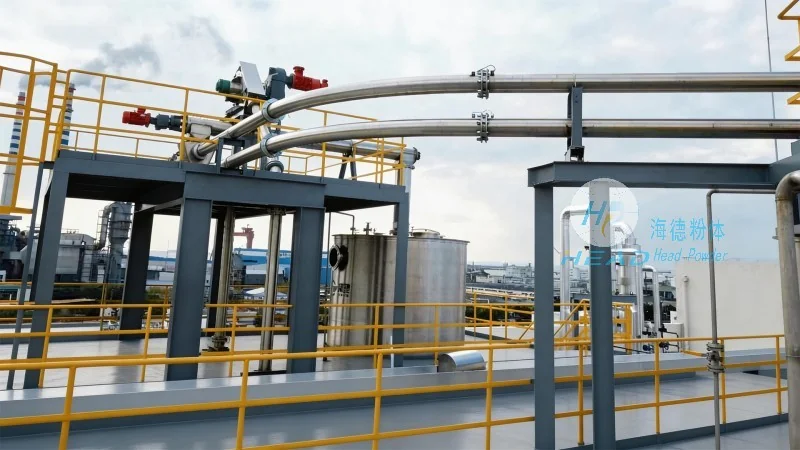
Dense-phase pneumatic conveying is preferred for longer distances, often exceeding 100 meters, and for handling larger quantities of lime. In this system, the air velocity is reduced, allowing more material to be conveyed in a single pulse. This method is particularly effective for abrasive materials like lime, as it reduces wear on the pipeline and equipment. The system typically uses a positive displacement blower or a rotary lobe pump to generate the necessary pressure. The conveying line is equipped with a series of valves and a receiver that can handle the higher material density. Dense-phase systems are more energy-intensive but offer higher material throughput and better control over the conveying process.
Option 3: Hybrid Pneumatic Conveying Systems
Hybrid systems combine elements of both dilute-phase and dense-phase conveying to optimize performance for specific applications. These systems may use a dilute-phase approach for the initial portion of the pipeline and then transition to a dense-phase mode for the remainder. This approach allows for efficient transport over longer distances while maintaining lower energy consumption compared to pure dense-phase systems. Hybrid systems are versatile and can be tailored to meet the unique requirements of lime handling, such as varying distances, material flow rates, and system constraints.
Equipment and Components for Lime Pneumatic Conveying
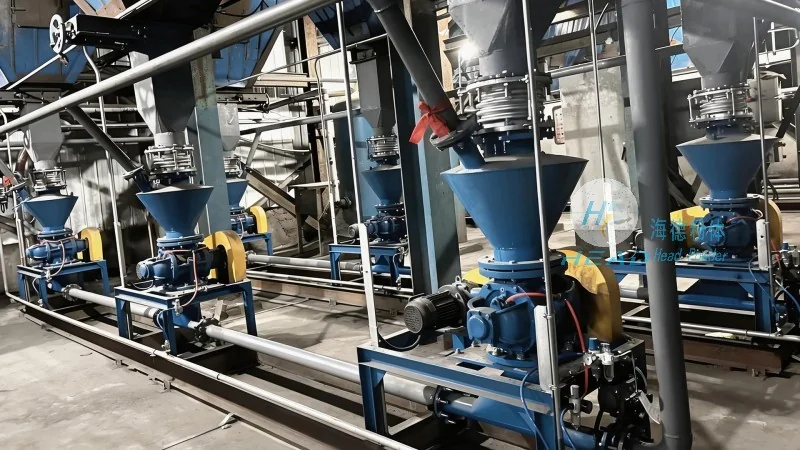
Regardless of the chosen system type, several key components are essential for reliable operation. The blower or air compressor provides the necessary air pressure and volume. Hoppers are used to store and feed the lime into the system, often equipped with vibrators or feeders to maintain a consistent flow. Cyclones and filters are critical for separating the lime particles from the air stream and collecting the material at the receiver. The pipeline itself must be made of wear-resistant materials, such as stainless steel or special alloys, to withstand the abrasive nature of lime. Additionally, check valves and pressure relief devices are installed to prevent backflow and protect the system from overpressure.
Benefits of Implementing Pneumatic Conveying for Lime
Adopting pneumatic conveying systems for lime offers numerous benefits. Firstly, it enhances safety by eliminating the need for manual handling of bulk materials, reducing the risk of accidents and exposure to dust. Secondly, it improves efficiency by automating the material transport process, leading to higher throughput and reduced labor costs. Thirdly, it ensures consistent material quality by maintaining a controlled environment, preventing contamination and moisture absorption. Finally, it offers flexibility in system design, allowing for easy integration with existing processing facilities and future expansion.
Case Study: Successful Implementation by Shandong HeadPowder Engineering Co., Ltd.
Shandong HeadPowder Engineering Co., Ltd., a leading provider of material handling solutions, has successfully implemented pneumatic conveying systems for lime in various industrial applications. One notable project involved a cement plant in Shandong, China, where the company designed and installed a dense-phase system to transport lime from storage silos to the kiln. The system was tailored to handle the plant's specific requirements, including a conveying distance of 150 meters and a material flow rate of 10 tons per hour. The implementation resulted in a significant reduction in material handling time and labor costs, while maintaining high material quality and system reliability. This case study demonstrates the effectiveness of pneumatic conveying solutions in optimizing lime handling processes.
Conclusion
Pneumatic conveying offers a robust and efficient solution for the transport of lime in industrial settings. By carefully evaluating the conveying distance, material characteristics, and operational requirements, industries can select the most appropriate system type—whether dilute-phase, dense-phase, or hybrid. Proper equipment selection and system design are crucial for ensuring reliable operation and maximizing the benefits of pneumatic conveying. With the expertise of companies like Shandong HeadPowder Engineering Co., Ltd., industries can implement effective lime handling solutions that enhance productivity, safety, and overall operational efficiency.