

Operation Process and Working Principle of Automatic Quantitative Material Feeding Pneumatic Conveyi
This document provides an overview of the operation process and working principle of the automatic quantitative material feeding pneumatic conveying system developed by Shandong HeadPowder Engineering Co., Ltd. (hereinafter referred to as HeadPowder). The system is designed to efficiently handle bulk materials in industrial applications, ensuring precise and reliable material transfer from storage to processing units.
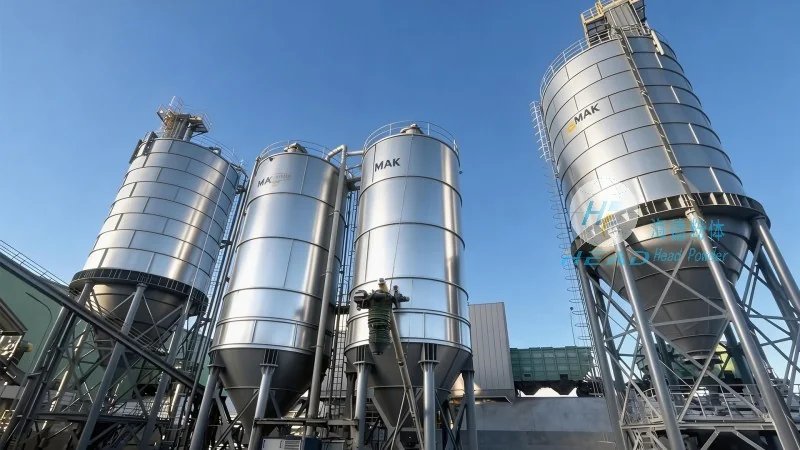
System Overview
The automatic quantitative material feeding pneumatic conveying system is a sophisticated piece of equipment engineered to meet the demands of modern industrial material handling. It integrates advanced control technologies and robust mechanical components to deliver consistent performance in various production environments. HeadPowder, a leading manufacturer based in Shandong, China, specializes in developing customized solutions tailored to specific industry requirements.
Key Components and Their Functions
The system comprises several critical components, each playing a vital role in the overall operation. These include the material hopper, feeding mechanism, pneumatic conveying pipeline, air compressor, and control system. The material hopper stores the bulk material and feeds it to the feeding device at a controlled rate. The feeding mechanism, often equipped with a screw or rotary valve, regulates the material flow into the conveying pipeline. The pneumatic conveying pipeline transports the material using compressed air, while the air compressor provides the necessary pressure and volume of air. The control system monitors and adjusts the operation parameters to maintain optimal performance and material accuracy.
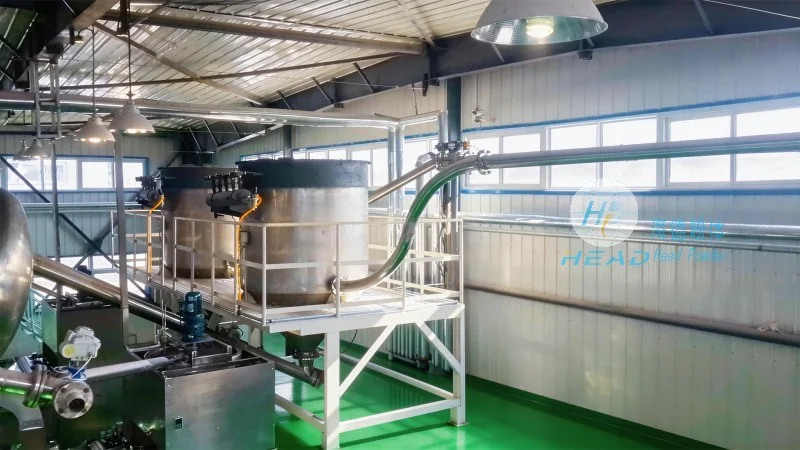
Operation Process
The operation of the automatic quantitative material feeding pneumatic conveying system follows a systematic sequence to ensure precise material transfer. Initially, the material is loaded into the hopper. The control system then activates the feeding mechanism, which starts the material flow into the conveying pipeline. Simultaneously, the air compressor generates compressed air that is introduced into the pipeline. The compressed air creates a pressure differential, drawing the material particles into the pipeline and transporting them to the destination point. The system continuously monitors the material flow rate and air pressure, adjusting the feeding speed or air volume as needed to maintain the desired material quantity. Upon reaching the target location, the material is discharged into the receiving hopper or processing equipment. The entire process is automated, minimizing human intervention and enhancing operational efficiency.
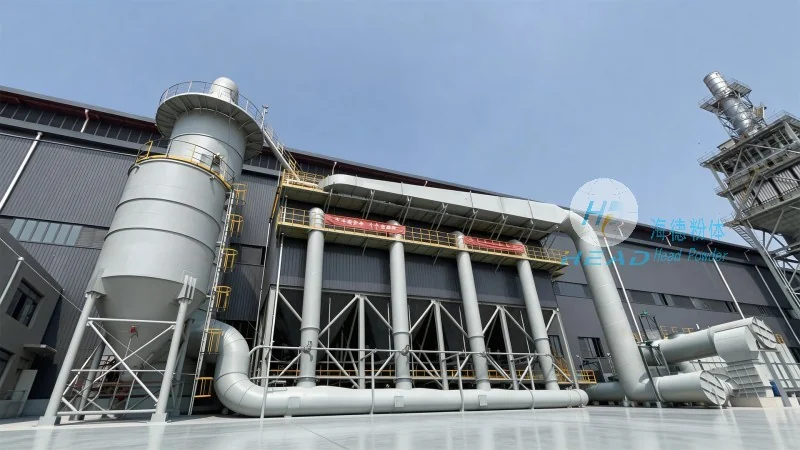
Working Principle
The working principle of the pneumatic conveying system is based on the fundamental concept of transporting solid particles using a gas stream. In this system, compressed air is used as the conveying medium. The material is introduced into the pipeline at a controlled rate, and the air flow carries the particles along the pipeline. The pressure difference between the hopper and the discharge point drives the material movement. The system utilizes a combination of positive and negative pressure zones to achieve efficient material transport. The positive pressure zone near the hopper pushes the material forward, while the negative pressure zone at the discharge point helps to draw the material out of the pipeline. This dual-pressure approach ensures consistent and reliable material transfer, even for materials with varying particle sizes and densities.
Advantages and Applications
The automatic quantitative material feeding pneumatic conveying system offers several advantages that make it suitable for a wide range of industrial applications. These include high material transfer efficiency, precise control over material quantity, minimal material loss, and reduced labor requirements. The system is commonly used in industries such as food processing, pharmaceuticals, chemicals, and minerals, where accurate and hygienic material handling is essential. HeadPowder's system is designed to handle various materials, including powders, granules, and bulk solids, with different characteristics like moisture content, particle size, and flowability.