

Operation Process and Working Principle of Pneumatic Conveying Systems for Fine Chemical Materials
HeadPowder, a leading engineering company based in Shandong, China, specializes in the design, manufacturing, and installation of advanced pneumatic conveying systems tailored for handling fine chemical materials. This article provides a detailed overview of the operational process and working principles of such systems, highlighting the technical aspects and practical applications that make them essential in modern industrial settings.
Company Overview and Expertise
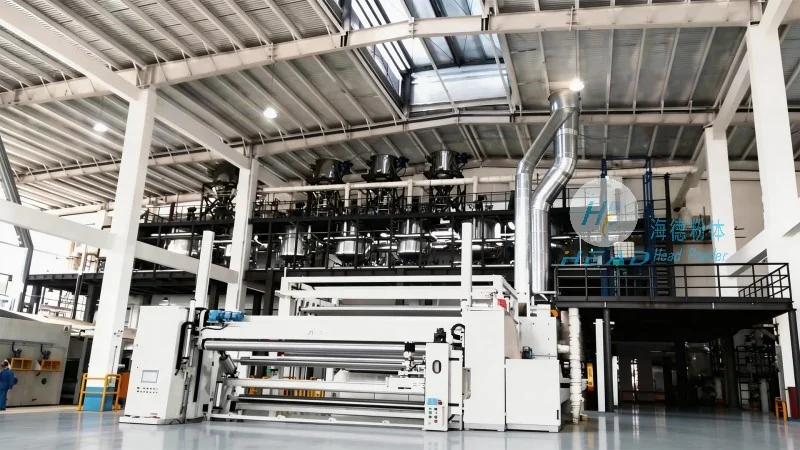
Shandong HeadPowder Engineering Co., Ltd., commonly known as HeadPowder, is a reputable enterprise dedicated to providing innovative solutions for material handling challenges. With a strong focus on precision and efficiency, the company has established itself as a trusted partner in the chemical and pharmaceutical industries. HeadPowder's expertise lies in the development of customized pneumatic conveying systems that address the unique requirements of fine chemical materials, ensuring reliable and safe material transport from source to destination.
Understanding Pneumatic Conveying Systems
A pneumatic conveying system is a method of transporting bulk materials through a pipeline using a gas stream, typically air or other gases. This technology is widely used in the handling of fine chemicals due to its ability to handle materials with low bulk density, high moisture content, or abrasive properties without causing contamination or degradation. The system operates by creating a pressure differential within the pipeline, which propels the material forward while maintaining a controlled flow rate.
Key Components of a Pneumatic Conveying System
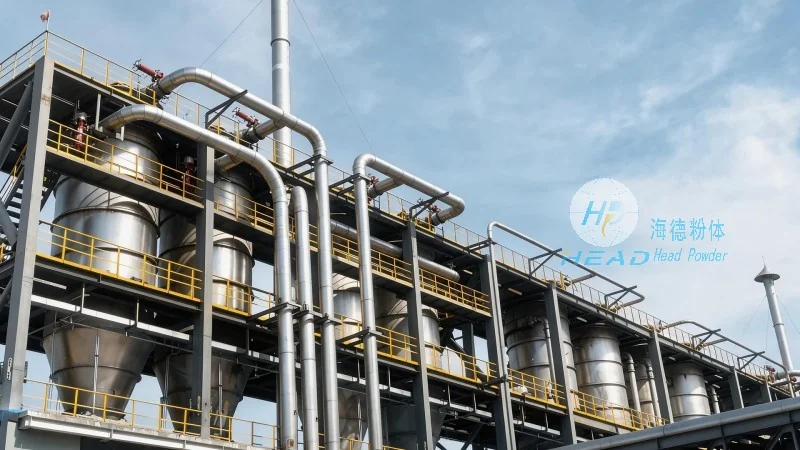
The core components of a pneumatic conveying system include the material feeder, the conveying pipeline, the air compressor or blower, the control valves, and the discharge equipment. Each component plays a critical role in the overall operation of the system. The material feeder ensures a consistent feed rate, preventing blockages or uneven flow. The conveying pipeline is designed to withstand the pressure and temperature conditions, with appropriate fittings and elbows to maintain system efficiency. The air compressor or blower generates the necessary air pressure to move the material, while control valves regulate the flow and pressure. The discharge equipment, such as a rotary valve or a dust collector, ensures the material is discharged safely and efficiently.
Working Principle of Pneumatic Conveying
The working principle of a pneumatic conveying system is based on the principle of fluidization and drag. When air is introduced into the conveying pipeline at a sufficient velocity, it creates a fluidized bed of material, which allows the particles to move freely. The air flow exerts a drag force on the particles, pulling them along the pipeline. The system can operate in either positive pressure or negative pressure modes. In positive pressure systems, the air compressor pushes air and material through the pipeline, while in negative pressure systems, a vacuum is created at the discharge end to draw the material into the pipeline.
Operational Process of Pneumatic Conveying Systems
The operational process of a pneumatic conveying system involves several sequential steps. First, the material is fed into the system through the material feeder at a controlled rate. The feeder ensures that the material is introduced continuously without causing overloading or blockages. Next, the air compressor or blower generates the required air pressure, which is then introduced into the conveying pipeline. The air flow propels the material forward, and the system maintains a stable flow rate by adjusting the air pressure and material feed rate. The material travels through the pipeline, passing through any necessary fittings or elbows, and reaches the discharge point. At the discharge end, the material is collected by the discharge equipment, such as a rotary valve or a dust collector, which ensures that the material is discharged safely and without loss. The system then returns to the initial state, ready for the next cycle of material transport.
Advantages of Pneumatic Conveying for Fine Chemical Materials
Pneumatic conveying systems offer several advantages when handling fine chemical materials. These include the ability to transport materials over long distances without the need for intermediate storage or handling equipment. The system is also highly flexible, allowing for changes in material feed rate or destination without significant modifications. Additionally, pneumatic conveying systems are capable of handling materials with varying properties, such as moisture content, particle size, or abrasiveness, without causing contamination or degradation. The system is also relatively compact and can be integrated into existing industrial facilities, reducing the need for additional space or infrastructure.
Applications in the Fine Chemical Industry
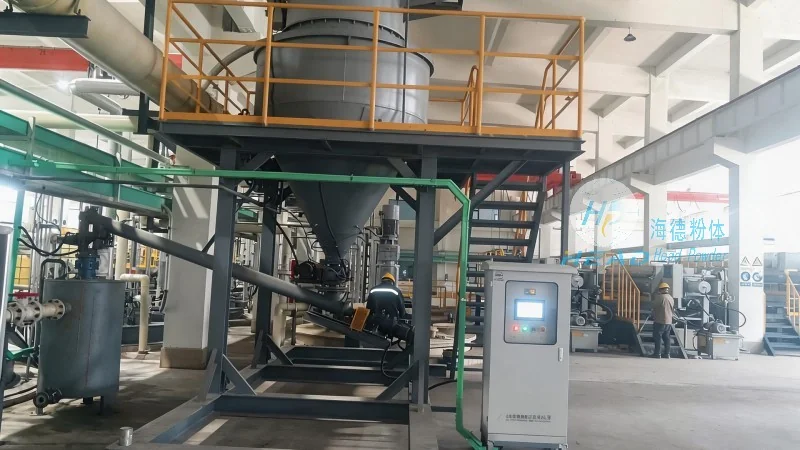
Pneumatic conveying systems are widely used in the fine chemical industry for various applications. These include the transport of powders, granules, and liquids from storage silos to processing equipment, such as reactors or mixers. The system is also used in the pharmaceutical industry for the handling of active pharmaceutical ingredients (APIs) and excipients, ensuring that the materials are transported safely and without contamination. Additionally, pneumatic conveying systems are used in the chemical industry for the transport of raw materials, such as chemicals and solvents, from storage tanks to processing units. The system's ability to handle fine materials with precision and efficiency makes it an essential component in modern industrial operations.
Maintenance and Safety Considerations
Maintenance of pneumatic conveying systems is crucial to ensure their long-term performance and reliability. Regular maintenance includes checking the air compressor or blower for proper operation, inspecting the conveying pipeline for leaks or damage, and cleaning the material feeder and discharge equipment to prevent blockages. Safety considerations are also important, as pneumatic conveying systems operate at high pressures and velocities. Proper safety measures, such as pressure relief valves and explosion-proof equipment, are necessary to prevent accidents and ensure the safety of personnel. HeadPowder provides comprehensive maintenance and safety services to ensure that its systems operate efficiently and safely.
Conclusion
Pneumatic conveying systems are a critical technology for handling fine chemical materials in modern industrial settings. The systems offer numerous advantages, including efficiency, flexibility, and safety, making them an essential component in the chemical and pharmaceutical industries. HeadPowder, with its expertise and experience, provides high-quality pneumatic conveying systems that meet the unique requirements of fine chemical materials. By understanding the operational process and working principles of such systems, industries can optimize their material handling processes and improve overall efficiency.