

Operation Process and Working Principle of Organic Salt Powder Conveyors
Organic salt powder conveyors are critical equipment in industrial processes, particularly for the efficient handling and transportation of organic salt powders. As a leading manufacturer based in Shandong, China, Shandong HeadPowder Engineering Co., Ltd. specializes in designing and supplying high-quality organic salt powder conveyors that meet the diverse needs of various industries. These systems are engineered to ensure minimal product loss, maintain product integrity, and provide reliable performance in demanding operational environments.
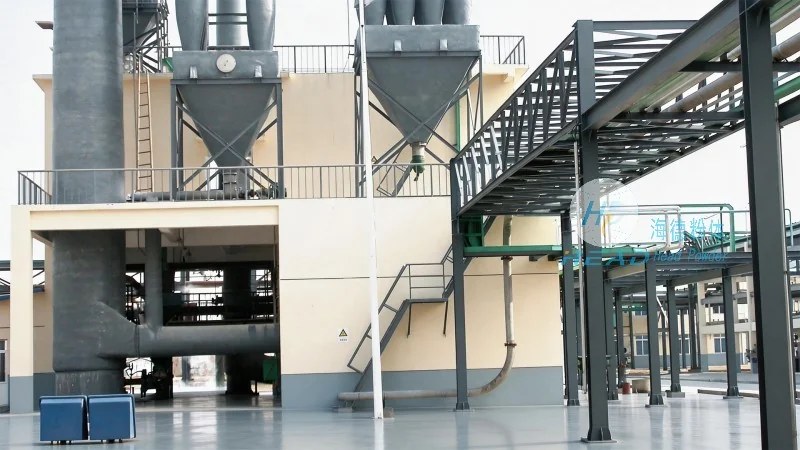
Working Principle of Organic Salt Powder Conveyors
The core working principle of organic salt powder conveyors is based on the utilization of air or mechanical forces to transport powder materials. In pneumatic conveying systems, for example, a blower or compressor generates a flow of air that carries the powder particles through a pipeline. The air flow is controlled to maintain a stable velocity, preventing particle segregation and ensuring uniform distribution. Mechanical conveyors, on the other hand, rely on rotating components like screws or belts to move the powder along a designated path. The choice between pneumatic and mechanical systems depends on factors such as the powder's properties, the required conveying distance, and the environmental conditions.
Key Components and Their Functions
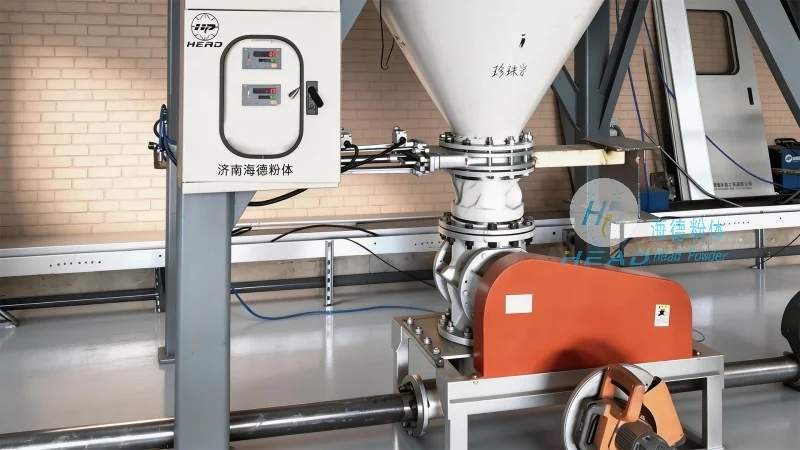
Organic salt powder conveyors consist of several critical components that work together to facilitate the conveying process. The main components include the hopper, feeder, conveyor line, and discharge device. The hopper serves as a storage container for the organic salt powder, providing a consistent feed to the conveyor system. The feeder, typically a rotary valve or screw feeder, regulates the flow rate of the powder into the conveyor line, preventing overloading and ensuring smooth operation. The conveyor line, which can be a pipeline for pneumatic systems or a trough for mechanical systems, transports the powder from the inlet to the outlet. The discharge device, such as a rotary valve or gate valve, controls the release of the powder at the end of the conveyor line, allowing for precise control over the discharge rate.
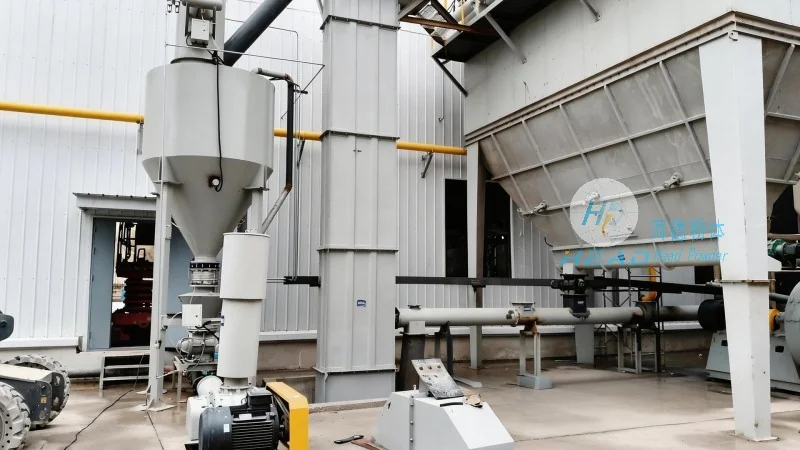
Operation Process of Organic Salt Powder Conveyors
The operation process of organic salt powder conveyors begins with the loading of the organic salt powder into the hopper. The powder is then fed into the conveyor line through the feeder, which maintains a steady flow rate. In pneumatic systems, the air flow is activated, and the powder is carried through the pipeline by the air stream. The air velocity is carefully controlled to prevent particle deposition and ensure efficient transport. In mechanical systems, the rotating components (e.g., screws or belts) move the powder along the conveyor line, with the speed and torque adjusted to handle the specific powder characteristics. The conveyor line may include bends or changes in elevation, which are designed to accommodate the required path without compromising the conveying efficiency. At the discharge end, the powder is released through the discharge device, where it is collected in a receiving container or transferred to the next processing stage.
Advantages of Organic Salt Powder Conveyors
Organic salt powder conveyors offer several advantages over traditional conveying methods. One of the key benefits is the ability to handle fine powders without causing segregation or agglomeration. The controlled flow and uniform air or mechanical forces prevent the separation of particles based on size or density, maintaining the product's homogeneity. Additionally, these conveyors are designed to minimize product contamination, as they operate in a closed system, reducing exposure to external elements. The compact design of many organic salt powder conveyors also makes them suitable for space-constrained environments, allowing for efficient integration into existing production lines. Furthermore, the adjustable flow rates and discharge controls enable precise control over the conveying process, ensuring that the required amount of powder is delivered accurately and on time.
Applications in Industrial Settings
Organic salt powder conveyors are widely used in various industrial sectors, including chemical manufacturing, food processing, and pharmaceutical production. In the chemical industry, they are used to transport organic salts used in the production of fertilizers, detergents, and other chemical products. The ability to handle fine powders and maintain product integrity is crucial in these applications, as any contamination or segregation can affect the final product quality. In the food industry, organic salt powder conveyors are used to transport salt for food processing, ensuring that the salt is delivered in a consistent and hygienic manner. The closed system design also helps maintain food safety standards by preventing cross-contamination. In the pharmaceutical industry, these conveyors are used to transport active pharmaceutical ingredients (APIs) and other fine powders, where precision and product purity are paramount. The controlled conveying process ensures that the API is delivered without degradation or contamination, meeting the stringent regulatory requirements.
Maintenance and Operational Considerations
Proper maintenance is essential to ensure the reliable operation of organic salt powder conveyors. Regular inspection of the hopper, feeder, and conveyor line is necessary to check for any signs of wear or blockage. The air filters and compressors in pneumatic systems should be cleaned or replaced regularly to maintain optimal air quality and prevent dust accumulation. Mechanical components, such as screws and bearings, should be lubricated according to the manufacturer's recommendations to reduce friction and extend their lifespan. Additionally, the conveyor line should be inspected for any signs of corrosion or damage, especially in environments with high humidity or corrosive substances. Operational considerations also include monitoring the flow rate and pressure in pneumatic systems, as well as the speed and torque in mechanical systems. Any deviations from the normal operating parameters should be addressed promptly to prevent system failures or product quality issues.