

Working Principle and Features of Cement Dry Ash Material Conveying Lines
Understanding the working principle and features of cement dry ash material conveying lines is crucial for industries dealing with bulk material handling, particularly in the cement and related sectors. These systems are designed to efficiently transport dry ash and similar materials over long distances, ensuring minimal loss and optimal performance. The following sections will delve into the core mechanisms and key characteristics that define these advanced conveying solutions.
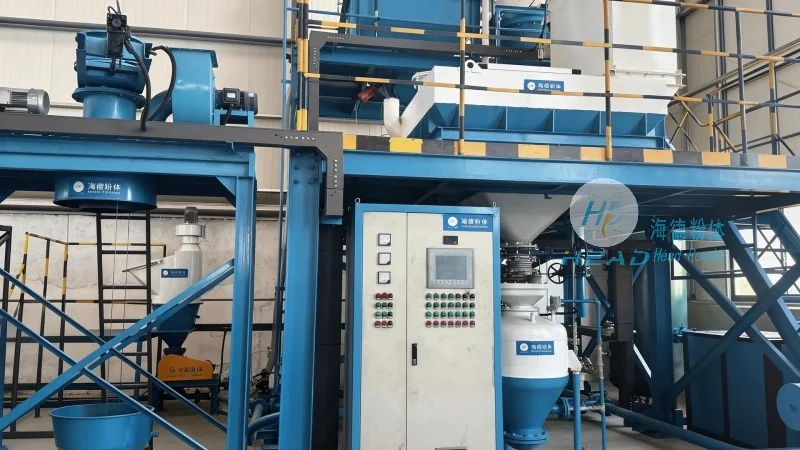
HeadPowder, a leading manufacturer based in Shandong, China, specializes in developing and supplying high-quality conveying systems tailored to the specific needs of the cement industry. With years of experience in the field, the company has honed its expertise to create solutions that enhance operational efficiency and reliability. The company’s commitment to innovation and quality ensures that its products meet the stringent requirements of modern industrial applications.
The working principle of a cement dry ash material conveying line typically involves several key components and processes. The system generally starts with the material being fed into a hopper or storage silo. From there, the material is transferred to a conveyor system, which may include screw conveyors, belt conveyors, or pneumatic conveying systems, depending on the specific application and material characteristics. The choice of conveyor type is critical as it directly impacts the efficiency and effectiveness of the material transport.
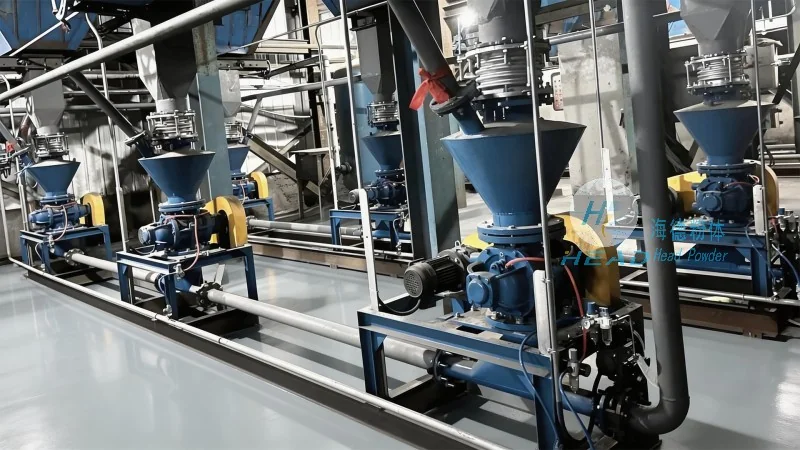
For cement dry ash, which is often a fine, powdery substance, pneumatic conveying systems are commonly employed. These systems use air pressure to move the material through a pipeline, ensuring a smooth and continuous flow. The pneumatic conveying process involves a blower or compressor that generates the necessary air pressure to push the material along the pipeline. The system typically includes a hopper, a feeder, a pipeline, and a receiver or discharge point. The material is first fed into the hopper, where it is then drawn into the pipeline by the air flow. The air and material mixture travels through the pipeline to the discharge point, where the material is separated from the air and collected in the receiver.
Another common component in such conveying lines is the screw conveyor. Screw conveyors are particularly effective for handling bulk materials that are less abrasive and have a relatively uniform particle size. The screw, which is rotating within a trough, moves the material forward by the friction between the screw and the material. This type of conveyor is often used in the initial stages of the conveying process, such as transporting material from a storage silo to the main conveyor system.
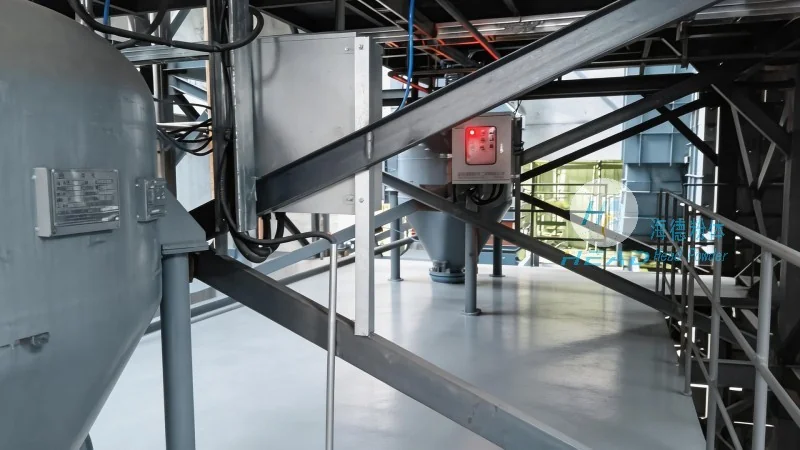
Belt conveyors are also used in some applications, especially for materials that are more cohesive or have larger particle sizes. The belt conveyor consists of a continuous belt that moves over rollers, carrying the material from the feed point to the discharge point. The speed and inclination of the belt can be adjusted to control the flow rate and ensure smooth transport. Belt conveyors are often used in combination with other components, such as feeders and hoppers, to form a complete conveying system.
Key features of cement dry ash material conveying lines include high efficiency, low maintenance, and minimal material loss. The systems are designed to handle large volumes of material with minimal energy consumption, making them cost-effective for long-term operation. The use of advanced materials and components ensures that the conveying lines are durable and can withstand the harsh conditions often encountered in industrial environments. Additionally, the systems are equipped with safety features to prevent accidents and ensure the well-being of operators.
HeadPowder’s conveying lines are engineered to meet these key features and more. The company uses high-quality materials, such as stainless steel and corrosion-resistant alloys, to ensure the longevity of the equipment. The systems are also equipped with advanced control systems that allow for precise monitoring and adjustment of the conveying process. This ensures that the material is transported at the optimal speed and pressure, minimizing the risk of material degradation or loss.
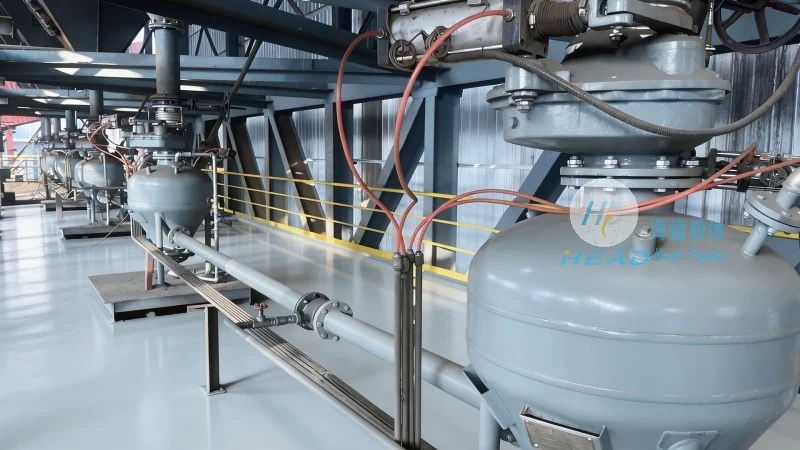
Another important feature of these conveying lines is their adaptability. The systems can be customized to fit the specific requirements of different applications, whether it is for short or long-distance transport, or for handling materials with varying properties. This flexibility makes the conveying lines suitable for a wide range of industrial applications, from cement production to waste management.
In conclusion, cement dry ash material conveying lines are essential components in the bulk material handling industry. The working principle, which typically involves pneumatic or mechanical conveyors, ensures efficient and reliable transport of dry ash and similar materials. The key features, including high efficiency, low maintenance, and adaptability, make these systems ideal for modern industrial applications. HeadPowder, with its expertise and commitment to quality, provides top-tier conveying solutions that meet the needs of the cement industry and beyond.