

What is a Continuous Metering Feeding Material Pneumatic Conveying System? What are its Design Princ
For industrial applications requiring precise and efficient material handling, continuous metering feeding material pneumatic conveying systems offer a reliable solution. These systems are engineered to transport bulk materials through an enclosed pipeline using air or other gas as the conveying medium. The core of such a system lies in its ability to accurately measure and feed material while ensuring consistent and controlled transport. This article delves into the fundamental aspects of these systems, exploring their design principles and how they function to meet the demands of modern material handling processes. Developed by Shandong HeadPowder Engineering Co., Ltd., a leading manufacturer in material handling solutions, these systems are designed to deliver high performance and durability.


Key Components of a Continuous Metering Feeding Material Pneumatic Conveying System
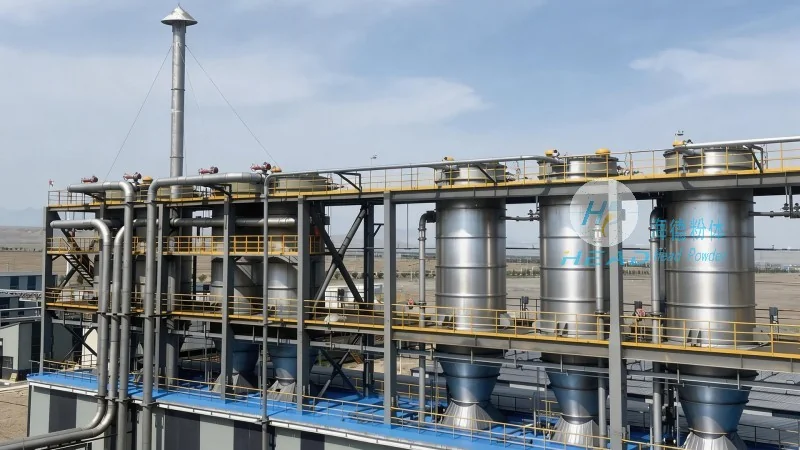
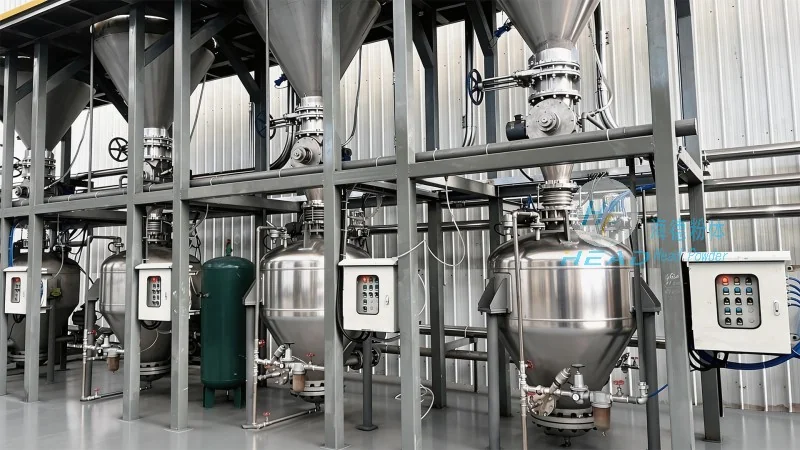
The effectiveness of a continuous metering feeding material pneumatic conveying system is attributed to its integrated components, each playing a critical role in the overall operation. The primary components include a metering feeder, a pneumatic conveying line, a control system, and a receiving hopper. The metering feeder is responsible for accurately measuring and feeding the material at a constant rate, ensuring uniform flow into the conveying line. This component is often equipped with adjustable settings to accommodate different material types and flow rates. The pneumatic conveying line, typically made of stainless steel or other corrosion-resistant materials, transports the material and air mixture through the system. The control system monitors and regulates the pressure, flow rate, and material feed, maintaining optimal performance. Finally, the receiving hopper collects the material at the end of the conveying line, providing a storage and discharge point.
Design Principles for Optimal Performance
The design of a continuous metering feeding material pneumatic conveying system is guided by several key principles aimed at maximizing efficiency, reliability, and material integrity. One of the fundamental principles is the selection of appropriate conveying air pressure and velocity. The air pressure must be sufficient to overcome the resistance of the material and the system components, while the velocity must be controlled to prevent material degradation or blockages. Engineers often use empirical formulas and material-specific data to determine the optimal pressure and velocity for a given application. Another critical principle is the consideration of material properties, such as particle size, density, and flowability. These properties influence the system's design, including the type of metering feeder (e.g., screw feeder, rotary valve) and the conveying line diameter. For example, cohesive or abrasive materials may require specialized components to ensure smooth operation and prevent wear. Additionally, the system's layout and configuration are designed to minimize pressure losses and energy consumption. This involves optimizing the pipeline length, bends, and fittings to reduce resistance and maintain consistent flow. The control system is also a vital design element, as it enables real-time monitoring and adjustment of the conveying parameters. Modern systems often incorporate sensors and automation to enhance performance and reduce downtime.
Operational Advantages of Continuous Metering Feeding Material Pneumatic Conveying Systems
Continuous metering feeding material pneumatic conveying systems offer several operational advantages that make them ideal for various industrial applications. One of the primary benefits is the ability to achieve precise and consistent material feed rates. This is crucial in processes where uniform material input is required, such as in chemical production, food processing, or pharmaceutical manufacturing. The continuous feeding capability ensures a steady flow of material, reducing the risk of interruptions or fluctuations that can affect product quality. Another advantage is the enclosed nature of the system, which provides a clean and dust-free environment. This is particularly important for materials that are sensitive to contamination or require hygienic handling, such as food or pharmaceuticals. The system also minimizes material spillage and waste, as the material is contained within the pipeline and hopper. Furthermore, the system's flexibility allows for easy integration with existing production lines. It can be adapted to handle different material types and flow rates by adjusting the metering feeder and control settings. This adaptability makes it suitable for a wide range of applications, from small-scale operations to large industrial facilities. The energy efficiency of these systems is another significant advantage. By optimizing the air pressure and flow rate, the system minimizes energy consumption while maintaining performance. This not only reduces operational costs but also contributes to environmental sustainability.