

Operation Process and Working Principle of Continuous Feeding Pneumatic Conveying System Equipment
HeadPowder, a leading engineering company based in Shandong, China, specializes in the design, manufacturing, and installation of advanced pneumatic conveying systems. This article provides a detailed overview of the operation process and working principle of continuous feeding pneumatic conveying system equipment, highlighting the key components, operational steps, and technical mechanisms that enable efficient material handling in various industrial applications.
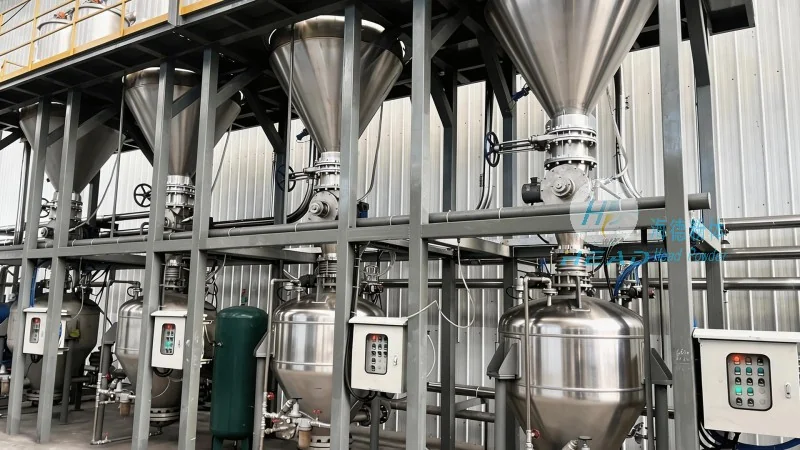
Company Profile and Background
HeadPowder Engineering Co., Ltd. is a professional manufacturer and supplier of pneumatic conveying equipment in China. With a strong focus on innovation and quality, the company has established itself as a trusted partner for industries requiring reliable and efficient material transport solutions. HeadPowder's headquarters is located in Shandong, China, where the company's research and development team continuously works on improving existing technologies and developing new solutions to meet the evolving needs of the market.
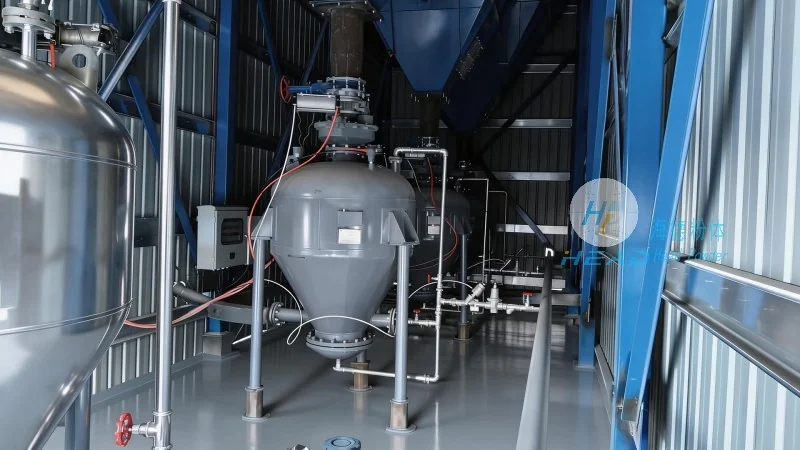
Overview of Continuous Feeding Pneumatic Conveying System Equipment
Continuous feeding pneumatic conveying systems are advanced industrial equipment designed to transport bulk materials from one location to another using a combination of air pressure and mechanical components. These systems are widely used in various industries, including food processing, pharmaceuticals, chemicals, and mining, due to their ability to handle a wide range of materials with minimal maintenance and high efficiency. The core components of such systems typically include a feeding hopper, a conveyor line, a separation unit, and a control system, all working in tandem to ensure smooth and continuous material flow.
Operation Process of Continuous Feeding Pneumatic Conveying System Equipment
The operation process of continuous feeding pneumatic conveying system equipment involves several sequential steps that ensure the efficient and safe transport of materials. The process begins with the loading of bulk materials into the feeding hopper. The hopper is equipped with a feeder, such as a rotary valve or a screw conveyor, which controls the flow rate of the material into the conveyor line. As the material enters the conveyor line, it is mixed with air from the blower or compressor, creating a slurry-like mixture that is then propelled through the pipeline. The conveyor line is typically made of stainless steel or other corrosion-resistant materials to ensure durability and hygiene, especially in industries like food and pharmaceuticals. The mixture travels through the pipeline until it reaches the separation unit, where the air and material are separated. The separated material is then discharged into the receiving container, while the air is either filtered and recycled or released into the atmosphere, depending on the system design.
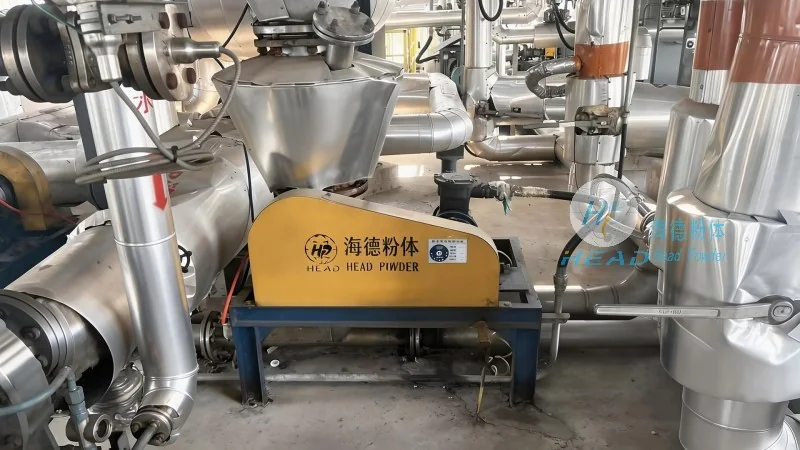
Working Principle of Continuous Feeding Pneumatic Conveying System Equipment
The working principle of continuous feeding pneumatic conveying system equipment is based on the fundamental concept of pneumatic transport, which utilizes the kinetic energy of air to move materials. The system operates by creating a pressure differential between the feeding hopper and the discharge point. The blower or compressor generates high-pressure air that is introduced into the conveyor line, creating a positive pressure environment. As the material is fed into the line, it is entrained by the air stream, and the combination of air velocity and material particle size determines the transport velocity. The separation unit at the end of the line uses gravity or centrifugal force to separate the material from the air. This separation process is crucial for maintaining the quality of the material and preventing contamination. The control system monitors various parameters, such as pressure, flow rate, and material level, to ensure optimal operation and prevent system failures. By integrating these components and processes, continuous feeding pneumatic conveying systems achieve high efficiency, low maintenance, and reliable performance in material handling applications.