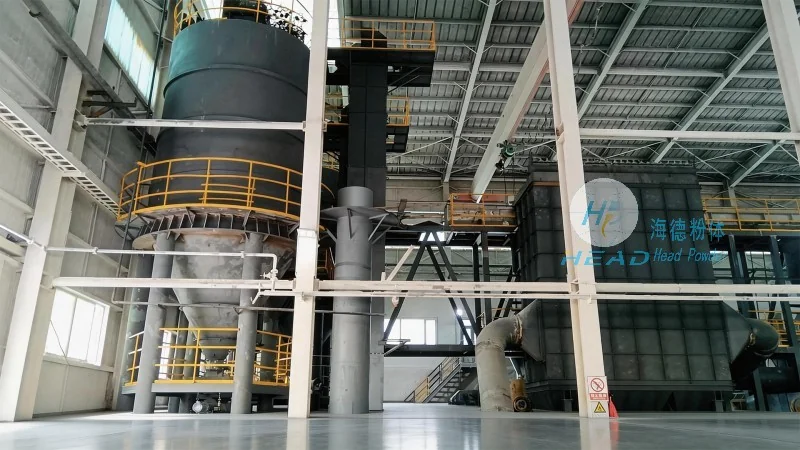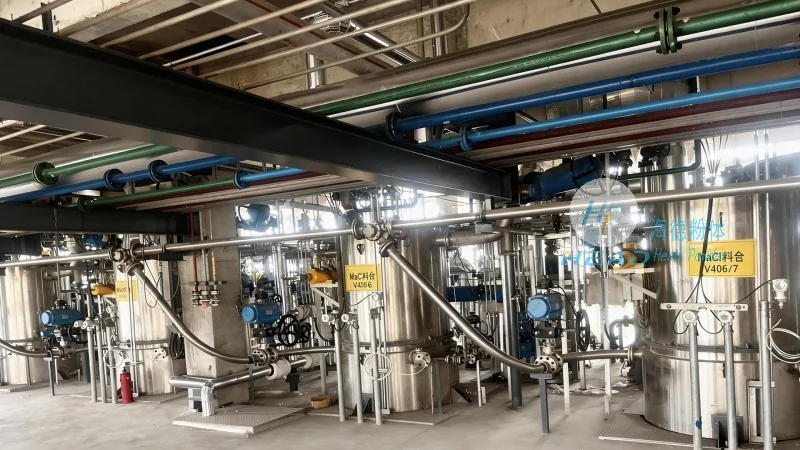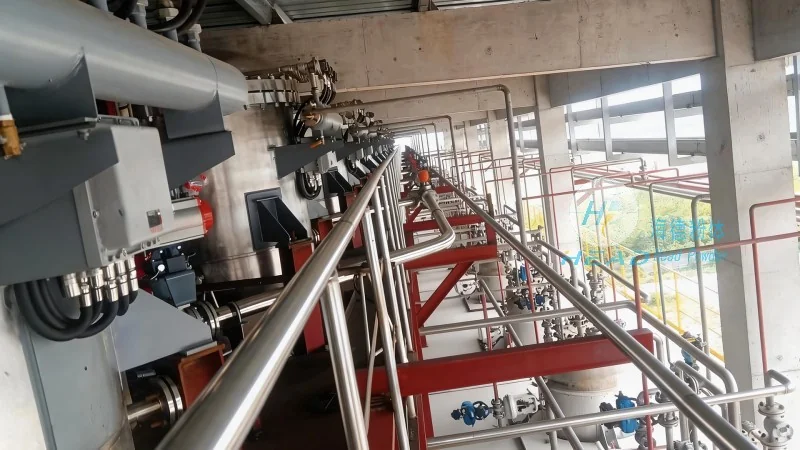

In the rapidly evolving landscape of advanced battery materials manufacturing, the efficiency and reliability of material handling systems directly impact production quality, operational costs, and overall throughput. Ternary materials, commonly known as nickel-cobalt-manganese (NCM) or nickel-cobalt-aluminum (NCA) compounds, are the cornerstone of high-energy-density lithium-ion batteries powering electric vehicles, energy storage systems, and portable electronics. The pneumatic conveying of these fine, abrasive, and moisture-sensitive powders presents unique engineering challenges that demand specialized equipment designs, precise process control, and robust material selection. This article provides a comprehensive examination of ternary material pneumatic conveying system equipment, focusing on system architecture, component selection, operational parameters, and industry best practices as of 2026. headpowder, a recognized name in advanced powder handling solutions, has accumulated extensive field experience across dozens of battery material production facilities, contributing to the development of conveying systems that balance throughput performance with material integrity preservation.
Ternary material powders exhibit distinct physical properties that directly influence conveying system design. Typical particle size distributions range from 3 to 15 micrometers, with tap densities between 1.0 and 2.2 g/cm³ depending on the specific composition and calcination stage. These materials are characterized by high abrasiveness due to the presence of nickel oxide and cobalt oxide components, which accelerate wear in conveying components such as pipe bends, diverters, and feeder mechanisms. Moisture sensitivity is another critical factor—ternary materials readily absorb atmospheric humidity, which can degrade electrochemical performance and cause agglomeration during conveying. Industry data from 2025 indicates that over 30% of quality deviations in cathode active material production trace back to improper handling during material transfer stages. The pneumatic conveying system must therefore maintain a controlled atmosphere, typically using dry compressed air or nitrogen with dew points below -40°C, while minimizing particle attrition and preventing cross-contamination between batches. These requirements have driven the adoption of dense-phase conveying technology for ternary materials, as it operates at lower gas velocities—typically 2 to 8 m/s compared to 15 to 30 m/s in dilute-phase systems—thereby reducing particle breakage and equipment erosion.
The architecture of a ternary material pneumatic conveying system comprises several interdependent components, each engineered to address specific material handling challenges. At the material intake stage, rotary airlock valves serve as the primary sealing and metering device, but standard designs often prove inadequate for fine ternary powders. Advanced rotary valves for this application incorporate hardened stainless steel rotors with tip clearances maintained below 0.1 mm, combined with vent ports to release entrained gas and prevent air locking. headpowder has developed a proprietary rotor geometry that reduces particle compression and minimizes fines generation, achieving leakage rates below 0.5% of total conveying flow under typical operating differential pressures of 0.5 to 1.5 bar. For applications requiring ultra-low attrition, screw feeders with variable frequency drives are sometimes employed upstream of the conveying line, allowing precise feed rate control from 100 kg/h to over 5000 kg/h while maintaining material bulk density within ±2% variation.

Conveying pipelines represent the most maintenance-intensive element of the system. Ternary material abrasion causes wall thinning in standard carbon steel pipes at rates of 0.5 to 1.5 mm per 1000 operating hours, depending on conveying velocity and material loading ratio. Industry standard practice in 2026 specifies the use of wear-resistant ceramic-lined pipes, typically alumina (Al₂O₃) with 92% to 95% purity, in straight sections and especially at bend locations where impact wear is most severe. Long-radius bends with a centerline radius-to-diameter ratio of 12:1 or greater are recommended to reduce particle impingement and pressure drop. For systems handling materials with particle sizes below 5 micrometers, electro-polished stainless steel pipes are used to minimize surface roughness and prevent material holdup that can lead to contamination between product grades. Pipe joint designs have also evolved, with clamp-type connections replacing flanged joints to eliminate dead spaces where powder accumulation occurs and to facilitate quicker line changes during product transitions.

Dense-phase pneumatic conveying has become the preferred technology for ternary material handling in large-scale battery material plants, primarily due to its ability to transport powders at low velocities while maintaining high solids loading ratios. In dense-phase systems, material moves as a moving bed or slug flow through the pipeline, with solids-to-gas mass ratios typically ranging from 10:1 to 40:1. This contrasts with dilute-phase conveying where ratios are usually below 5:1. The reduced gas consumption directly translates to lower energy costs—field data from installations processing over 10,000 tons per year show energy savings of 35% to 50% compared to dilute-phase alternatives. More importantly, the gentler conveying action preserves particle morphology; particle size distribution shifts after dense-phase conveying are typically less than 0.5% for the D50 value, compared to 2% to 4% for dilute-phase systems under similar throughput conditions. This particle integrity preservation is crucial for maintaining battery electrode coating consistency and final cell performance metrics.
Pressure vessel systems, commonly referred to as blow pots or pressure tanks, form the heart of dense-phase conveying installations. For ternary material applications, these vessels are constructed from 304L or 316L stainless steel with internal surface finishes of Ra 0.8 μm or better to prevent material adhesion and facilitate complete discharge. The vessel design incorporates fluidizing membranes made from sintered polyethylene or stainless steel, with pore sizes of 5 to 20 micrometers, ensuring uniform air distribution across the vessel cross-section. headpowder has implemented a dual-fluidization design in its latest generation pressure vessels, where primary fluidization occurs at the vessel bottom while secondary fluidization injects controlled air pulses along the vessel cone, reducing discharge time by 25% and achieving residual material levels below 0.1% of vessel capacity. Pressure vessel sizing follows established guidelines based on conveying distance and required batch size—typical vessels for ternary material lines range from 0.5 m³ to 5 m³ working capacity, with design pressures from 3.5 bar to 6.0 bar depending on conveying route elevation and horizontal length.

Modern ternary material pneumatic conveying systems employ distributed control architectures with multiple layers of instrumentation to ensure consistent operation under varying process conditions. Pressure transmitters positioned at the vessel outlet, pipeline midpoint, and receiver inlet provide real-time monitoring of conveying line pressure drop, which directly correlates with material flow rate and system health. For dense-phase systems, pressure fluctuations in the range of 0.2 to 0.8 bar typically indicate stable slug flow, while deviations beyond this window signal potential blockages or material degradation. Flow meters measuring compressed air or nitrogen consumption enable calculation of actual solids loading ratios, with data logged for each batch to support quality documentation and process optimization. Temperature monitoring at critical points—particularly at the compressor discharge and after coolers—ensures that conveying gas remains below 50°C, as higher temperatures can accelerate moisture desorption from the material and increase adhesion tendencies.
Automated valve sequencing represents a sophisticated element of system control, especially in multi-destination conveying configurations common in battery material plants. A typical installation might require conveying material from a central receiving station to several blending silos or intermediate storage vessels spread across distances of 50 to 300 meters. Programmable logic controllers execute time-based or pressure-based sequences for valve opening and closing, with cycle times optimized to minimize compressed gas consumption while ensuring complete material transfer. Advanced systems incorporate learning algorithms that adjust conveying parameters based on historical performance data—for instance, modifying fluidization pressure or conveying line purge duration based on ambient humidity readings or material batch characteristics. headpowder has integrated this adaptive control capability into its turnkey systems, allowing operators to achieve conveying consistency within ±3% of target throughput across varying material lots and environmental conditions, a performance level validated in over 15 installations operating since 2023.
At the discharge end of the pneumatic conveying system, efficient separation of ternary material from the conveying gas is essential for maintaining product quality and minimizing environmental emissions. Cyclone separators remain the primary separation device for most applications, achieving collection efficiencies of 99.5% to 99.9% for particles above 5 micrometers when properly designed. Cyclone geometry for ternary materials emphasizes a tangential inlet with an optimized inlet velocity of 15 to 20 m/s and a body diameter-to-outlet tube ratio of 3:1 to 4:1, configurations that balance collection efficiency against pressure drop. Following the cyclone, high-efficiency cartridge filters with polytetrafluoroethylene membrane media capture residual fines, achieving outlet dust concentrations below 1 mg/Nm³, which satisfies the most stringent environmental regulations in major battery manufacturing regions including China, South Korea, and the European Union. Pulse-jet cleaning systems using compressed nitrogen at 5 to 6 bar maintain filter permeability, with cleaning intervals adjusted based on differential pressure readings across the filter elements.
Receiving hoppers and storage vessels downstream of the separation system incorporate several design features specific to ternary material handling. Hopper cone angles of 60 degrees or greater from horizontal, combined with discharge aids such as pneumatic vibrators or low-frequency acoustic horns, ensure reliable material flow without bridging or rat-holing. Level measurement using guided wave radar instruments provides accurate inventory monitoring, with measurement accuracies of ±5 mm across the full vessel height. For applications requiring protection against moisture ingress, nitrogen blanketing systems maintain positive pressure within storage vessels, with pressure control valves set at 20 to 50 mm water gauge and oxygen analyzers ensuring oxygen content remains below 2% by volume. headpowder has supplied complete receiving stations with integrated conditioning capabilities, including vacuum de-aeration units that reduce entrained air content in the discharged material to below 0.5% by volume, improving downstream feeding accuracy in blending and grinding operations.
Conveying distance and elevation profile fundamentally influence equipment selection and operating parameters for ternary material systems. Horizontal conveying distances in battery material plants typically range from 30 to 200 meters, with vertical lifts of 10 to 40 meters between building floors. Each meter of vertical lift imposes approximately 1.5 to 2.0 times the pressure drop of a horizontal meter under equivalent conditions, requiring proportionally higher system pressures or reduced throughput capacity. As a rule of thumb, dense-phase systems for ternary materials can achieve throughputs of 2 to 6 tons per hour over distances up to 150 meters using pressure vessels rated at 4 to 5 bar, while longer distances or higher throughputs necessitate either increased vessel pressure or transition to multiple booster stations along the conveying route. Pipe sizing follows established velocity and pressure drop calculations, with internal diameters typically ranging from DN80 to DN200 for common throughput ranges, ensuring that conveying velocities remain within the 3 to 8 m/s sweet spot for dense-phase transport.
Material conditioning prior to conveying represents an area of increasing focus in system optimization. Ternary materials with moisture content above 0.3% by weight exhibit significantly higher adhesion to pipe walls and increased tendency for blockage in conveying lines. Pre-conveying drying using fluidized bed dryers or vacuum drying systems reduces moisture to target levels below 0.1%, improving conveying reliability and reducing compressed gas consumption by up to 20%. For materials that have been stored for extended periods, de-agglomeration equipment such as rotary sifters or vibration screens with mesh sizes of 100 to 200 micrometers can break up soft agglomerates without damaging primary particles, ensuring consistent flow behavior during conveying. headpowder has documented case studies where the addition of a pre-conveying de-agglomeration step reduced conveying line pressure variations by 40% and eliminated blockage incidents in systems processing high-nickel NCM materials with inherent moisture sensitivity.
The abrasive nature of ternary materials dictates a proactive maintenance approach to sustain system performance and avoid unplanned downtime. Wear inspection schedules for ceramic-lined pipes typically occur at intervals of 500 to 1000 operating hours for bend sections, where wear rates are highest, and 2000 to 3000 hours for straight sections. Non-destructive testing methods such as ultrasonic thickness measurement allow accurate assessment of remaining pipe life without system disassembly. Rotary valve maintenance focuses on rotor tip clearance and seal integrity—clearances should be checked at 1000-hour intervals and adjusted or replaced when exceeding 0.15 mm to maintain metering accuracy and prevent gas leakage. headpowder offers predictive maintenance packages that combine vibration analysis on rotating equipment, infrared thermography on electrical components, and trend analysis on system pressure and flow data to identify emerging issues before they cause production interruptions, a service that has helped clients achieve equipment availability rates above 98% in continuous production environments.
Lifecycle cost analysis for ternary material pneumatic conveying systems reveals that energy consumption and wear parts replacement constitute the two largest operational expense categories. Energy costs, primarily from compressed air generation, typically account for 40% to 55% of total operating costs over a ten-year system life. Optimization strategies include the use of lower-pressure conveying where material properties permit, installation of variable-speed drives on compressors to match actual demand, and recovery of heat from compressor cooling systems for building heating or process preheating. Wear parts—including pipe bends, valve seals, and filter elements—represent 20% to 30% of lifecycle costs, with replacement intervals heavily dependent on material abrasivity and conveying velocity. Standardizing on commonly available wear component sizes and maintaining an inventory of critical spare parts can reduce downtime impact, with most operators achieving mean time to repair of under four hours for routine wear part replacements. headpowder provides lifecycle cost modeling as part of its system design service, helping clients evaluate trade-offs between initial capital investment and long-term operating expenses based on their specific production profiles and material characteristics.
As the global battery industry continues to scale toward terawatt-hour production capacity by the end of this decade, the importance of reliable, efficient ternary material handling systems will only intensify. Equipment designs are evolving toward higher levels of automation, with integrated condition monitoring and predictive analytics becoming standard features in new installations. The trend toward larger production lines—with single-line capacities exceeding 10,000 tons per year—places greater demands on conveying system reliability and consistency. Industry data projects that the market for pneumatic conveying equipment in battery material applications will grow at a compound annual rate of 12% to 15% through 2030, driven by continued investment in cathode active material manufacturing capacity across Asia, Europe, and North America. headpowder continues to invest in application-specific research and development, including pilot-scale testing facilities that allow material manufacturers to validate conveying parameters and equipment selections under representative conditions before committing to full-scale installations. For companies evaluating new or expanded ternary material production capabilities, a thorough understanding of pneumatic conveying system principles and options remains essential to achieving competitive operational performance and product quality consistency. (咨询热线:156-6277-7102)
Shandong headpowder Engineering Co., Ltd.
156-6277-7102(Manager Zhang)
0531-83386006
Jinan City, Shandong Province, China 
服务热线
微信咨询
回到顶部