

Principle and Working Scene Characteristics of Phosphate Powder Conveying Equipment
Phosphate fertilizer is a cornerstone of modern agricultural practices, and the efficient handling and transportation of phosphate powder are critical for optimizing production workflows. Phosphate powder conveying equipment, including pneumatic conveyors, screw conveyors, and bucket elevators, serves as the backbone of material flow in fertilizer and mining operations. This article delves into the fundamental principles governing these systems and highlights the key working scene characteristics that make them indispensable for phosphate powder applications.

Company Overview: Shandong HeadPowder Engineering Co., Ltd.
HeadPowder, a leading manufacturer in material handling solutions, specializes in designing and manufacturing high-performance conveying equipment tailored for phosphate and other fine powders. With a strong focus on innovation and customer-centric service, HeadPowder has established itself as a trusted partner for industries reliant on reliable powder handling systems. The company’s headquarters is located in Shandong, China, where it leverages advanced engineering and rigorous quality control to deliver superior products that meet the demanding requirements of the fertilizer and mining sectors.

Principle of Phosphate Powder Conveying Equipment
The core principle of phosphate powder conveying equipment revolves around the efficient movement of fine particles through specialized mechanisms. Pneumatic conveyors utilize air pressure to transport powder in a closed system, minimizing dust emissions and ensuring precise control over material flow. Screw conveyors employ rotating screws to push powder along a trough, providing a continuous and low-maintenance method for horizontal or slight incline transport. Bucket elevators use vertical or inclined buckets to lift powder from lower to higher levels, making them ideal for vertical or steep incline applications. Each type of equipment is engineered to address the unique challenges of phosphate powder, such as its tendency to agglomerate or create dust, by incorporating features like air filtration, material conditioning, and gentle handling mechanisms.
Working Scene Characteristics of Phosphate Powder Conveying Equipment
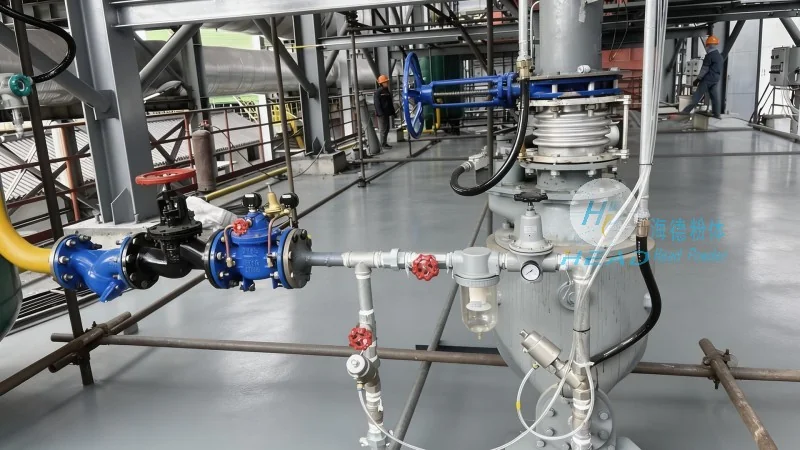
The working scene characteristics of phosphate powder conveying equipment are pivotal for their effectiveness in real-world applications. One key characteristic is the ability to handle fine, abrasive particles without causing excessive wear or blockages. Phosphate powders often have high moisture content or are prone to clumping, which can lead to clogging in traditional conveying systems. Advanced designs, such as those offered by HeadPowder, incorporate adjustable speed controls, material pre-drying, and anti-clogging mechanisms to mitigate these issues. Another critical characteristic is dust control, as phosphate powders are hazardous when inhaled. Conveying systems equipped with filtration and ventilation systems help maintain a safe working environment while preventing environmental contamination. Additionally, the equipment must be easy to maintain and clean, as phosphate powders can adhere to surfaces and require regular maintenance to ensure long-term performance. The working scene also includes considerations for space constraints, as many phosphate processing facilities operate in compact areas. Compact and modular designs allow for flexible installation, adapting to the specific layout and requirements of each site.
Application Scenarios and Performance Metrics
Phosphate powder conveying equipment is widely utilized in various industrial settings, including fertilizer production plants, mining operations, and chemical processing facilities. In fertilizer production, these systems are essential for transporting raw phosphate ore to grinding and mixing units, ensuring a consistent feed rate for downstream processes. The performance of the conveying equipment is measured by factors such as material throughput, energy efficiency, and operational reliability. High throughput rates are vital to meet production demands, while energy efficiency reduces operational costs. Reliability is also a key metric, as downtime can significantly impact production schedules and profitability. HeadPowder’s equipment is engineered to deliver high throughput with minimal energy consumption, supported by durable components that minimize maintenance needs. The working scene characteristics, such as dust control and material handling, directly contribute to the overall performance and safety of the system, making them suitable for continuous operation in demanding environments.