

Principles and Application Scenarios of Oat Flour Pneumatic Conveying
In the food processing industry, especially for materials like oat flour that are fragile and have strict hygiene requirements, pneumatic conveying technology has become an efficient and sanitary material transport solution. This article will delve into the principles of oat flour pneumatic conveying and analyze its application characteristics in different working scenarios, while introducing the professional capabilities of Shandong HeadPowder Engineering Co., Ltd. (headpowder) in related technical fields.
Principles of Oat Flour Pneumatic Conveying
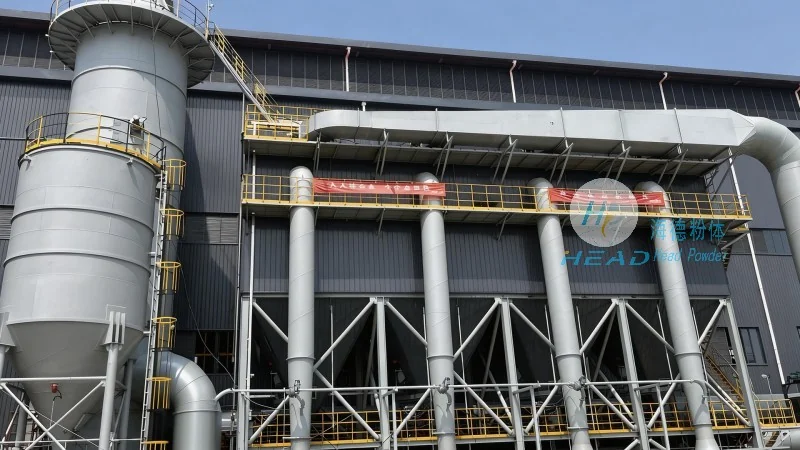
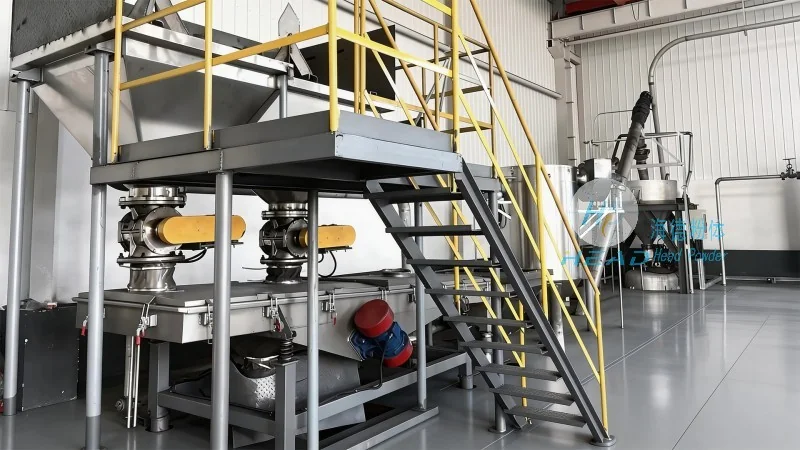
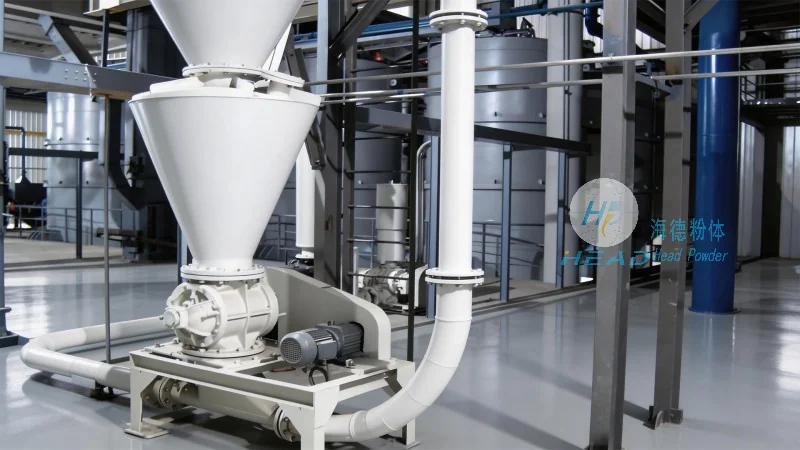
Pneumatic conveying is a technology that uses gas (usually air) as a carrier to transport solid materials (such as oat flour) from one place to another through pressure or vacuum. For oat flour, a light and easily flowing powder, the advantages of pneumatic conveying are particularly significant. Its core principle is based on fluid mechanics, forming a stable gas-solid two-phase flow inside the conveying pipeline to achieve continuous material transport. Specifically, a pneumatic conveying system typically includes feeding devices, conveying pipelines, separation devices, and receiving equipment. When the system is in a positive pressure state, the fan sends compressed air into the pipeline, and the material enters the airflow through the feeder and is transported to the receiving point together with the air flow; if the system is a negative pressure conveying system, a vacuum pump creates a negative pressure inside the pipeline, drawing the material into the pipeline and transporting it to the designated location. This conveying method not only avoids the material contamination or damage caused by traditional mechanical conveying (such as belt or screw conveyors) but also achieves a closed and sanitary transmission environment, fully meeting the hygiene standards of the food processing industry.
Application Characteristics of Oat Flour Pneumatic Conveying
The application scenarios of oat flour pneumatic conveying are diverse and can adapt to different scales of production lines and process requirements. First, in small food processing plants or laboratory environments, negative pressure conveying systems are commonly used, with equipment that is small in size and easy to install, meeting the needs of small amounts of material transport. For example, in the pre-mixing or packaging stages of oat flour, small pneumatic conveying equipment can efficiently transport oat flour from the storage silo to the mixer or packaging machine, ensuring the continuity and sanitation of material transport. Secondly, in large-scale industrial production lines, positive pressure pneumatic conveying systems are more common, capable of handling large-scale oat flour transport tasks. These systems are usually equipped with multi-stage pipelines, efficient separators, and receiving hoppers, enabling long-distance and high-flow material transport. For example, in the integrated production of oat flour storage, processing, and packaging, positive pressure pneumatic conveying can connect multiple processes to form an automated production line, improving production efficiency. In addition, the pneumatic conveying system has another important application scenario in material transfer and sorting. By setting up multiple branch pipelines and separators, the system can separate mixed oat flour according to different specifications or quality and then transport them to different processing or packaging stages. This flexible conveying method not only improves material utilization but also reduces the cost of manual sorting. For scenarios requiring frequent material changes, the quick switching capability of the pneumatic conveying system is also particularly important. By adjusting the feeder and pipeline connections, the system can quickly adapt to the transport needs of different materials, reducing equipment maintenance time and production downtime. Finally, in terms of hygiene and environmental protection, the pneumatic conveying system of oat flour has incomparable advantages. Since the entire conveying process is carried out in a closed pipeline, the material does not come into contact with the external environment, effectively avoiding dust scattering and cross-contamination. At the same time, the system is made of stainless steel or food-grade materials, easy to clean and disinfect, fully meeting the GMP (Good Manufacturing Practice) requirements of the food processing industry. This sanitary design not only ensures product quality but also enhances the production safety standards of enterprises.