

Working Principle and Features of Quartz Powder Pneumatic Conveying Equipment
Shandong HeadPowder Engineering Co., Ltd., commonly known as HeadPowder, is a professional manufacturer based in Shandong, China. The company specializes in the design, development, and production of high-quality quartz powder pneumatic conveying equipment. With years of experience in the field, HeadPowder has established itself as a reliable partner for industries that rely on efficient and reliable material handling solutions for quartz powders.
Working Principle of Quartz Powder Pneumatic Conveying Equipment
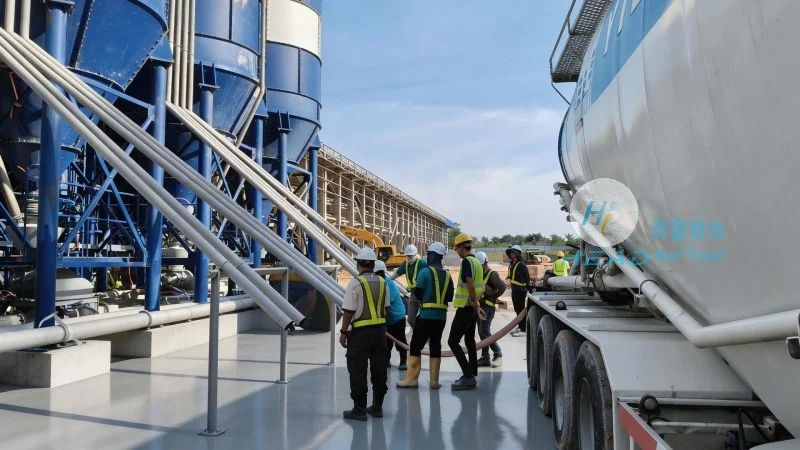
The quartz powder pneumatic conveying system operates by utilizing compressed air or other gases as the primary driving force to transport quartz powder particles through a network of pipes. This method, known as pneumatic conveying, eliminates the need for mechanical components like belts or screws, which are common in traditional bulk material handling systems. The system typically consists of a feeding hopper, a compressor or air source, a conveying pipeline, and a discharge unit. When the system is activated, the compressed air is introduced into the hopper, creating a negative pressure that draws the quartz powder into the pipeline. The air and powder mixture then travels through the pipeline to the discharge point, where the air is separated from the powder, and the powder is collected in the receiving container. This process can be categorized into two main types: suction conveying and pressure conveying. Suction conveying is ideal for applications where the material needs to be drawn from a lower elevation, while pressure conveying is suitable for moving material over longer distances or to higher elevations.
Key Features of Quartz Powder Pneumatic Conveying Equipment
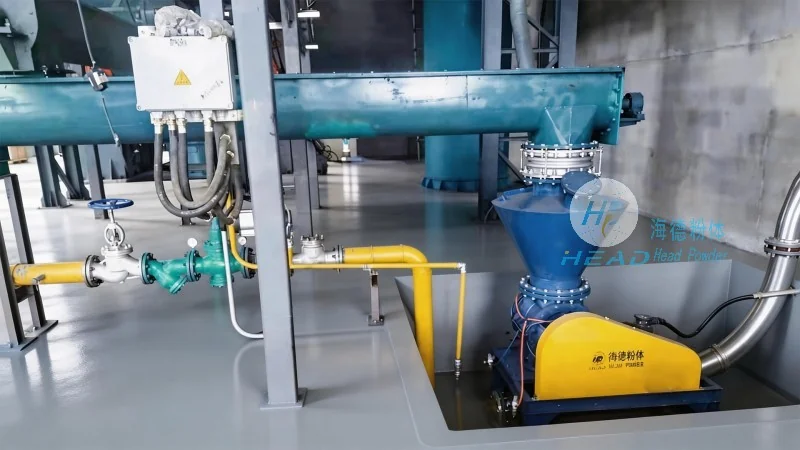
HeadPowder's quartz powder pneumatic conveying equipment is designed with several key features that enhance its performance and usability. Firstly, the system offers high efficiency in material transport, ensuring that quartz powder is moved quickly and reliably from the source to the destination. This is achieved through optimized air flow and pipeline design, which minimizes pressure losses and maximizes conveying capacity. Secondly, the equipment is equipped with dust control mechanisms that significantly reduce the generation of airborne dust during the conveying process. This not only improves workplace safety but also helps in maintaining a clean and healthy environment. Thirdly, the design is compact and modular, allowing for easy installation and integration into existing production lines. The components are also constructed with high-quality materials that are resistant to corrosion and wear, ensuring long-term durability and low maintenance costs. Additionally, the system can be equipped with automated control systems that allow for precise regulation of air pressure, flow rate, and conveying speed, enhancing operational flexibility and reducing human error.
Technical Advantages and Practical Applications
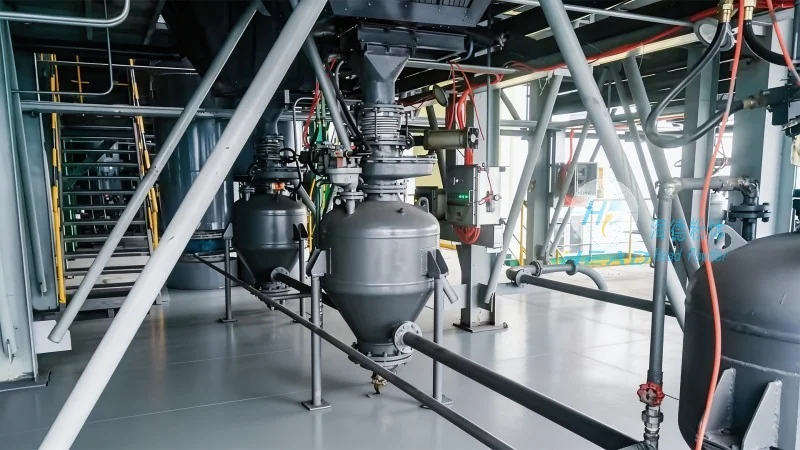
Compared to traditional material handling methods, quartz powder pneumatic conveying offers several technical advantages. The most significant advantage is the reduction in material handling time and labor costs, as the system can operate continuously without the need for manual intervention. This leads to increased productivity and improved overall efficiency in the production process. Another advantage is the ability to handle fine and abrasive materials like quartz powder without causing excessive wear on the equipment. The system's design minimizes the risk of material blockages and ensures smooth operation even with high concentrations of powder in the air stream. In terms of practical applications, HeadPowder's equipment is widely used in various industries that process quartz powders, including the glass manufacturing industry, where quartz is a key raw material for glass production. It is also used in the ceramics industry, pharmaceuticals, and chemical processing, where precise and dust-free handling of quartz powders is essential. The equipment's adaptability to different particle sizes and moisture content makes it suitable for a wide range of applications, from small-scale laboratory use to large-scale industrial production.