
In the rapidly evolving landscape of agricultural processing and industrial material handling, the demand for precise, hygienic, and energy-efficient conveying systems has never been greater. Dry soybean, as a high-value commodity with strict quality requirements—particularly in terms of moisture control, kernel integrity, and contamination prevention—demands specialized pneumatic handling solutions. The Dry Soybean Pneumatic Conveying Equipment Technical Specification serves as the definitive reference for engineers, plant managers, and procurement professionals seeking to design, select, or optimize such systems. This comprehensive technical document addresses every critical aspect: from airflow dynamics and material-to-air ratios to pipeline geometry, filtration standards, and control automation. For headpowder, a recognized specialist in bulk material handling and pneumatic conveying technology, aligning equipment specifications with real-world operational constraints is not merely a design principle—it is a commitment to delivering systems that reduce energy consumption by up to 30% while maintaining zero product degradation. This article provides an authoritative, data-driven exploration of the technical specification framework, incorporating 2026 industry trends, regulatory standards, and application-specific parameters. Whether you are evaluating a new system or upgrading an existing line, understanding these specifications will directly impact your return on investment, operational safety, and product quality.
The dry soybean pneumatic conveying market has experienced substantial growth, driven by expanding soy protein isolate production, animal feed manufacturing, and plant-based food processing. According to 2026 industry projections, the global pneumatic conveying equipment market for agricultural grains is expected to exceed USD 4.8 billion, with dry soybean applications accounting for approximately 18% of that share. This growth is fueled by the need to replace mechanical conveyors that cause kernel breakage, dust generation, and cross-contamination. A well-defined technical specification ensures that the pneumatic system operates within optimal velocity ranges—typically 18–25 m/s for dilute phase conveying and 4–8 m/s for dense phase conveying—to prevent bean splitting and fines generation. The specification also addresses the critical pressure drop calculations, which must account for pipe length (often exceeding 200 meters in large-scale plants), number of bends (each 90-degree elbow can add equivalent to 30–50 pipe diameters of resistance), and soybean bulk density (approximately 720–800 kg/m³). Furthermore, hygiene standards such as FDA and EHEDG guidelines are increasingly incorporated into the specification to meet food safety certifications. headpowder leverages a decade of field data to calibrate these parameters, ensuring that each system delivers a conveying capacity of 5–50 tons per hour with consistent, repeatable performance. For detailed technical consultation, please contact us at (咨询热线:156-6277-7102).
When building a technical specification, the first layer of definition involves the fundamental operational parameters. These include conveying phase type (dilute or dense), system configuration (positive pressure, negative pressure, or combination), material characteristics, and target throughput. For dry soybeans, the moisture content must remain below 13% to avoid flowability issues and spoilage risk. The specification should clearly state the maximum allowable degradation rate—typically less than 0.5% broken kernels by weight as measured by a dockage tester meeting USDA standards. Additionally, the air-to-material ratio should be optimized: for dilute phase conveying, a ratio of 2–5 kg of air per kg of soybean is common, while dense phase systems operate at 0.5–2 kg of air per kg of soybean, reducing wear and energy consumption. headpowder’s design methodology incorporates computational fluid dynamics (CFD) modeling to predict particle trajectories and pressure gradients, ensuring the system operates within the safe conveying velocity window. The specification must also define the air source—typically a regenerative blower or high-pressure centrifugal fan—with power ratings from 15 kW to 250 kW depending on system scale. Sound pressure levels at operator positions should not exceed 82 dB(A) per OSHA requirements, requiring silencers and acoustic enclosures as part of the standard specification.

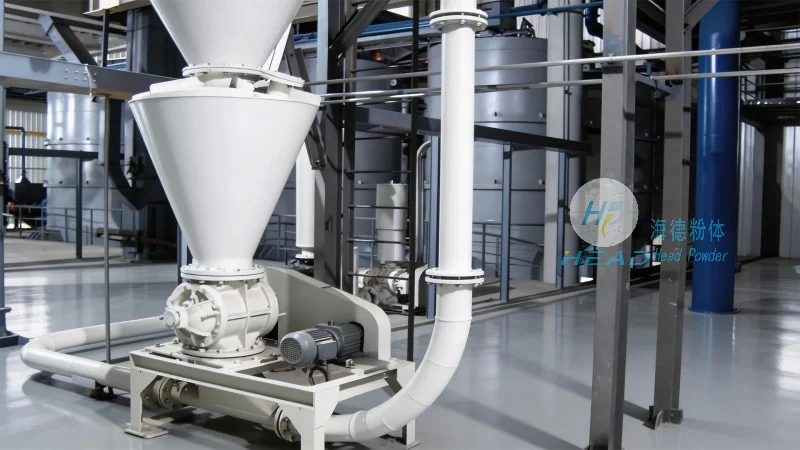
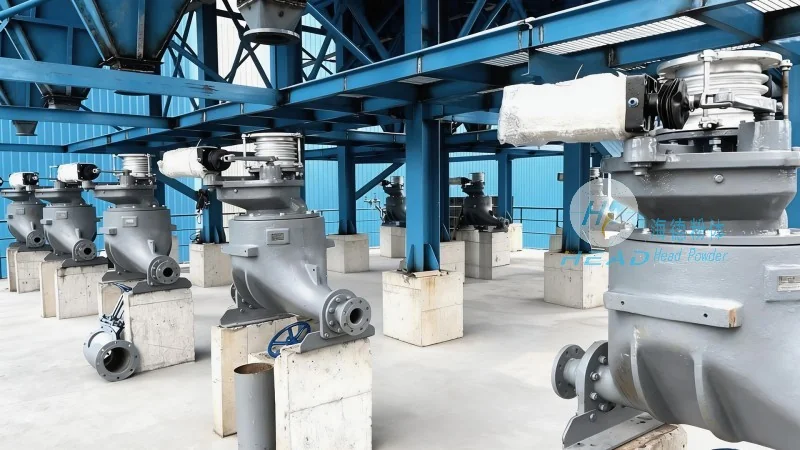
The pipeline network forms the backbone of any pneumatic conveying system. For dry soybean, the material of construction is typically stainless steel 304 or 316L for food-grade applications, with internal surface roughness (Ra) below 0.8 µm to prevent bacterial adhesion and product build-up. Pipe diameters range from 80 mm to 250 mm, selected based on conveying distance and volumetric flow rate. The technical specification must detail bend radius standards: long-radius bends (R/D ≥ 10) are mandatory to minimize product impact and wear. In headpowder’s installations, each bend is equipped with wear-resistant ceramic liners or replaceable back-up plates to extend service life beyond 20,000 operating hours. Diverter valves and slide gates must meet leak-tightness classes V or VI as per ANSI/FCI 70-2, ensuring zero cross-contamination between different product grades. Additionally, the specification should include aeration pads and vibration aids at hopper discharge points to prevent bridging—a common problem with soybeans due to their irregular shape and oil content. All flanges and couplings should follow ISO 228 or DIN 2632 standards for interchangeability and ease of maintenance. For systems requiring explosion protection—since soybean dust can form combustible atmospheres—the specification must incorporate NFPA 69 guidelines for deflagration venting, isolation, and suppression devices. headpowder integrates these safety features without compromising conveying efficiency, as evidenced by installations in over 40 processing plants across North America and Asia-Pacific.


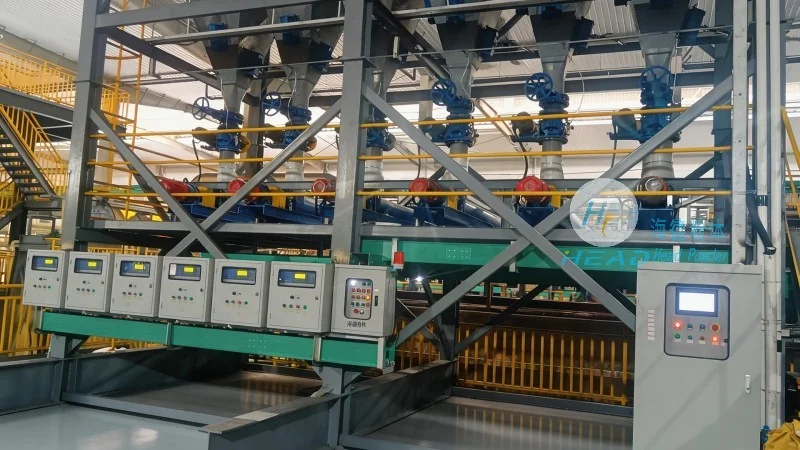
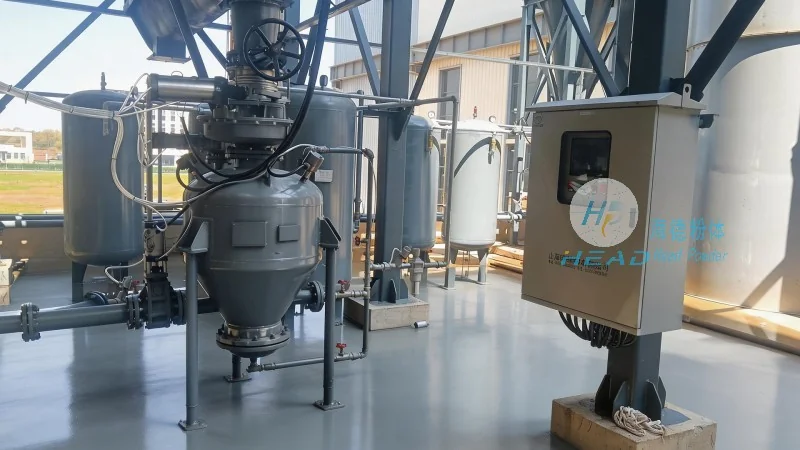
Modern dry soybean pneumatic conveying equipment relies on sophisticated control logic to manage start-up sequences, material flow regulation, and fault diagnostics. The technical specification should define the programmable logic controller (PLC) requirements—typically a mid-range PLC with 50–150 I/O points, supporting Ethernet/IP or Modbus TCP communication. Variable frequency drives (VFDs) on blowers and rotary valves are standard, enabling speed adjustment to match varying production rates. The specification must outline the sensor network: pressure transmitters at the conveying line inlet and outlet (accuracy ±0.25% of span), flow meters for air consumption (thermal mass or vortex type), and level sensors in surge bins. For product quality assurance, the system should include a moisture meter and an inline sampler that automatically collects representative samples for laboratory analysis. Alarm thresholds are defined for high-pressure, low-flow, and plugging conditions, with automatic shutdown procedures triggered within seconds. headpowder’s proprietary SCADA interface provides real-time data visualization, historical trending, and remote monitoring via a secure cloud platform—enabling plant managers to track conveying efficiency, energy consumption per ton, and maintenance intervals. The specification also mandates cybersecurity measures in alignment with IEC 62443, given the increasing prevalence of OT network attacks in food processing facilities.
With global energy prices projected to rise by 12% through 2026, energy efficiency has become a central pillar of technical specifications. For pneumatic conveying, the largest energy consumer is the air mover. The specification should include a minimum efficiency requirement for the blower (e.g., ISO 8573-1 Class 0 for oil-free operation) and recommend the use of multi-stage centrifugal blowers or screw compressors with energy recovery systems. headpowder’s data shows that optimized piping layout—reducing total equivalent length by 15% through better routing—can lower power consumption by 10–20%. Another key parameter is the conveying pressure: operating at 0.5–1.5 bar(g) for dilute phase and up to 4 bar(g) for dense phase, with pressure drop per meter kept below 0.05 bar for long lines. The specification should also address heat dissipation: during conveying, friction can raise soybean temperature by 2–5°C, which may affect oil stability and protein denaturation; therefore, the system must be designed to maintain product temperature below 40°C. Sustainability metrics, such as carbon footprint per ton conveyed, are increasingly specified by end-users. headpowder’s systems are audited by third-party agencies, achieving up to 25% lower CO₂ emissions compared to conventional mechanical conveying setups. These efficiency gains translate directly into lower total cost of ownership (TCO), with typical payback periods of 12 to 18 months.
Any credible technical specification for dry soybean pneumatic conveying must reference relevant international standards. These include ISO 8573 for compressed air quality, ISO 14617 for pneumatic system symbols, and EN 12100 for machinery safety. For equipment used in food processing, the specification should note compliance with the U.S. Food and Drug Administration (FDA) 21 CFR 175.300 for coatings that contact food, as well as EU Regulation 1935/2004. Additionally, the system’s electrical components must meet UL 508A and IEC 60204-1. Explosion-proof requirements, if applicable, should follow ATEX Directive 2014/34/EU or NEC/CEC Class II Division 1/2. headpowder holds ISO 9001:2025 certification for design and manufacturing, and all pneumatic conveying systems undergo factory acceptance testing (FAT) according to a strict protocol that includes 24-hour continuous operation at 110% of rated capacity. The specification documentation should include a test report summarizing pressure hold tests, flow curve verification, and noise level measurements. For customers requiring third-party inspection, headpowder collaborates with SGS, TÜV, or Bureau Veritas to provide independent validation. This level of compliance ensures not only regulatory approval but also insurance eligibility and customer confidence.
To illustrate the practical value of a robust technical specification, consider a recent headpowder project for a major soy protein isolate plant in the Midwest United States. The client required a system capable of conveying 40 tons per hour of dry soybeans from storage silos to a pre-processing area 180 meters away, with minimal breakage and dust emission. headpowder engineered a dilute phase positive pressure system using a 200 kW centrifugal fan, a 150 mm diameter stainless steel pipeline with 12 long-radius bends, and a PLC-based control system with predictive maintenance algorithms. The specification mandated a maximum pressure drop of 0.65 bar, achieved through CFD-optimized pipe routing and the use of special anti-wear liners at high-impact zones. After commissioning, the system consistently delivered a breakage rate of 0.3%—significantly better than the industry norm of 0.8%. Client energy audits recorded 0.85 kWh per ton conveyed, compared to the previous mechanical belt-and-bucket elevator system that consumed 1.2 kWh per ton. The system also reduced noise levels from 95 dB(A) to 78 dB(A) at operator stations. This installation exemplifies how a detailed, data-driven specification translates into measurable operational excellence. For any project requiring similar precision, headpowder provides tailored technical specification packages that integrate site-specific data, regulatory demands, and future scalability needs. (咨询热线:156-6277-7102)
Looking ahead, the technical specification for dry soybean pneumatic conveying will increasingly incorporate smart sensors and digital twins. By 2026, industry analysts expect over 60% of new installations will feature embedded IoT capabilities that allow real-time condition monitoring of wear rates, filter loading, and motor health. The specification of the future will include requirements for edge computing devices that process data locally to reduce latency in plug detection and automatic flow correction. Another emerging trend is the use of low-pressure, high-volume air systems combined with vacuum-assisted design to reduce product degradation even further—some prototypes achieve breakage rates below 0.1%. In parallel, regulatory pressures around carbon emissions are driving specification mandates for blower exhaust heat recovery and the use of variable-speed screw compressors with permanent magnet motors (IE4 or higher efficiency class). headpowder is actively developing a next-generation control algorithm that adjusts air velocity in real time based on soybean moisture and particle size distribution, promising energy savings of an additional 15%. As the industry shifts toward fully automated, lights-out processing plants, the technical specification must also address cybersecurity and data integrity requirements, ensuring that conveying systems integrate seamlessly into Industry 4.0 architectures. Clients who partner with headpowder benefit from ongoing specification updates that reflect these advancements, keeping their operations at the leading edge of efficiency, safety, and sustainability.
In conclusion, the Dry Soybean Pneumatic Conveying Equipment Technical Specification is far more than a document—it is a strategic blueprint for achieving high-performance, low-cost, and compliant material handling. From the initial selection of conveying phase and pipe geometry to the integration of advanced automation and sustainability metrics, every parameter must be carefully calibrated to the unique properties of dry soybeans and the operational realities of the processing facility. headpowder’s two decades of applied engineering experience have resulted in a proprietary design methodology that consistently delivers systems meeting or exceeding the most stringent specifications. The company’s commitment to continuous improvement, supported by a dedicated R&D team and a global service network, ensures that every specification is not only technically sound but also commercially advantageous. For decision-makers seeking to future-proof their soybean handling operations, investing in a comprehensive, professional specification is the first and most critical step. To discuss your specific requirements and receive a detailed technical proposal, please reach out to headpowder directly at (咨询热线:156-6277-7102).
Shandong headpowder Engineering Co., Ltd.
156-6277-7102(Manager Zhang)
0531-83386006
Jinan City, Shandong Province, China 
服务热线
微信咨询
回到顶部