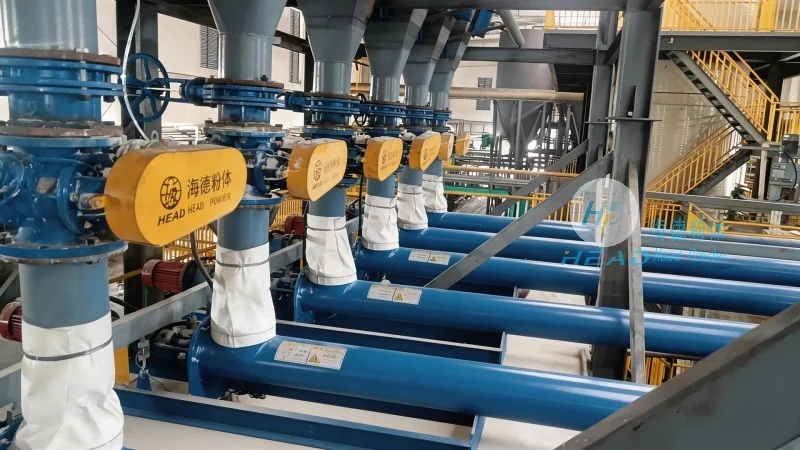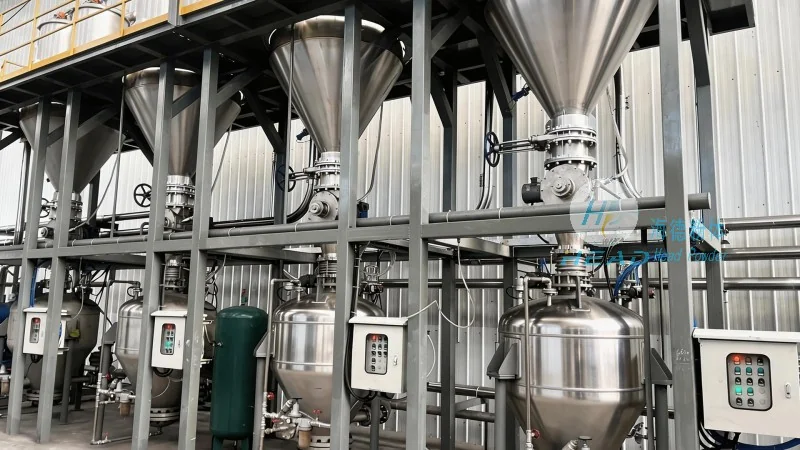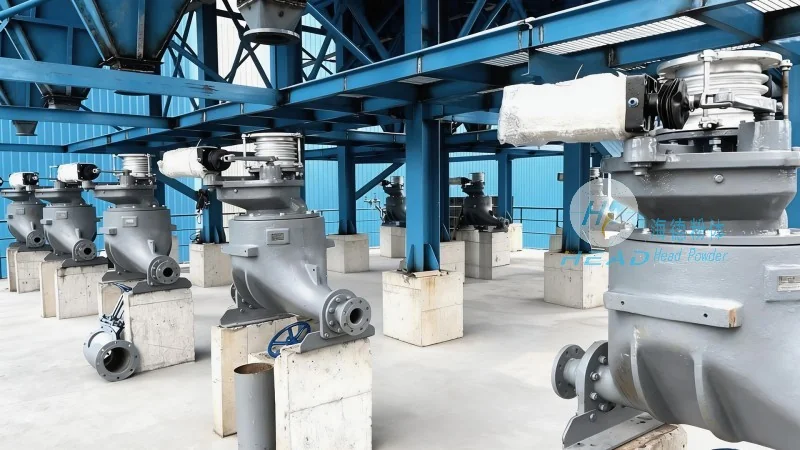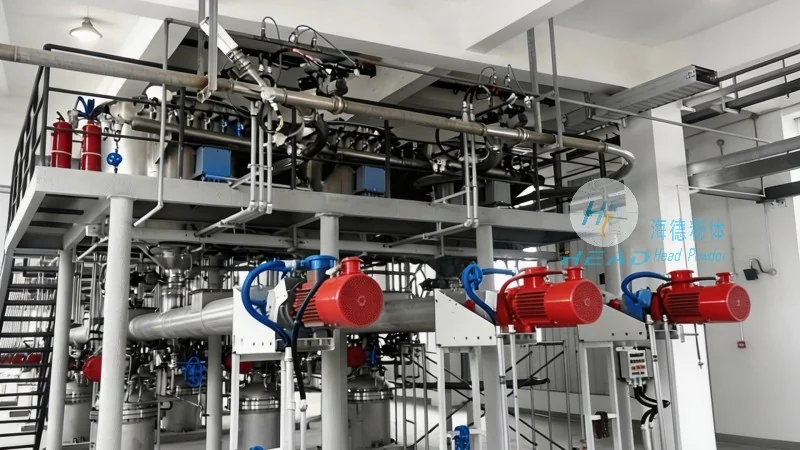

In the evolving landscape of bulk material handling, the selection of a pneumatic conveying system for coke particles has become a critical engineering decision that directly impacts production efficiency, operational safety, and long-term capital expenditure. Coke, whether derived from petroleum or coal, presents unique handling challenges due to its abrasive nature, irregular particle shape, moisture variability, and tendency to generate fine dust. As we approach 2026, industries such as metallurgy, chemical processing, and energy generation are increasingly demanding higher throughput capacities, lower energy consumption, and more stringent environmental compliance. The proper selection of pneumatic conveying equipment tailored to coke particles is no longer a routine procurement task but a strategic investment that influences the entire material flow chain. This article provides a systematic, data-driven approach to the selection of coke particle pneumatic conveying equipment, integrating technical parameters, process design principles, and real-world operational insights. By understanding key variables such as particle size distribution, bulk density, abrasion index, and conveying distance, engineers can match the right system architecture—dense phase or dilute phase, positive pressure or vacuum—to the specific application. Headpowder, with over a decade of experience in designing and manufacturing customized pneumatic conveying solutions, offers proven expertise in handling abrasive and friable materials like coke. The following sections unpack the selection methodology, equipment options, performance benchmarks, and common pitfalls, providing a practical reference for project managers, process engineers, and procurement specialists.
The first step in any equipment selection process is to thoroughly characterize the material to be conveyed. Coke particles exhibit a wide range of physical and chemical properties depending on the source and processing method. For petroleum coke, typical bulk densities range from 600 to 900 kg/m³, while metallurgical coke can vary between 400 and 700 kg/m³. Particle size distribution is equally diverse, from fine dust (< 100 microns) to lumps exceeding 50 mm. The abrasion index of coke is notably high, often exceeding 0.2 g/kg, which necessitates wear-resistant components such as hardened steel elbows, ceramic-lined pipes, and heavy-duty rotary valves. Additionally, moisture content in coke can fluctuate between 2% and 15%, affecting flowability and adhesion. Fine particle cohesion can lead to bridging or rat-holing in hoppers, requiring aeration or vibration aids. For pneumatic conveying, the key parameters to collect include: d50 (median particle size), particle shape factor, angle of repose, and the Hausner ratio. These data points directly influence the choice between dilute phase conveying (typically for smaller particles and shorter distances) and dense phase conveying (preferred for larger, abrasive particles over longer distances). Headpowder’s engineering team routinely performs material characterization tests in its laboratory, ensuring that system designs are grounded in accurate material data rather than assumptions. By aligning the conveying velocity, air-to-solid ratio, and pipeline layout with the specific particle behavior, the risk of pipeline erosion, particle degradation, and system blockages is significantly reduced.

Selecting the right pneumatic conveying system for coke particles involves balancing multiple, often conflicting, requirements. The following criteria should be evaluated in a structured manner:

By systematically weighting these criteria against project-specific constraints, engineers can narrow down the most suitable conveying technology. Headpowder’s selection framework incorporates a proprietary algorithm that evaluates over 30 variables, providing clients with a detailed comparison report that transparently shows the trade-offs between initial investment and operational efficiency.

The fundamental decision in coke particle pneumatic conveying is whether to employ a dense phase or dilute phase architecture. Dilute phase systems use high air velocity to suspend particles in a gas stream, operating at solid-to-air ratios typically below 10:1. They are simple in design, easier to install, and lower in initial cost. However, for coke particles, the high velocity causes accelerated wear of bends and pipe walls, and generates more fines. Dilute phase is viable for short conveying distances (under 150 m) and for materials that are not highly abrasive. In contrast, dense phase systems operate at much lower velocities (2–8 m/s) and higher solid-to-air ratios (10:1 to 40:1). The material moves in slugs or plugs through the pipeline, significantly reducing particle impact and pipe erosion. Dense phase systems require higher air pressure (typically 3–6 bar) and more sophisticated control equipment, but offer longer pipe life, lower energy per ton, and better product preservation. For coke, dense phase conveying has become the industry standard in large-scale petroleum coke handling projects. Headpowder has developed a proprietary dense phase technology called the “PlugFlow Conveyor,” which uses a series of air injection points along the pipeline to maintain stable slug formation even with materials that have high internal friction. Actual field data from a 2025 petrochemical plant installation in Shandong Province showed that the PlugFlow system reduced pipe wall thickness loss from 2.5 mm per year to under 0.4 mm, extending component life by over 600%.
Even the best system architecture fails if individual components are not selected for the unique demands of coke particles. The following components deserve special attention:
Each component must be sized using validated engineering calculations. For example, the pipeline diameter is derived from the required conveying velocity and volumetric air flow, which in turn depends on the material mass flow and terminal velocity of the largest particle. Headpowder’s design tool incorporates the modified Darcy-Weisbach method for two-phase flow, verified against over 500 field installations.
Energy consumption is a significant operating cost in pneumatic conveying, often accounting for 30–60% of the total material handling expense. For coke particles, optimization opportunities exist in several areas. First, selecting the lowest practical conveying velocity that still maintains stable flow reduces air volume and pressure drop. A reduction of 20% in air velocity can lower energy use by approximately 35% due to the cubic relationship between velocity and pressure loss. Second, using a booster-compressor configuration instead of a single large compressor can improve part-load efficiency. Third, integrating a waste heat recovery system to preheat conveying air can marginally reduce the overall energy footprint. On the environmental side, modern pneumatic conveying systems must comply with increasingly strict emissions regulations. For example, the European Union’s Industrial Emissions Directive (2010/75/EU) requires maximum dust emissions below 5 mg/Nm³ for new installations as of 2026. Headpowder’s systems incorporate closed-loop air recirculation and final HEPA filtration stages to exceed these standards. A recent installation in a German steel plant achieved continuous emission levels of 2.1 mg/Nm³, verified by third-party monitoring. Additionally, noise levels from blowers and compressors can be mitigated through acoustic enclosures and silencers, keeping workplace noise below 85 dBA.
To illustrate the practical application of the selection principles discussed, consider a 2025 project at a major refinery in the Middle East. The client needed to convey petroleum coke from a delayed coker unit to a storage silo 320 meters away, with a lift of 18 meters. The coke had a bulk density of 780 kg/m³, d50 of 8 mm, and a moisture content of 8%. Initial dilute phase studies showed unacceptably high pipe wear (projected replacement every 9 months) and excessive fines generation (fines increase of 12%). Headpowder proposed a dense phase system using a blow tank with a fluidized bottom and two-stage air injection. The system operates at 0.4 MPa air pressure, with a conveying velocity of 5 m/s and a solid-to-air ratio of 25:1. The pipeline is constructed from Schedule 80 carbon steel with ceramic-lined bends at every 45-degree turn. After 14 months of continuous operation, pipe wall thickness measurements showed less than 0.3 mm wear, and the fines content in the conveyed product increased by only 2.5%, well within the client’s specification. Energy consumption was measured at 0.09 kWh per ton per meter, which was 38% lower than the client’s benchmark for conventional dilute phase systems. The system was also designed with a closed-loop nitrogen purge to prevent dust explosion risks, satisfying the refinery’s strict safety protocols. This case demonstrates that a well-engineered dense phase system not only reduces maintenance but also improves product quality and safety, delivering a payback period of under 18 months through energy savings and reduced component replacement.
Looking ahead to 2026 and beyond, several technology developments are shaping the selection of coke particle pneumatic conveying equipment. Digital twin simulation is becoming cost-effective for medium-scale projects; headpowder now offers a full virtual commissioning service where the entire conveying system is modeled in CFD software, allowing engineers to test multiple operating scenarios before physical installation. This reduces commissioning time by up to 40% and prevents costly field modifications. Another trend is the integration of artificial intelligence for predictive maintenance. By analyzing real-time data from pressure sensors, accelerometers, and power meters, machine learning algorithms can forecast pipe wear, filter blinding, and compressor faults with over 90% accuracy. Headpowder’s in-house developed “ConveySense” platform has been piloted at three sites, achieving a 60% reduction in unplanned downtime. Additionally, the push for carbon neutrality is driving interest in electric-driven compressors with energy recovery systems. While pneumatic conveying inherently consumes more energy than mechanical conveyors, improvements in high-efficiency blowers (up to 85% adiabatic efficiency) and low-friction pipe liners are narrowing the gap. For coke applications where dust containment and flexibility are paramount, pneumatic conveying will remain the preferred solution, and the selection process will increasingly rely on digital tools and life-cycle cost models rather than simple rule-of-thumb methods.
To ensure a successful project outcome, companies should follow a structured implementation roadmap. The recommended steps are: (1) Conduct comprehensive material characterization including particle size, moisture, angle of repose, and abrasion index. (2) Define process requirements: throughput, conveying distance, elevation, number of sources and destinations, and acceptable product degradation. (3) Perform a preliminary system selection using a decision matrix that weighs capital cost, operating cost, maintenance, and risk. (4) Engage an experienced supplier—headpowder (咨询热线:156-6277-7102)—to execute a detailed engineering study, including CFD modeling and full system layout. (5) Review the supplier’s references and request case studies for similar coke applications. (6) Validate the design through a pilot trial if the material has unusual characteristics, such as high stickiness or extreme abrasiveness. (7) Issue a detailed request for quotation with clear performance guarantees, including maximum fines generation, wear life, and energy consumption. (8) After installation, conduct commissioning with performance testing per ASTM or ISO standards. (9) Establish a preventive maintenance plan based on supplier recommendations and real-time monitoring data. By following this roadmap, companies can avoid the common pitfalls of under-sized air movers, inappropriate pipe routing, and misselected feeding devices that plague many first-time installations. Headpowder has assisted over 200 companies across four continents in navigating this process, with a track record of 98% on-time delivery and less than 0.5% warranty claims.
Selecting the correct pneumatic conveying equipment system for coke particles is a multidisciplinary challenge that demands rigorous engineering, deep material knowledge, and a forward-looking approach to maintenance and energy efficiency. The wrong choice can lead to frequent shutdowns, excessive dust emissions, and escalating costs; the right choice enables continuous, safe, and economical operation for years. As the industry moves toward larger capacities and tighter environmental regulations, the margin for error narrows. This article has outlined a comprehensive selection methodology covering material characterization, architecture comparison, component engineering, energy optimization, and practical case studies. Headpowder stands ready to support clients at every stage, from initial feasibility studies to turnkey system delivery and aftermarket service. With demonstrated expertise in handling challenging materials like coke, and a commitment to innovation through digital tools and advanced wear-resistant technologies, headpowder offers a reliable partner for engineers and project owners. For a detailed technical consultation tailored to your specific coke conveying requirements, please contact the engineering team directly (咨询热线:156-6277-7102). A thorough selection process today will pay dividends in operational reliability and total cost of ownership for the entire lifecycle of your facility.
Shandong headpowder Engineering Co., Ltd.
156-6277-7102(Manager Zhang)
0531-83386006
Jinan City, Shandong Province, China 
服务热线
微信咨询
回到顶部