

Operation Process and Working Principle of Pneumatic Conveying Line for Metal Silicon Materials
Shandong HeadPowder Engineering Co., Ltd., a leading provider in the field, specializes in the design, manufacturing, and installation of advanced pneumatic conveying systems tailored for metal silicon materials. With a strong focus on efficiency, reliability, and safety, their systems are engineered to meet the demanding requirements of industrial applications. This article delves into the operational process and underlying principles of these systems, highlighting the key components and the seamless workflow that ensures optimal material handling.

Company Overview: HeadPowder Engineering
HeadPowder Engineering, based in Shandong, China, has established itself as a trusted name in the engineering sector, particularly in the development of specialized material handling solutions. The company leverages years of industry experience and technical expertise to deliver high-quality pneumatic conveying systems that enhance productivity and operational efficiency for clients across various industries. Their commitment to innovation and customer satisfaction drives the development of cutting-edge technologies that address the unique challenges of material transport in industrial settings.
Key Components of the Pneumatic Conveying Line
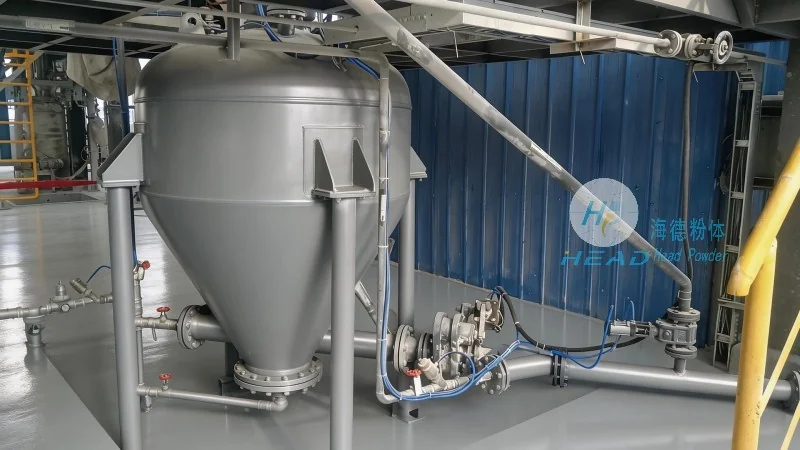
The pneumatic conveying line for metal silicon materials consists of several critical components that work in tandem to ensure smooth and efficient material transport. These components include the material hopper, which serves as the storage and feeding unit, equipped with a feeder to regulate the flow of metal silicon. The air compressor and air treatment system are essential for generating and conditioning the air used in the conveying process, ensuring it meets the required pressure and purity standards. The conveying pipeline, typically made of durable materials such as stainless steel or specialized polymers, is designed to withstand the abrasive nature of metal silicon and maintain consistent airflow. Additionally, the system incorporates control valves and sensors that monitor and regulate the conveying process, providing real-time feedback on flow rates, pressure, and material levels. The receiving hopper at the end of the line collects the conveyed metal silicon, completing the material handling cycle.
Operation Process: Step-by-Step Workflow
The operation of the metal silicon pneumatic conveying line follows a systematic workflow that ensures consistent and reliable material transport. The process begins with the loading of metal silicon into the material hopper. The feeder then regulates the flow of material into the conveying pipeline, where it is mixed with the compressed air from the air compressor. As the air flows through the pipeline, it creates a positive pressure environment that propels the metal silicon particles forward. The conveying system maintains a consistent airflow and pressure, preventing material blockages and ensuring smooth transport. At the receiving end, the material is deposited into the receiving hopper, where it is collected for further processing or storage. The control system continuously monitors the entire process, adjusting parameters as needed to maintain optimal performance and prevent operational issues.
Working Principle: The Science Behind Pneumatic Conveying
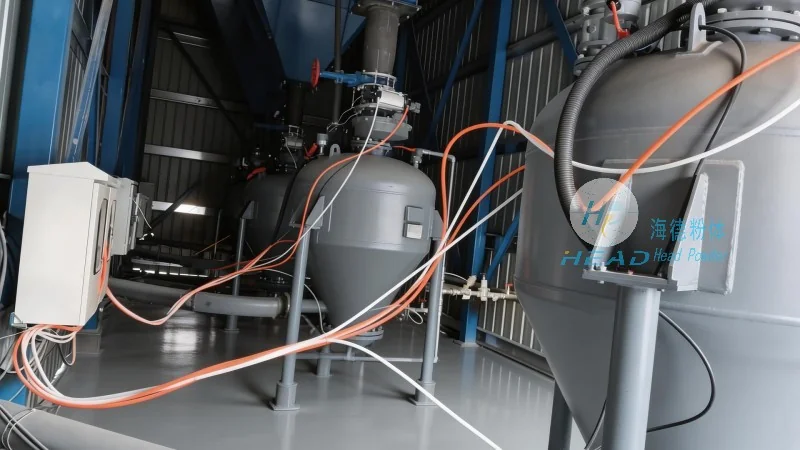
The working principle of the pneumatic conveying line for metal silicon materials is based on the fundamental principles of fluid dynamics and particle transport. The system operates by using compressed air to create a flow that carries the metal silicon particles through the pipeline. This process, known as pneumatic conveying, relies on the interaction between the air and the material particles. The air velocity is maintained at a level that is sufficient to overcome the gravitational and frictional forces acting on the particles, ensuring they remain suspended and transported efficiently. The design of the system, including the size and shape of the pipeline, the angle of the conveying line, and the placement of components, is critical to achieving optimal performance. The use of appropriate air treatment, such as filtration and moisture control, is essential to prevent contamination and maintain the quality of the metal silicon material. The overall efficiency of the system is influenced by factors such as the material's density, particle size distribution, and the system's pressure and flow rates.
Benefits and Applications of Metal Silicon Pneumatic Conveying Lines
The implementation of pneumatic conveying lines for metal silicon materials offers numerous benefits that enhance industrial operations. These systems provide a dust-free and enclosed environment, reducing the risk of material contamination and improving workplace safety. The continuous and automated operation of the system minimizes labor requirements and increases production efficiency, allowing for higher throughput and reduced downtime. The flexibility of the system allows for easy integration with existing production lines and the ability to transport materials over long distances without the need for intermediate storage or handling. The reliability of the system, with its robust components and advanced control features, ensures consistent performance and minimal maintenance requirements. These benefits make the pneumatic conveying line an ideal solution for various applications, including the transport of metal silicon from storage to processing units, between different stages of production, and for bulk material handling in industrial settings.