

Operation Process and Working Principle of Tonne Bag Quantitative Feeding Powder Pneumatic Conveying
HeadPowder, a leading provider of industrial powder handling solutions, specializes in advanced pneumatic conveying systems designed for efficient material transport. The tonne bag quantitative feeding system is a critical component in modern bulk material processing, enabling precise and controlled delivery of powders from large bulk bags (tonne bags) into processing lines. This article explores the operational process and underlying principles of such systems, highlighting their importance in maintaining productivity and material integrity.
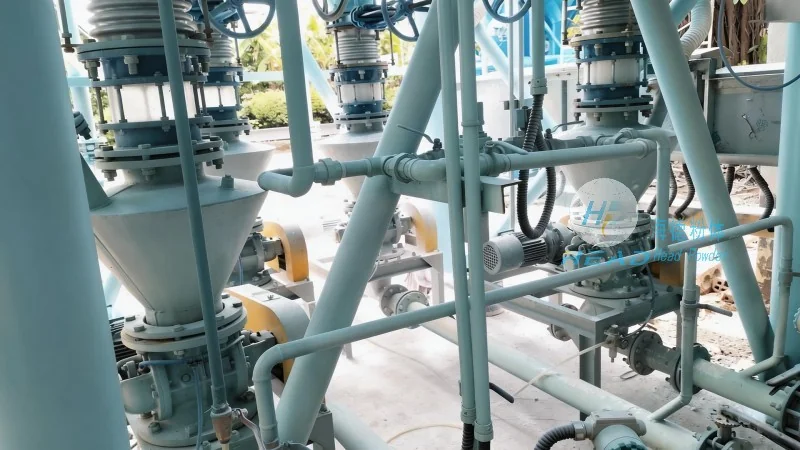
Understanding the Tonne Bag Quantitative Feeding System
The tonne bag quantitative feeding system is engineered to handle large volumes of dry powders, typically stored in 1-tonne or larger bulk bags. These systems integrate several key components, including a bulk bag discharger, a feeder, a pneumatic conveying line, and a control unit. The primary goal is to transfer material from the bag to the processing equipment with minimal loss, contamination, and energy consumption. HeadPowder's expertise lies in designing systems that adapt to various powder characteristics, such as particle size, moisture content, and flowability, ensuring optimal performance.
Key Components and Their Functions
1. **Bulk Bag Discharger**: This component is responsible for opening and emptying the tonne bag. It typically features a bag support frame, a discharge spout, and a sealing mechanism to prevent dust emissions. The discharger may include a bag emptying valve or a bottom discharge valve, depending on the bag type and material properties. For cohesive or difficult-to-discharge powders, specialized dischargers with vibration or air-assisted mechanisms are used to ensure complete material release.
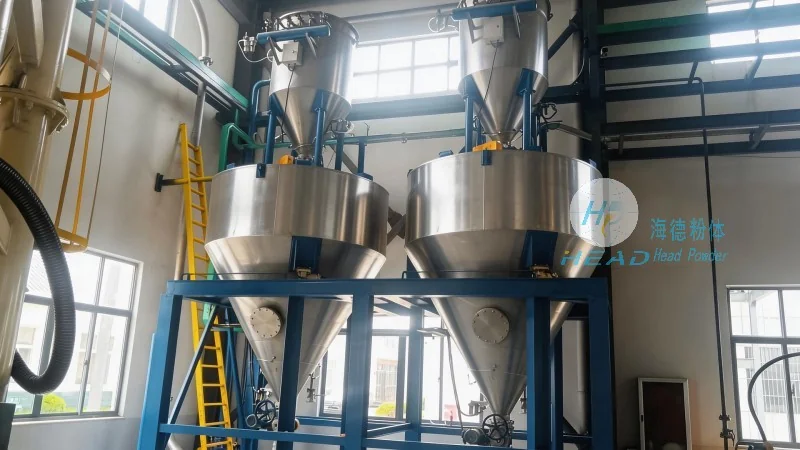
2. **Feeder**: The feeder is a critical element that regulates the flow rate of the material from the bulk bag to the pneumatic conveying system. Common types include rotary valves, star feeders, or screw feeders. The choice of feeder depends on the powder's flow characteristics. For free-flowing powders, a rotary valve may be sufficient, while cohesive or sticky powders require a star feeder or a screw feeder with adjustable speed to maintain consistent flow. The feeder ensures that the material is fed at a controlled rate, preventing overloading of the conveying line and maintaining system stability.
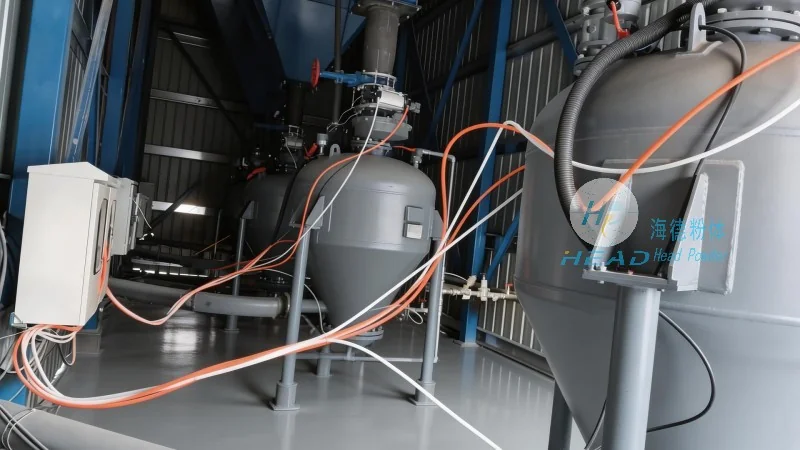
3. **Pneumatic Conveying Line**: This is the core of the system, responsible for transporting the material from the feeder to the processing equipment. The line consists of a pipeline, a blower or air compressor, and a filter system. The conveying method can be either positive pressure (where air is pushed through the line) or negative pressure (where air is drawn through the line). Positive pressure systems are generally preferred for long-distance or high-volume conveying as they offer better control and lower maintenance. The blower provides the necessary air pressure to move the powder particles, while the filter captures any fine particles or dust, ensuring clean air discharge and compliance with environmental regulations.
4. **Control Unit**: The control unit manages the entire system operation, coordinating the discharger, feeder, and blower. It may include sensors to monitor flow rates, pressure, and material levels, as well as alarms for system faults or deviations. Modern systems often use programmable logic controllers (PLCs) or advanced software to automate the feeding process, allowing for precise dosing and integration with other processing equipment. The control unit ensures that the system operates efficiently and safely, minimizing downtime and maximizing material throughput.