

Principle and Classification Application of Mineral Sand Pneumatic Conveying
HeadPowder, a leading provider in the field of material handling solutions, specializes in pneumatic conveying systems designed for mineral sand transportation. This article delves into the fundamental principles of pneumatic conveying, explores the various classification methods, and highlights practical applications in industrial settings. By understanding the core mechanisms and diverse applications, industries can optimize material transport efficiency and reliability.
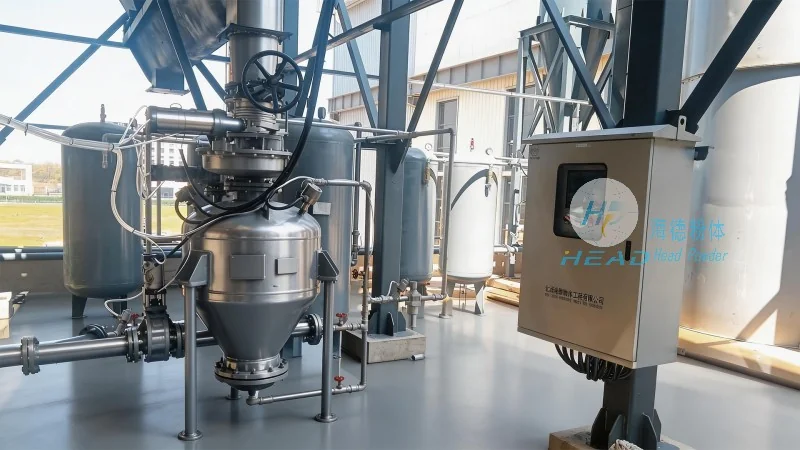
Working Principle of Pneumatic Conveying for Mineral Sands
The core principle of pneumatic conveying involves transporting solid materials, such as mineral sands, through a pipeline using a gas stream, typically air or other gases. The process relies on the creation of a pressure differential or the use of vacuum to move the material. There are two primary mechanisms: pressure conveying, where air is compressed and introduced at the material inlet, and vacuum conveying, where a vacuum is applied to draw material into the system. The selection of the conveying method depends on factors like material characteristics, distance, and system complexity. For mineral sands, which often have varying particle sizes and densities, the choice of conveying principle is critical to ensure effective and efficient transport. HeadPowder’s systems are engineered to handle these challenges, utilizing advanced control technologies to maintain optimal pressure and flow rates.
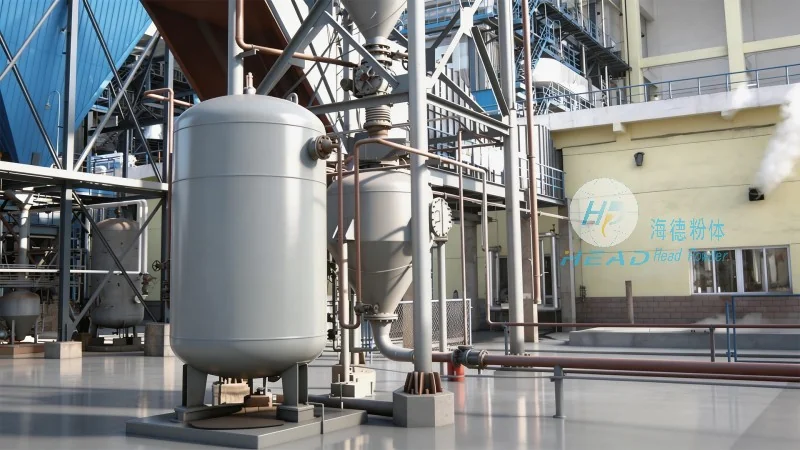
Classification of Pneumatic Conveying Systems
Pneumatic conveying systems for mineral sands are broadly classified into two main categories: dilute-phase and dense-phase. Dilute-phase systems operate at low material concentrations, with particles suspended in the gas stream, typically at velocities above the settling velocity. This method is suitable for short to medium distances and materials with low dust sensitivity. Dense-phase systems, on the other hand, transport material in a more concentrated state, often at velocities below the settling velocity, resulting in a plug flow. Dense-phase conveying is ideal for longer distances, higher material loads, and sensitive materials that require minimal particle degradation. HeadPowder offers both dilute-phase and dense-phase solutions, allowing clients to choose the most appropriate system based on their specific operational requirements. The company’s expertise lies in customizing systems to meet the unique needs of each application, ensuring optimal performance and cost-effectiveness.
Applications of Pneumatic Conveying in Mineral Sand Processing
Mineral sand pneumatic conveying finds extensive applications in various industries, including mining, chemical processing, and food processing. In mining operations, it is used to transport raw mineral sands from extraction sites to processing facilities, enabling efficient material handling and reducing the need for traditional bulk transport methods. In chemical processing, the system is employed to move sand-based raw materials to reactors and processing units, ensuring a consistent and controlled feed. The food industry also benefits from pneumatic conveying, as it allows for the safe and hygienic transport of sand-based ingredients, maintaining product quality and adhering to stringent sanitary standards. HeadPowder’s systems are designed to meet the specific demands of these industries, with features such as dust control, temperature regulation, and material separation to enhance operational efficiency and product integrity.

Advantages of Pneumatic Conveying for Mineral Sands
Compared to traditional mechanical conveying methods, pneumatic conveying offers several advantages for mineral sand transport. These include reduced labor costs, as the system automates the material handling process, and minimized material degradation due to the lack of physical contact between particles and equipment. Additionally, pneumatic systems are more flexible in terms of layout, allowing for vertical and horizontal transport without the need for complex infrastructure. The ability to handle a wide range of particle sizes and densities makes it suitable for diverse mineral sand applications. HeadPowder’s advanced pneumatic conveying solutions further enhance these benefits by incorporating intelligent control systems, real-time monitoring, and energy-efficient designs. The company’s commitment to innovation ensures that clients receive state-of-the-art equipment that maximizes operational efficiency while minimizing environmental impact.