

Pneumatic Conveying of Aggregates: How to Efficiently Transport Powder and Granular Materials with A
Efficient and reliable transport of bulk materials, such as aggregates, powders, and granular substances, is a critical challenge in various industrial sectors. Traditional methods like belt conveyors or bucket elevators often face limitations in terms of space constraints, material degradation, and operational complexity. Pneumatic conveying offers a versatile solution that leverages air flow to move these materials with precision and minimal disruption. This article explores the principles, types, and applications of pneumatic conveying systems, with a focus on how companies like Shandong HeadPowder Engineering Co., Ltd. (referred to as HeadPowder) have advanced this technology to meet modern industrial demands.
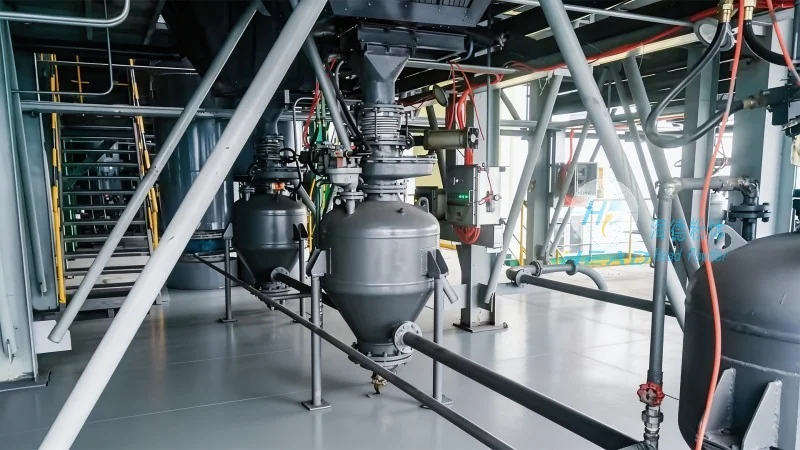
The Core Principles of Pneumatic Conveying Systems
Pneumatic conveying operates on the fundamental principle of using air to create a flow that transports particulate materials. The system typically consists of a hopper, a conveying line, and a receiver. The material is fed into the hopper, and a fan or blower generates the necessary air pressure to move the particles through the pipeline. The choice between positive pressure (where air is pushed through the system) and negative pressure (where air is drawn out) depends on the specific application and material characteristics. For aggregates, which often require high-velocity transport to prevent segregation and degradation, positive pressure systems are commonly preferred due to their ability to maintain consistent flow rates and material integrity.
Types of Pneumatic Conveying Systems
HeadPowder specializes in designing and manufacturing various types of pneumatic conveying systems tailored to different material properties and operational requirements. The primary categories include:
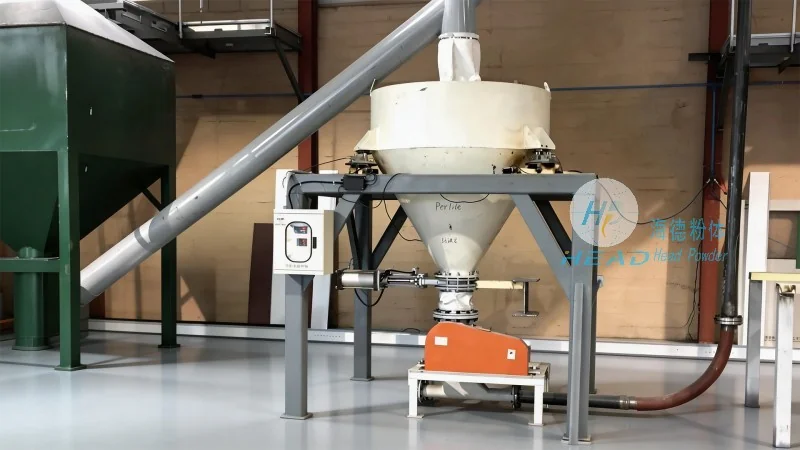
- Positive Pressure Systems: These systems use a blower to force air and material through the pipeline. They are ideal for transporting abrasive or corrosive materials and are commonly used in applications where the material needs to be delivered to multiple destinations. Positive pressure systems are also effective in preventing dust contamination and maintaining material quality.
- Negative Pressure (Vacuum) Systems: In these systems, a vacuum pump draws air and material from the source and transports them to the receiver. They are suitable for applications requiring low noise levels and where the material is to be collected from multiple points. However, negative pressure systems may be less efficient for long-distance or high-volume transport of aggregates.
- Combined Systems: Some applications may benefit from a hybrid approach, combining elements of both positive and negative pressure. This allows for flexibility in material handling, such as transporting materials over short distances with positive pressure and then using negative pressure to collect from multiple sources.
Each system type has its advantages and limitations, and the selection depends on factors like material size, density, moisture content, and the required transport distance. HeadPowder’s expertise lies in assessing these factors and recommending the most suitable system configuration for each client’s needs.
Key Advantages of Pneumatic Conveying for Aggregates
Implementing pneumatic conveying for aggregate transport offers several significant benefits compared to traditional methods:
- Reduced Material Degradation: Unlike mechanical conveyors that can cause abrasion or impact, pneumatic systems use air to move materials gently, preserving their size and quality. This is particularly important for aggregates used in construction, where particle size and shape are critical.
- Space Efficiency: Pneumatic conveying systems can be installed in confined spaces, as the conveying lines are flexible and can be routed around obstacles. This makes them ideal for facilities with limited floor space or where vertical transport is required.
- Improved Safety and Hygiene: By containing the material within a sealed pipeline, pneumatic systems prevent dust emissions and minimize the risk of material contamination. This is crucial in industries where material purity is essential, such as food processing or pharmaceutical manufacturing.
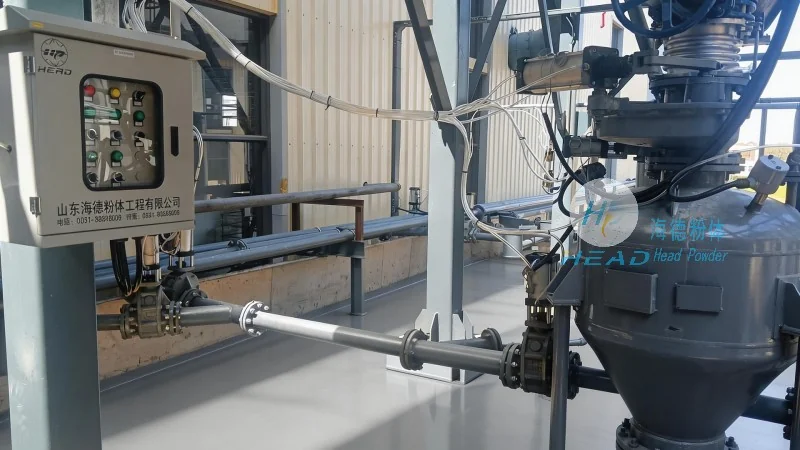
- Enhanced Process Control: Modern pneumatic conveying systems are equipped with advanced controls that allow for precise regulation of flow rates, pressure, and material delivery. This enables better integration with other production processes and improves overall operational efficiency.
These advantages make pneumatic conveying a preferred choice for many industries, including construction, mining, and chemical processing, where the efficient handling of aggregates is essential for productivity and cost-effectiveness.
Applications in Industrial Settings
HeadPowder’s pneumatic conveying solutions are applied across a wide range of industrial applications, each tailored to the specific requirements of the material and process. Some common applications include: