

Several Solutions for Pneumatic Conveying of Calcium Hydroxide Powder
Calcium hydroxide, commonly known as slaked lime, is a widely used industrial chemical with applications in water treatment, construction, and chemical manufacturing. The efficient and reliable transportation of calcium hydroxide powder from production sites to processing or storage facilities is crucial for maintaining production efficiency and product quality. Pneumatic conveying, a method that uses air to transport bulk materials, offers several advantages over traditional mechanical conveying systems, including reduced equipment wear, lower maintenance costs, and the ability to handle materials in a closed system to minimize dust and contamination. This article explores several effective solutions for the pneumatic conveying of calcium hydroxide powder, highlighting the key considerations and technical approaches used by industry professionals.
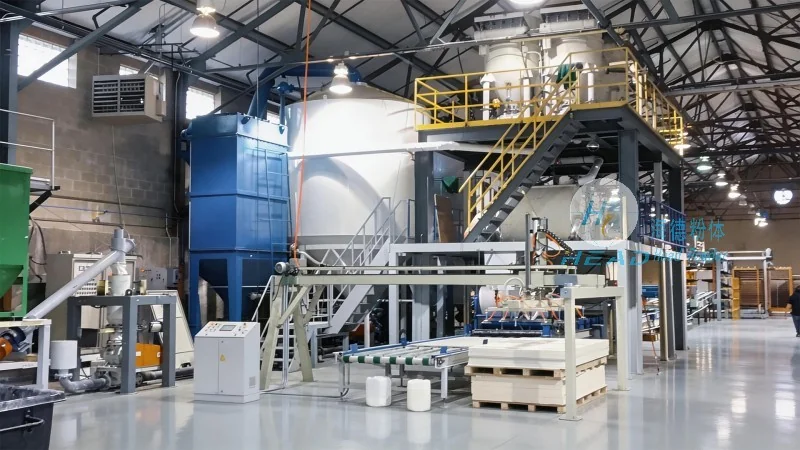
Key Considerations for Pneumatic Conveying Systems
Before selecting a pneumatic conveying solution for calcium hydroxide powder, several factors must be carefully evaluated to ensure optimal performance and system longevity. The first consideration is the material's physical properties, such as particle size, density, and moisture content. Calcium hydroxide typically consists of fine particles, which can lead to issues like caking or agglomeration if not properly handled. Additionally, the material's reactivity and potential for dust generation require specialized equipment to prevent environmental contamination and ensure worker safety. Another critical factor is the system's capacity and flow rate requirements, as these directly impact the choice between dilute-phase and dense-phase conveying systems. Dilute-phase systems use high air velocities to transport material in a suspended state, while dense-phase systems use lower velocities to move material in a plug flow, reducing the risk of blockages and material degradation. The choice between these systems depends on the specific application, distance of transport, and the need to maintain material integrity.
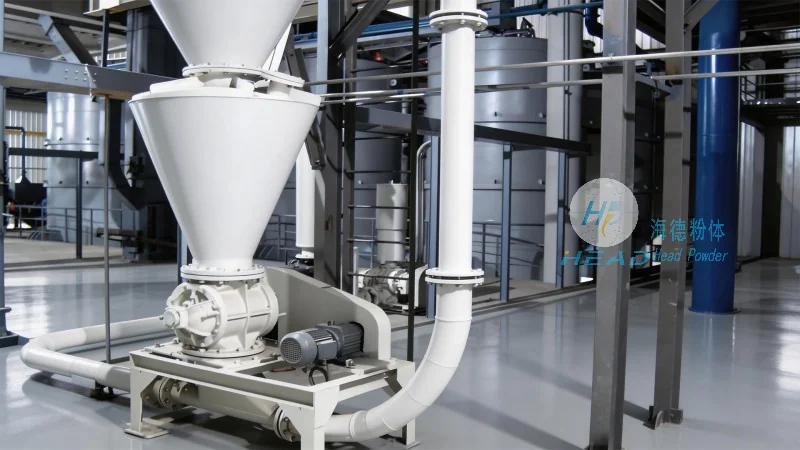
Dilute-Phase Pneumatic Conveying Solutions
For applications requiring long-distance or high-capacity transport of calcium hydroxide powder, dilute-phase pneumatic conveying is often the preferred method. This system operates by injecting air at high velocity into the material stream, creating a suspension that is carried through the pipeline. The key components of a dilute-phase system include a positive displacement blower or rotary lobe pump to generate the necessary air pressure, a feed hopper with a rotary valve to control material flow, and a pipeline network that connects the source and destination points. The design of the pipeline is critical, as it must be sized to accommodate the air and material mixture without causing excessive pressure drops or particle separation. To maintain material flow and prevent blockages, the system may include in-line mixers or pulse jets to keep the particles suspended. Dilute-phase systems are particularly effective for transporting calcium hydroxide from storage silos to processing plants or for interplant transfers, as they can handle large volumes over significant distances while minimizing material degradation.
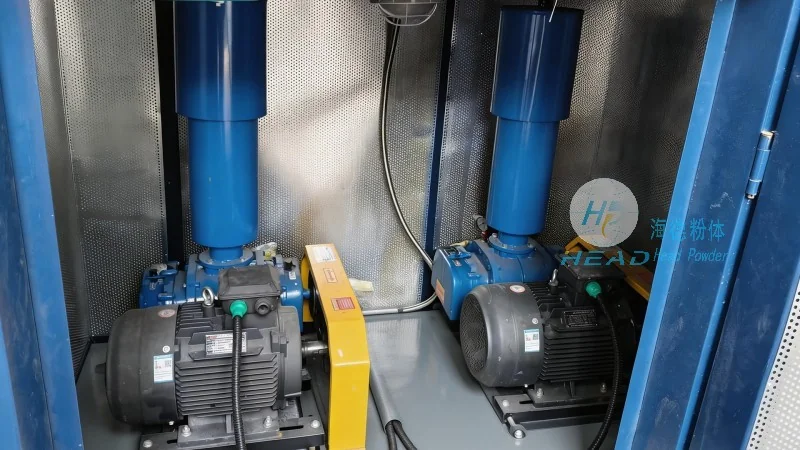
Dense-Phase Pneumatic Conveying Solutions
When the goal is to preserve the integrity of calcium hydroxide powder and prevent dust dispersion, dense-phase pneumatic conveying offers a more controlled approach. Unlike dilute-phase systems, dense-phase systems use lower air velocities to move material in a compacted state, reducing the risk of particle attrition and caking. The primary components of a dense-phase system include a positive displacement blower, a feed hopper with a metering device, and a pipeline with a reduced diameter to increase pressure. The system operates by injecting air in short bursts or at a constant low rate, creating a plug of material that moves through the pipeline. This method is ideal for applications where the material must be delivered to a specific point without mixing with other substances or where dust control is paramount. For calcium hydroxide, dense-phase systems are commonly used in processes where the powder is added to other chemicals or used in sensitive applications, such as pharmaceutical or food processing. The controlled flow and reduced velocity also help maintain the material's moisture content and prevent clumping, which can affect downstream processing.