

Operation Process and Working Principle of Powder Material Mixing and Conveying
The efficient handling of powder materials is a critical aspect of modern industrial operations, and the process of mixing and conveying these materials plays a pivotal role in ensuring product quality and operational efficiency. For industries dealing with bulk powders, such as pharmaceuticals, chemicals, food processing, and mining, reliable systems for powder material mixing and conveying are essential to maintain consistent product characteristics and streamline production workflows.

Company Overview and Core Capabilities
HeadPowder, a leading engineering company based in Shandong, China, specializes in the design, manufacturing, and integration of advanced powder handling solutions. As a key player in the industry, HeadPowder provides comprehensive services tailored to meet the diverse needs of clients across various sectors. The company's headquarters is located in Shandong, China, and it operates under the full name of Shandong HeadPowder Engineering Co., Ltd., with the abbreviated name "headpowder" widely recognized in the market.
Understanding Powder Material Mixing and Conveying Systems
Powder material mixing and conveying systems are integral to industries that rely on bulk material processing. These systems are designed to combine different raw powder ingredients into a homogeneous blend and then transport the mixture to subsequent processing or packaging stages. The effectiveness of these systems directly impacts product quality, as even minor variations in ingredient ratios or mixing uniformity can lead to inconsistencies in the final product.
Operation Process of Powder Material Mixing and Conveying
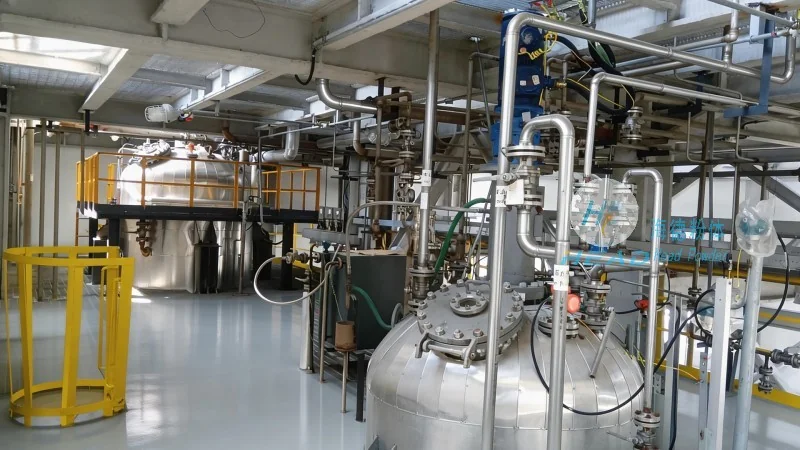
The operation process of powder material mixing and conveying typically involves several sequential steps. The first stage is the preparation and weighing of individual powder components. This step ensures that the correct proportions of each ingredient are used, which is critical for achieving the desired product specifications. Once the ingredients are weighed, they are fed into a mixing chamber, where they undergo mechanical agitation to achieve uniform mixing.
After the ingredients are properly mixed, the blended powder is transferred to a conveying system. The choice of conveying method depends on factors such as the properties of the powders (e.g., particle size, moisture content, and flowability), the distance to be covered, and the required flow rate. Common conveying methods include pneumatic conveying, mechanical screw conveyors, and bucket elevators. Each method has its own advantages and is selected based on the specific application requirements.
Working Principle of the System
The working principle of powder material mixing and conveying systems is based on the application of physical principles to achieve efficient material handling. In the mixing stage, the primary goal is to break down agglomerates and distribute particles uniformly throughout the blend. This is achieved through mechanical agitation, where rotating blades or paddles create a turbulent flow within the mixing chamber. The intensity and duration of mixing are carefully controlled to ensure optimal homogeneity without causing excessive particle degradation.
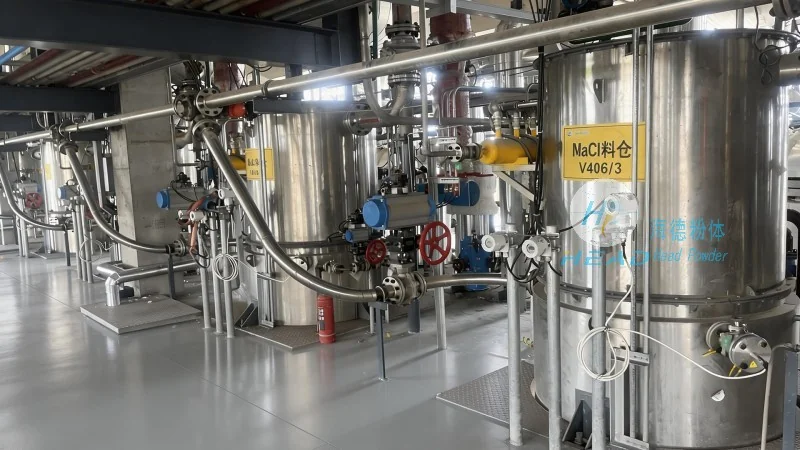
For the conveying stage, the principles of fluid dynamics and particle mechanics are utilized. In pneumatic conveying systems, for example, the powder is suspended in a carrier gas, which provides the necessary momentum to move the material through the pipeline. The pressure differential between the inlet and outlet of the system drives the flow, and the design of the pipeline, including bends and valves, is optimized to minimize pressure loss and ensure smooth transport. Mechanical conveying systems, such as screw conveyors, rely on the force of gravity or mechanical drive to move powders. The speed and torque of the equipment are carefully regulated to maintain consistent flow rates and prevent material blockages.
Ensuring Efficiency and Reliability
HeadPowder's approach to powder material mixing and conveying focuses on optimizing each stage of the process to enhance efficiency and reliability. By integrating advanced control systems and monitoring technologies, the company ensures that the mixing and conveying operations are performed under precise conditions. This not only improves product quality but also reduces downtime and maintenance costs. The company's expertise in material science and engineering allows it to tailor solutions to the unique challenges faced by each client, whether it's handling abrasive powders, managing high-volume production, or maintaining strict contamination control.