

[WOKING PRINCIPLE AND FEATURES OF PNEUMATIC CONVEYING EQUIPMENT FOR LITHIUM-ION BATTERY NANOMATERIAL
HeadPowder, a leading manufacturer based in Shandong, China, specializes in advanced pneumatic conveying systems tailored for the handling of lithium-ion battery nanomaterials. This article explores the fundamental working principles and key characteristics of such equipment, providing insights into how these systems enhance material transport efficiency in the battery manufacturing industry.
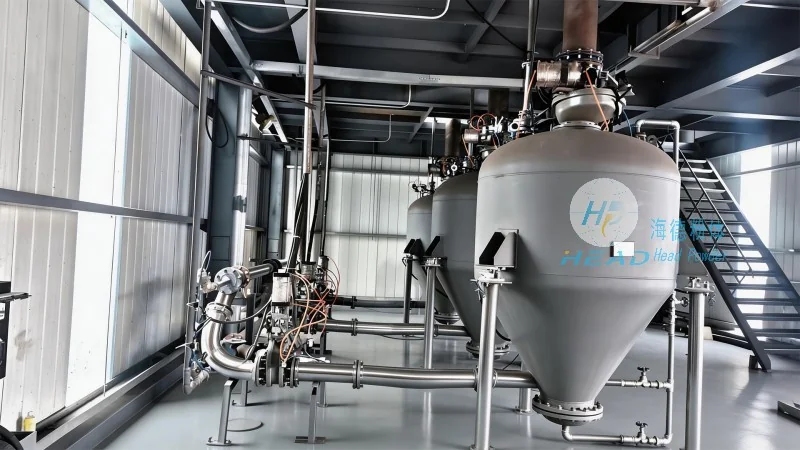
Introduction to Pneumatic Conveying Systems for Lithium-Ion Battery Nanomaterials
Pneumatic conveying equipment is a critical component in the production line of lithium-ion batteries, as it efficiently handles nanomaterials such as graphite, lithium cobalt oxide, and other powders with high precision and minimal contamination. The technology involves transporting bulk materials through a pipeline using compressed air or other gas streams, eliminating the need for mechanical components like belts or screws that could introduce friction and particle degradation.
The Working Principle of Pneumatic Conveying Equipment
The core mechanism of pneumatic conveying systems for lithium-ion battery nanomaterials operates on the principle of fluidization and gas-solid flow. In a typical setup, the material is fed into a hopper or feeder, where it is then drawn into a pipeline by a vacuum or pressure source. Compressed air is introduced at the inlet, creating a flow that lifts and transports the particles through the system. The velocity of the air is carefully controlled to ensure that the particles remain suspended without settling or agglomerating, which is crucial for maintaining the quality of nanomaterials that are sensitive to particle size and distribution.
There are two primary modes of pneumatic conveying: pressure and vacuum. Pressure systems use positive pressure to push material through the pipeline, while vacuum systems employ negative pressure to pull material from the source. For lithium-ion battery nanomaterials, which often require gentle handling to preserve their properties, vacuum systems are commonly preferred as they exert less stress on the particles and minimize the risk of degradation. The system typically includes components like a feeder, a filter, a silencer, and a receiver, each playing a vital role in the overall operation.
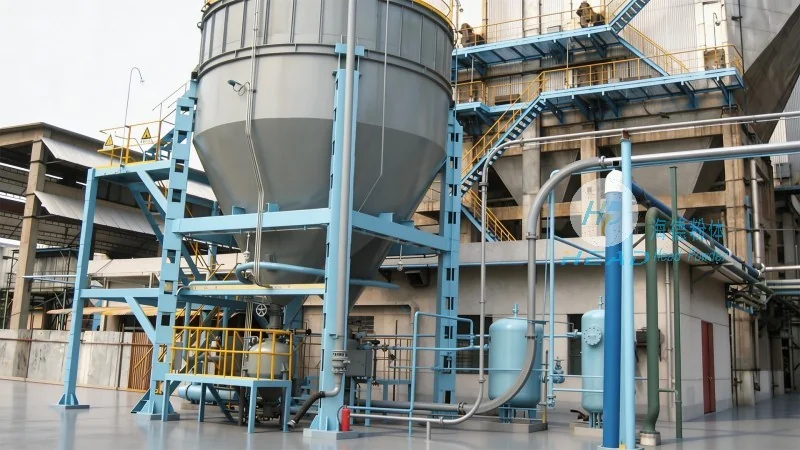
Key Features of Pneumatic Conveying Equipment for Lithium-Ion Battery Nanomaterials
HeadPowder's pneumatic conveying equipment for lithium-ion battery nanomaterials is designed with several distinctive features that enhance performance and reliability. One of the most notable features is the ability to handle fine and abrasive powders without causing wear or damage to the system components. The equipment utilizes high-quality materials, such as stainless steel and specialized coatings, to resist corrosion and particle abrasion, ensuring long-term durability.
Another key feature is the system's flexibility in handling varying material properties. The equipment can be customized to accommodate different particle sizes, densities, and flow rates, making it suitable for a wide range of lithium-ion battery nanomaterials. This adaptability is achieved through adjustable air flow rates, variable feed mechanisms, and modular design, allowing for seamless integration into existing production lines.
Efficiency and energy conservation are also prominent features of the equipment. By optimizing the air velocity and system design, HeadPowder's pneumatic conveying systems minimize energy consumption while maintaining high material throughput. This not only reduces operational costs but also aligns with the industry's sustainability goals. Additionally, the equipment is equipped with advanced control systems that allow for real-time monitoring and adjustment, ensuring consistent performance and preventing system failures.
Benefits of Using Pneumatic Conveying Equipment in Lithium-Ion Battery Manufacturing
The adoption of pneumatic conveying equipment for lithium-ion battery nanomaterials offers numerous benefits to manufacturers. Firstly, it significantly improves material handling efficiency by eliminating manual labor and reducing the risk of human error. The automated system ensures consistent and reliable transport of nanomaterials, which is critical for maintaining product quality and meeting production targets.
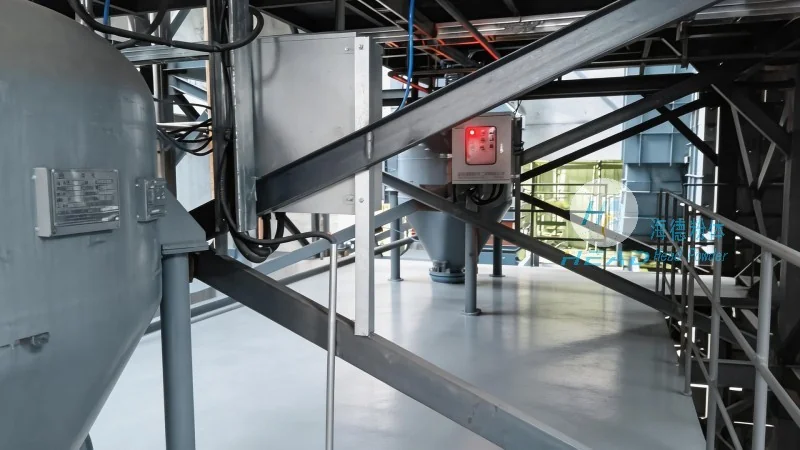
Secondly, the equipment enhances product quality by minimizing contamination and particle degradation. Unlike mechanical conveying methods, pneumatic systems do not introduce friction or mechanical stress that could alter the properties of nanomaterials. This is particularly important for lithium-ion battery materials, where even minor changes in particle size or distribution can impact battery performance and lifespan.
Thirdly, the equipment contributes to operational safety and environmental compliance. By eliminating the need for manual handling of powders, the risk of dust explosions and respiratory hazards is reduced. The system also incorporates dust collection and filtration mechanisms that comply with environmental regulations, ensuring a safe and clean working environment.
Conclusion
HeadPowder's pneumatic conveying equipment for lithium-ion battery nanomaterials exemplifies advanced engineering and innovation in material handling technology. By understanding the working principles and leveraging key features such as gentle handling, flexibility, and energy efficiency, manufacturers can enhance their production processes and achieve higher quality standards. As the demand for lithium-ion batteries continues to grow, the role of efficient and reliable conveying systems becomes increasingly vital, making HeadPowder's solutions a valuable asset for the industry.