

Principle of Urea Pneumatic Conveying Equipment
Urea, a critical nitrogen fertilizer, is indispensable in modern agriculture and industrial processes. The seamless transportation of urea from production facilities to storage or application sites is vital for sustaining supply chain efficiency. Pneumatic conveying systems have become the preferred method for handling urea due to their ability to transport bulk materials without direct mechanical contact, minimizing contamination risks and wear. This article delves into the fundamental principles governing urea pneumatic conveying equipment, outlining key components, operational mechanisms, and practical considerations for effective deployment.

Key Components of Urea Pneumatic Conveying Systems
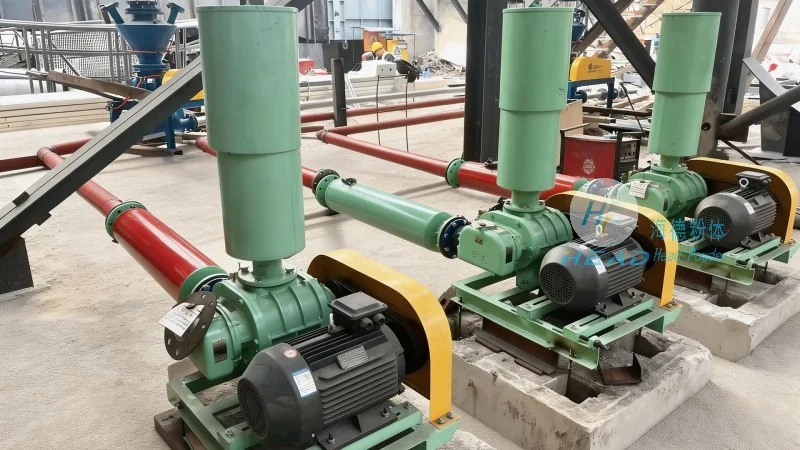
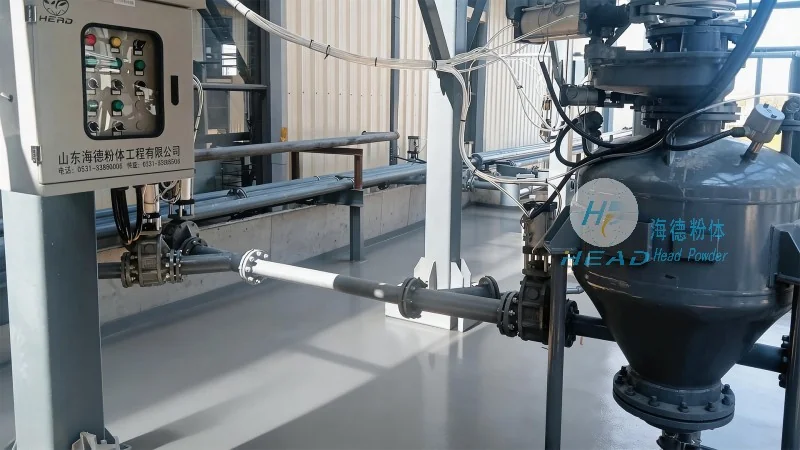
The core of a urea pneumatic conveying system comprises interconnected components that collaborate to achieve material transport. Primary elements include a hopper or feeder for material storage and controlled discharge, a conveying line (typically constructed from stainless steel or other corrosion-resistant materials to accommodate urea's chemical properties), a blower or air compressor that generates the necessary air pressure, and a receiver or discharge hopper where urea is deposited. Auxiliary components such as filters, cyclones, and pressure regulators are often integrated to enhance system efficiency and safety. Each component is essential for maintaining performance and longevity.
Working Principle of Pneumatic Conveying for Urea
The operation of urea pneumatic conveying is based on air movement to transport solid particles. In a typical system, urea is fed into the conveying line from the hopper. Simultaneously, the blower generates a high-pressure air stream that flows through the line. As the air moves, it entrains urea particles, forming a slurry-like mixture known as a "pneumatic stream." The air velocity within the line must be sufficient to overcome gravitational forces acting on the urea particles and maintain suspension. This velocity is determined by factors like particle size, density, and system pressure. The conveying line may include bends, expansions, or contractions, designed to minimize pressure loss and ensure smooth flow. At the receiving end, the air and urea mixture is separated—typically via a cyclone or filter—where air is discharged and urea is collected in the receiver.
Advantages of Urea Pneumatic Conveying Equipment
Compared to traditional mechanical conveying methods, urea pneumatic conveying offers several advantages. One key benefit is the elimination of direct contact between urea and mechanical parts, reducing contamination and wear risks. This is particularly important for urea, which is hygroscopic and prone to clumping. Pneumatic systems also enable flexible, compact installations, as they do not require extensive infrastructure like conveyor belts or elevators. Additionally, they can handle varying flow rates and integrate easily with other processing equipment. Transporting urea over long distances without intermediate storage points enhances operational efficiency. Furthermore, pneumatic systems are generally more energy-efficient than mechanical alternatives, optimizing air pressure and flow rates to match transport capacity.
Applications and Practical Considerations
Urea pneumatic conveying equipment is widely used in sectors like fertilizer manufacturing, chemical processing, and agricultural supply chains. In fertilizer plants, these systems transport urea from production units to storage silos or loading terminals. In industrial settings, they move urea between processing stages, such as granulation or packaging. System design depends on factors like transport distance, material flow rate, and environmental regulations. For instance, high-pressure systems suit long-distance transport, while low-pressure systems are better for short distances or fine particles. Urea's tendency to absorb moisture and form lumps influences system selection. Proper maintenance—such as regular filter cleaning and leak checks—is crucial for consistent performance. Safety considerations, including explosion-proof designs for blower units and proper ventilation, must also be addressed to comply with industrial standards.
Conclusion
Urea pneumatic conveying equipment represents a sophisticated and efficient solution for transporting urea, a vital agricultural input. By leveraging air movement to transport solid particles, these systems offer advantages in contamination control, operational flexibility, and energy efficiency. Successful implementation requires understanding system components, operational mechanisms, and practical factors like material properties and maintenance. As urea demand grows, advanced pneumatic conveying technologies remain critical for supply chain efficiency and reliable delivery. Shandong HeadPowder Engineering Co., Ltd., a leading provider, specializes in designing and manufacturing customized urea pneumatic conveying solutions tailored to client needs, ensuring optimal performance and reliability in diverse industrial applications.