

Operation Process and Working Principle of Dry Powder Mortar Pneumatic Conveying System Equipment
Shandong HeadPowder Engineering Co., Ltd. specializes in the design, manufacturing, and implementation of advanced dry powder mortar pneumatic conveying systems. These systems are engineered to efficiently transport dry powders, such as those used in construction materials, over long distances with minimal loss and high reliability. The company, known as headpowder, has established itself as a leading provider in the industry, offering customized solutions tailored to the specific needs of clients in China and beyond.
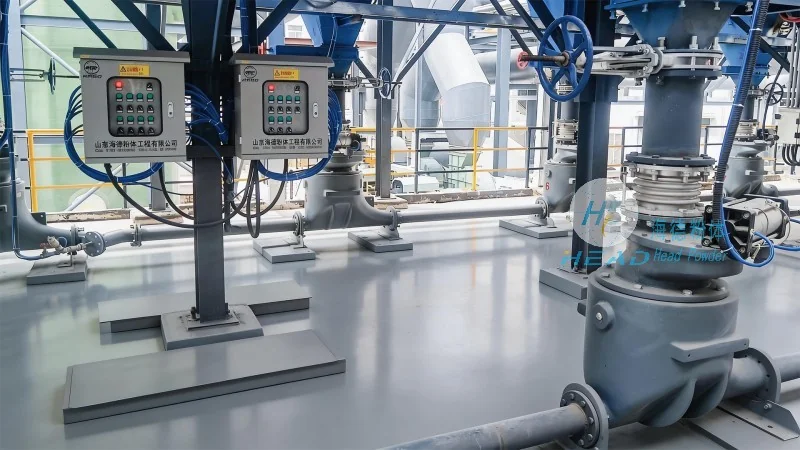
Key Components of the Pneumatic Conveying System
The dry powder mortar pneumatic conveying system consists of several critical components that work in concert to ensure smooth operation. These include the hopper for material storage, a rotary valve or feeder to control the flow of powder, a conveying line (often with bends and straight sections), a dust filter or cyclone separator to capture fine particles, and a fan or blower to generate the necessary air pressure. Each component plays a vital role in maintaining the system's efficiency and safety.
Operation Process of the Dry Powder Mortar Pneumatic Conveying System
The operation process begins with the loading of dry powder mortar into the hopper. The rotary valve or feeder then regulates the discharge of the material into the conveying line. Simultaneously, the fan or blower creates a negative pressure within the system, drawing the powder particles into the air stream. As the mixture travels through the conveying line, it passes through bends and straight sections, which are designed to handle the material's flow characteristics without causing blockages or excessive wear. At the destination point, a dust filter or cyclone separator separates the powder from the air, allowing the powder to be discharged into a storage bin or processing unit, while the cleaned air is released back into the environment.
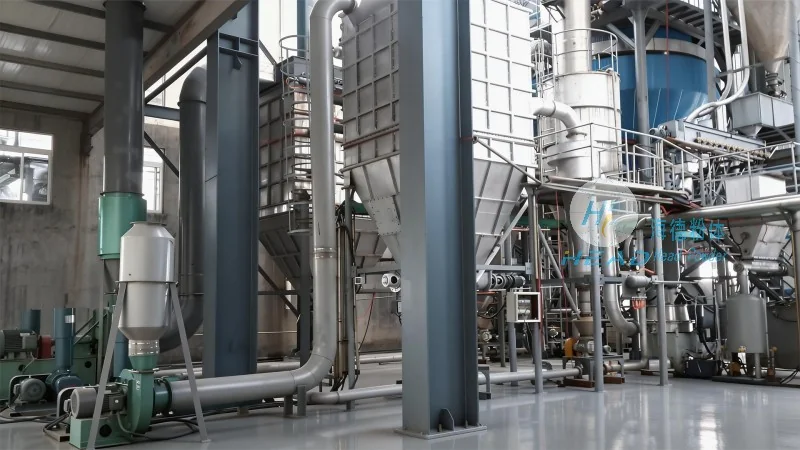
Working Principle of the Pneumatic Conveying System
The core working principle of the dry powder mortar pneumatic conveying system is based on the use of air as a medium to transport the dry powder. The system operates under negative pressure, where the fan or blower pulls air through the conveying line, creating a vacuum that draws the powder particles into the air stream. The powder particles are entrained by the air, forming a suspension that moves through the system. The design of the conveying line, including the angle of the bends and the diameter of the pipes, is crucial to maintaining the flow of the powder-air mixture. The dust filter or cyclone separator at the end of the line uses centrifugal force to separate the powder from the air, ensuring that the powder is collected efficiently and the air is cleaned before release.

Advantages of the Dry Powder Mortar Pneumatic Conveying System
Shandong HeadPowder Engineering Co., Ltd.'s dry powder mortar pneumatic conveying systems offer several advantages over traditional methods of material transport. These include high efficiency in transporting large quantities of powder over long distances, minimal material loss due to the enclosed system, reduced labor costs as the system operates automatically, and improved safety by eliminating the need for manual handling of powders. Additionally, the system is designed to be flexible, allowing for easy integration with existing production lines and the ability to adjust the conveying rate based on production needs.
Customization and Application
HeadPowder provides customized solutions for various applications, including the transportation of dry powder mortars in construction projects, industrial plants, and manufacturing facilities. The systems can be tailored to handle different types of powders, such as cement, sand, and additives, and can be scaled to accommodate varying production volumes. The company's expertise in engineering ensures that each system is optimized for the specific requirements of the client, resulting in a reliable and efficient operation.