

Operation Process and Working Principle of Positive Electrode Material Pneumatic Conveying Lines
Positive electrode material pneumatic conveying lines are sophisticated systems designed to transport and handle fine powders used in lithium-ion battery manufacturing. These systems are critical components in the production of high-performance batteries, ensuring efficient material movement while maintaining product integrity. The following sections detail the operational process and underlying principles of such systems, providing insights into their functionality and importance in modern battery production.
Key Components of Pneumatic Conveying Systems
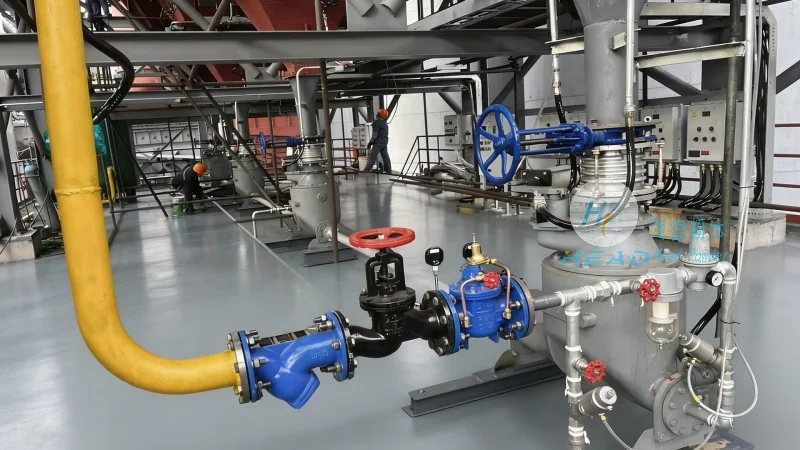
The pneumatic conveying line for positive electrode materials typically consists of several key components, each playing a vital role in the overall operation. These include the material hopper, which stores the raw positive electrode powder; the air compressor or blower, which generates the air pressure needed for material transport; the conveying pipes, which guide the powder from the hopper to the processing equipment; and the control valves and sensors that regulate the flow and pressure. Additionally, dust collection systems are often integrated to ensure environmental compliance and maintain a clean working environment.
Working Principle of Pneumatic Conveying
The core principle of pneumatic conveying is the use of air pressure to move solid particles through a pipeline. In the case of positive electrode material lines, the process begins with the material being fed from the hopper into the conveying pipe. The air compressor then introduces high-pressure air into the pipe, creating a flow that propels the powder forward. The velocity of the air and the size of the particles determine the type of conveying system—such as dilute-phase or dense-phase transport. Dilute-phase systems use higher air velocities to suspend particles in the air stream, while dense-phase systems use lower velocities to move particles in a more compact manner, reducing the risk of particle degradation.
Operation Process: Step-by-Step
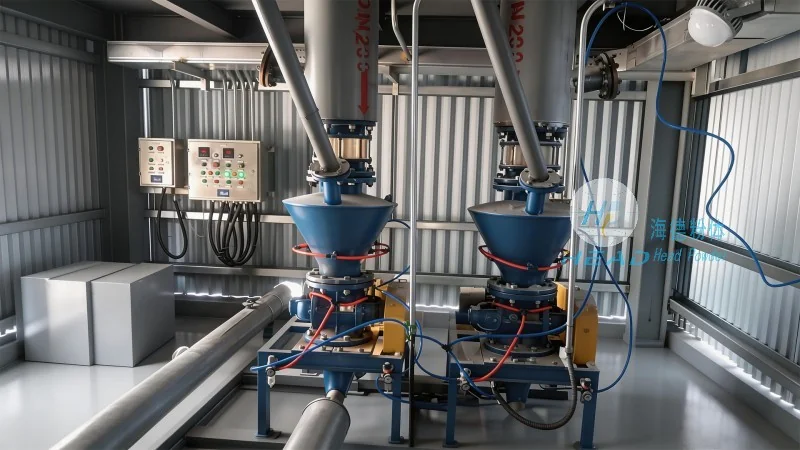
The operation of a positive electrode material pneumatic conveying line follows a systematic sequence to ensure reliable and efficient material transfer. The process starts with the loading of the hopper with the raw positive electrode powder. Once the hopper is filled, the air compressor is activated, and the system begins to generate the necessary air pressure. The control system then opens the material feed valve, allowing the powder to be drawn into the conveying pipe by the moving air. As the powder travels through the pipes, it passes through any necessary processing equipment, such as mixers or classifiers, before being discharged into the final storage or processing vessel. The system continuously monitors pressure and flow rates, adjusting the air supply as needed to maintain optimal performance. This closed-loop operation ensures consistent material handling and minimizes downtime.
Benefits and Advantages of Pneumatic Conveying
Implementing pneumatic conveying systems for positive electrode materials offers several advantages over traditional mechanical conveying methods. These systems are highly efficient, capable of transporting materials over long distances with minimal energy consumption. They also provide excellent control over the material flow, reducing the risk of contamination and ensuring product purity. Additionally, pneumatic conveying is less prone to material degradation compared to mechanical systems, which can cause particle attrition or agglomeration. The closed-loop design of these systems also contributes to better environmental management, as they can be equipped with dust collection and filtration systems to prevent airborne particle release.
Applications in Battery Manufacturing
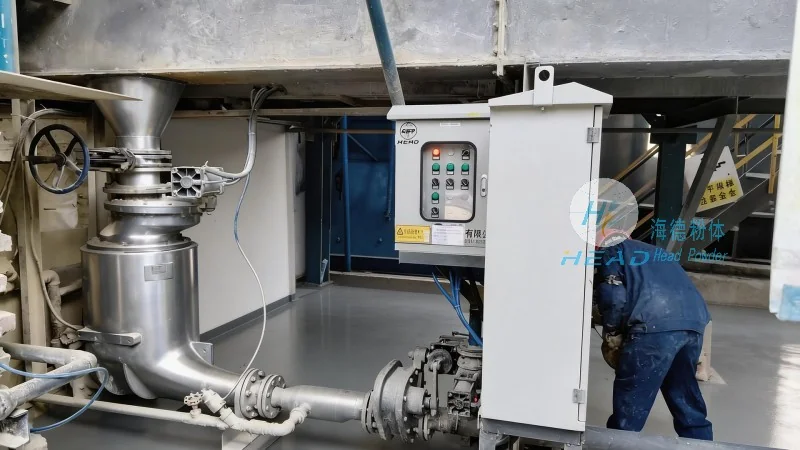
Positive electrode material pneumatic conveying lines are widely used in the lithium-ion battery manufacturing industry. These systems are essential for transporting active materials, binders, and conductive additives to the mixing and coating stages. The precision and reliability of pneumatic conveying ensure that the material is delivered in the correct proportions, which is critical for achieving uniform battery performance. By integrating these systems into the production line, manufacturers can enhance overall efficiency, reduce production costs, and improve product quality. The technology is particularly valuable in high-volume production environments, where consistent material handling is essential for meeting market demands.
Conclusion
Positive electrode material pneumatic conveying lines are advanced systems that play a crucial role in the production of modern lithium-ion batteries. By understanding their operation process and working principles, manufacturers can optimize their production lines and improve overall efficiency. The integration of these systems with other production equipment, such as mixers and coating machines, ensures a seamless workflow and high-quality output. As the demand for high-performance batteries continues to grow, the importance of reliable material handling systems like pneumatic conveying will only increase. Companies like Shandong HeadPowder Engineering Co., Ltd. specialize in designing and manufacturing such systems, providing tailored solutions to meet the specific needs of battery manufacturers.